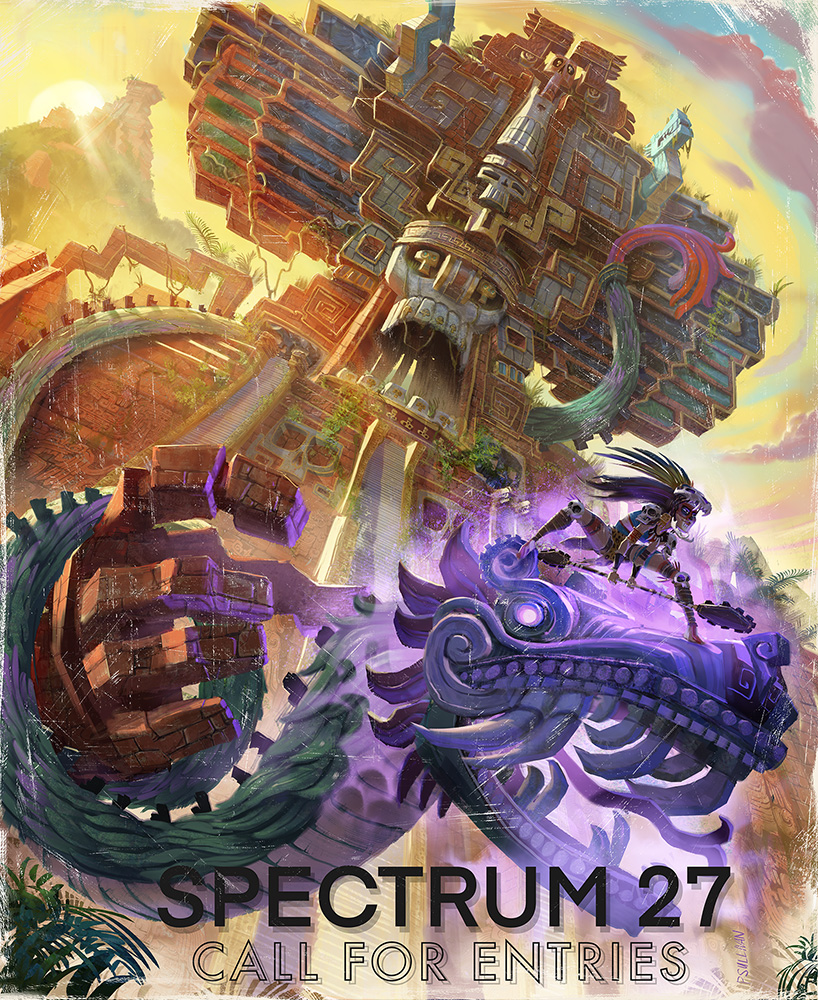
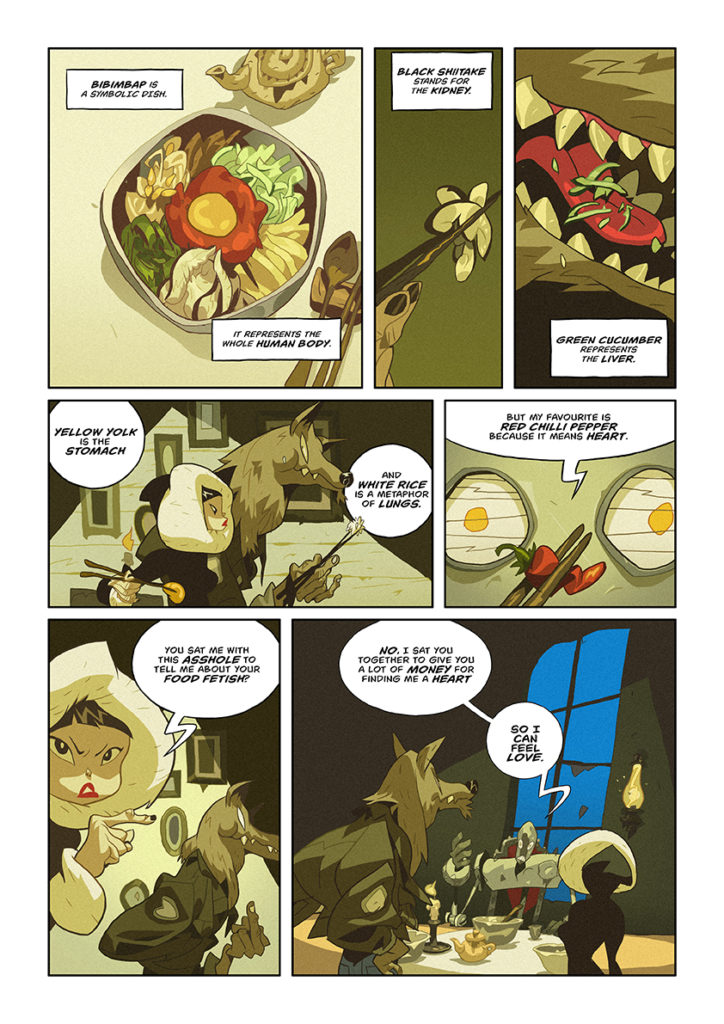
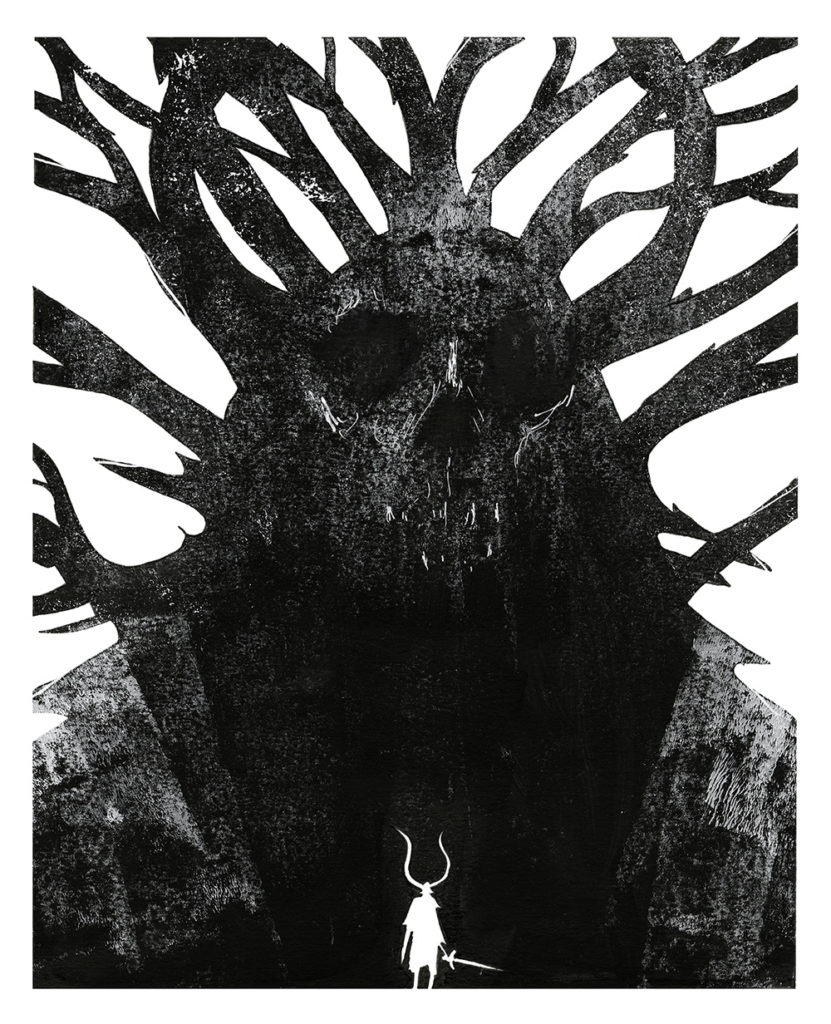
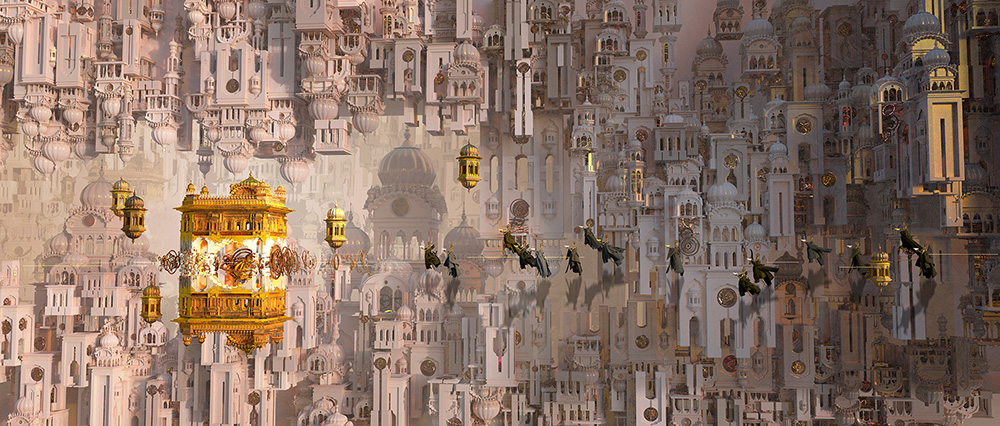
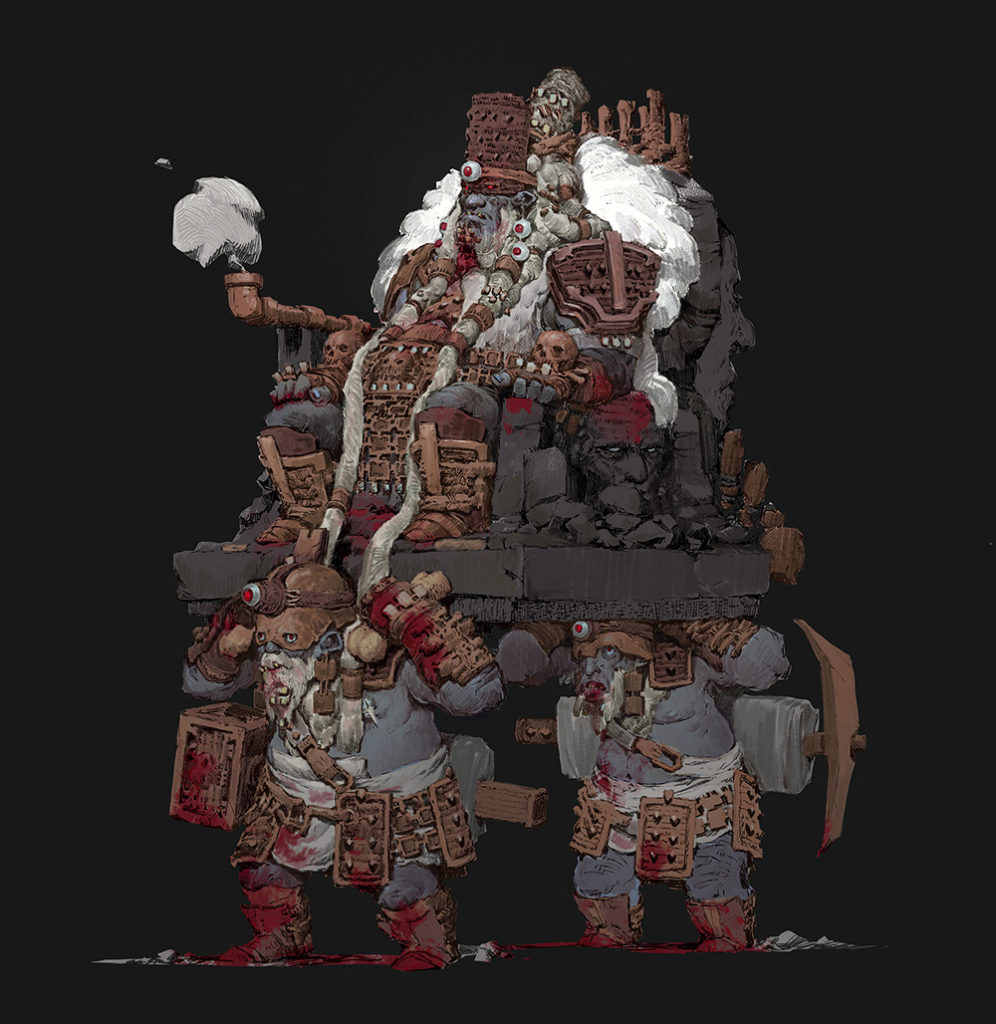
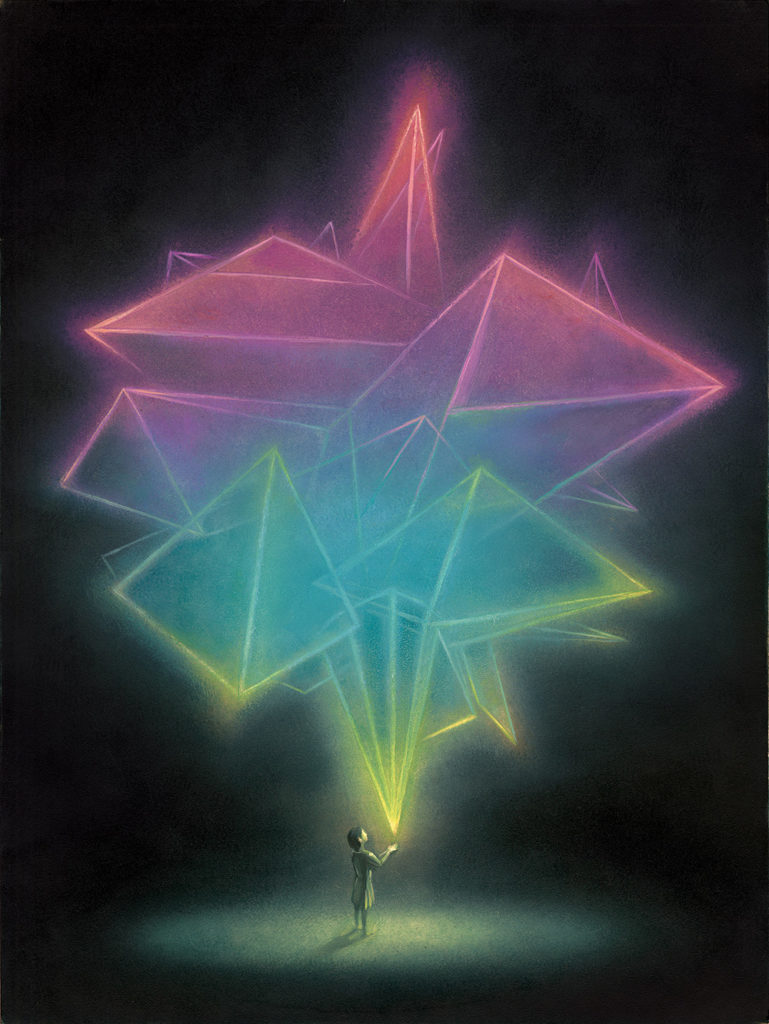
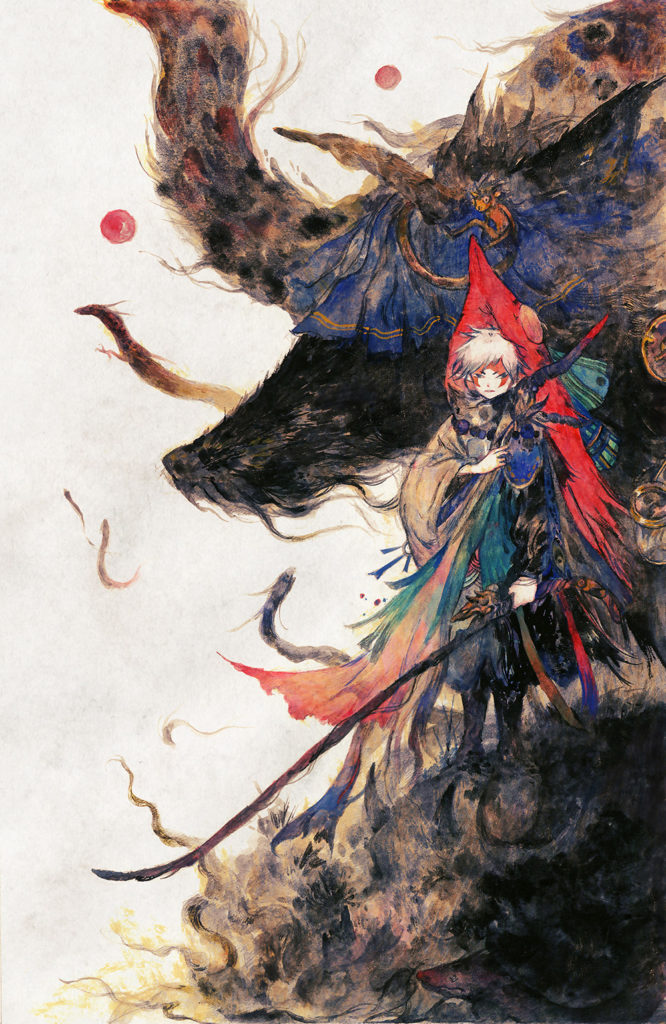
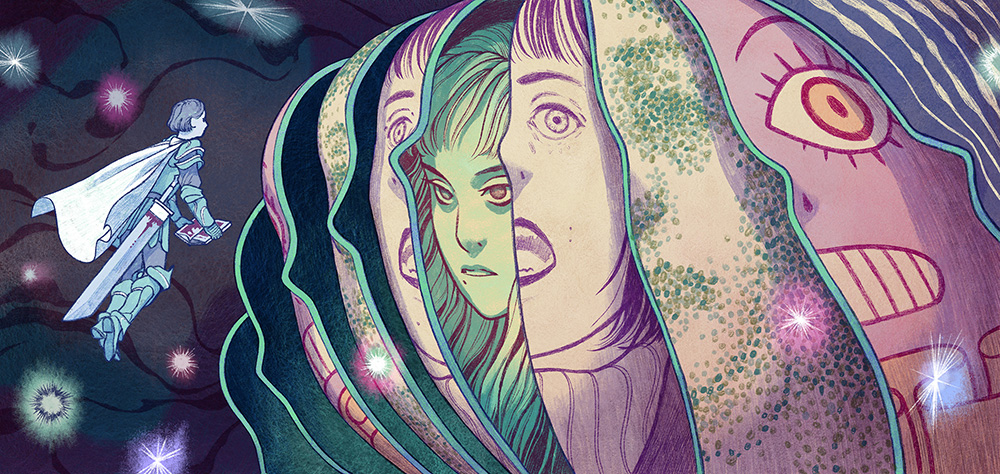
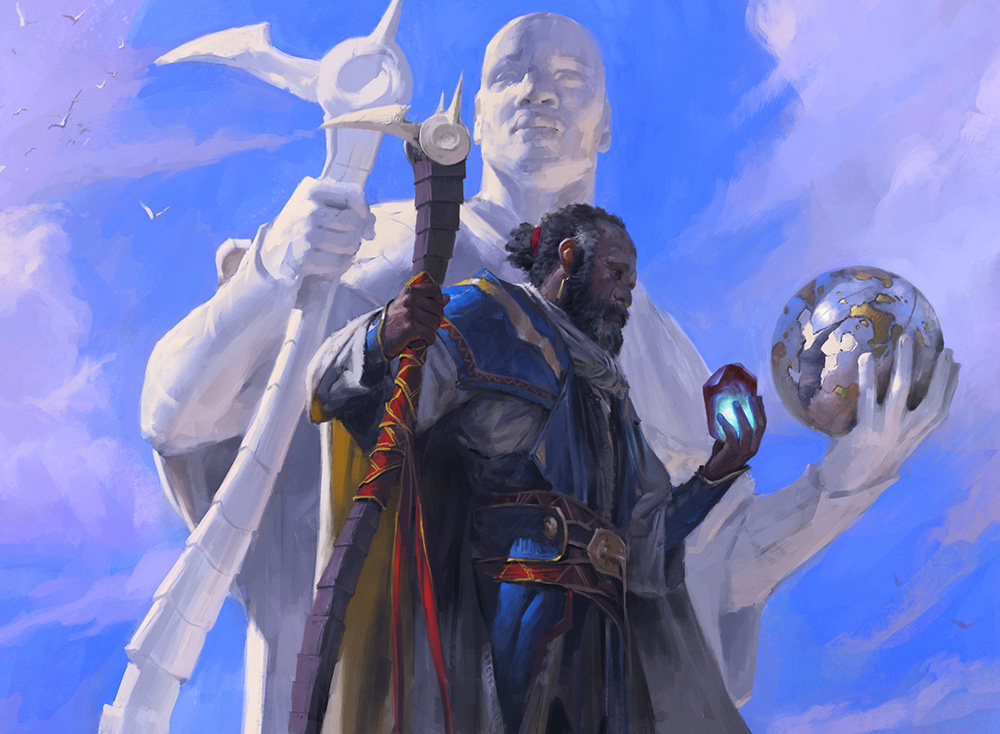
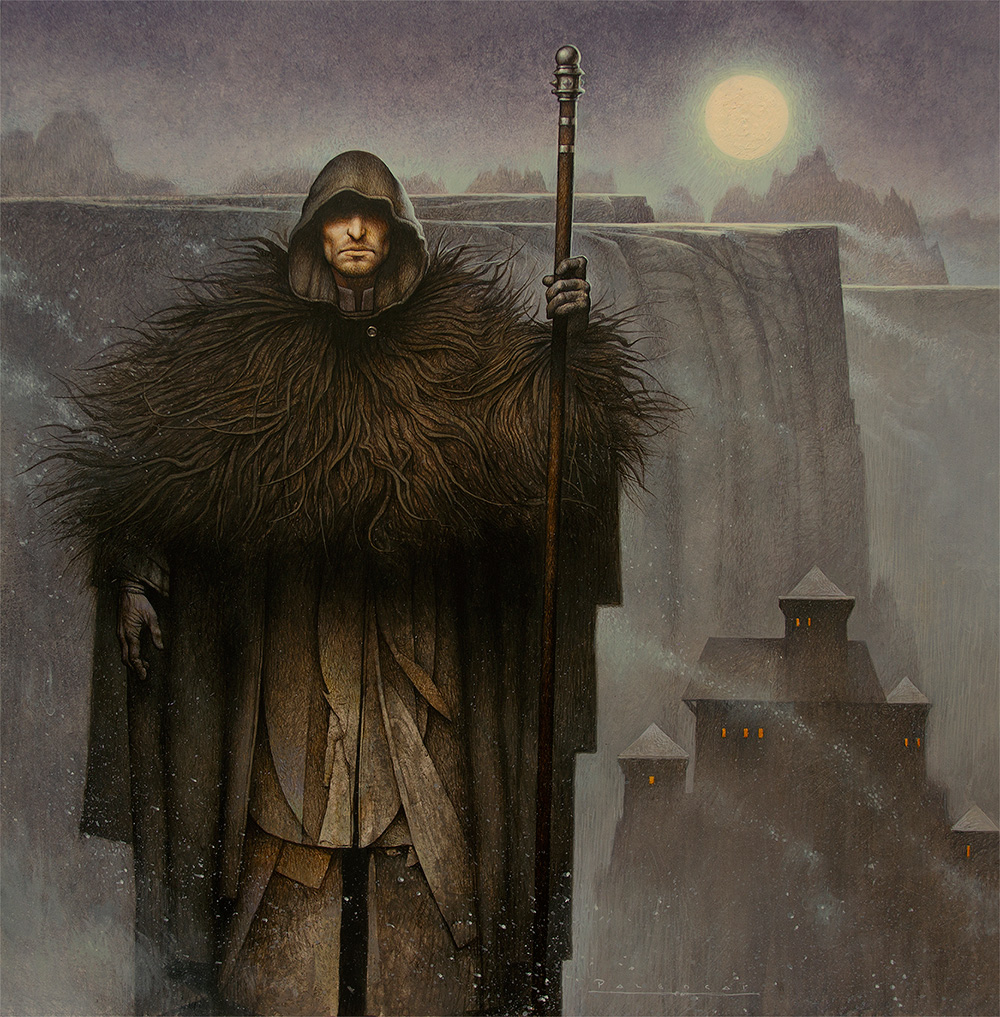
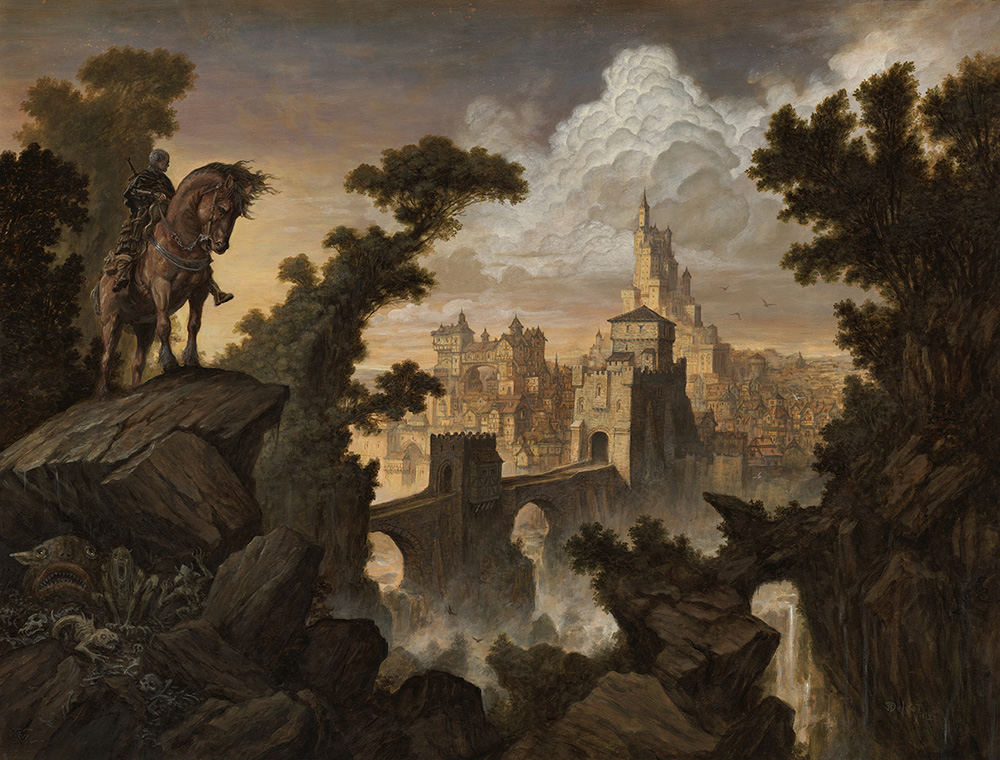
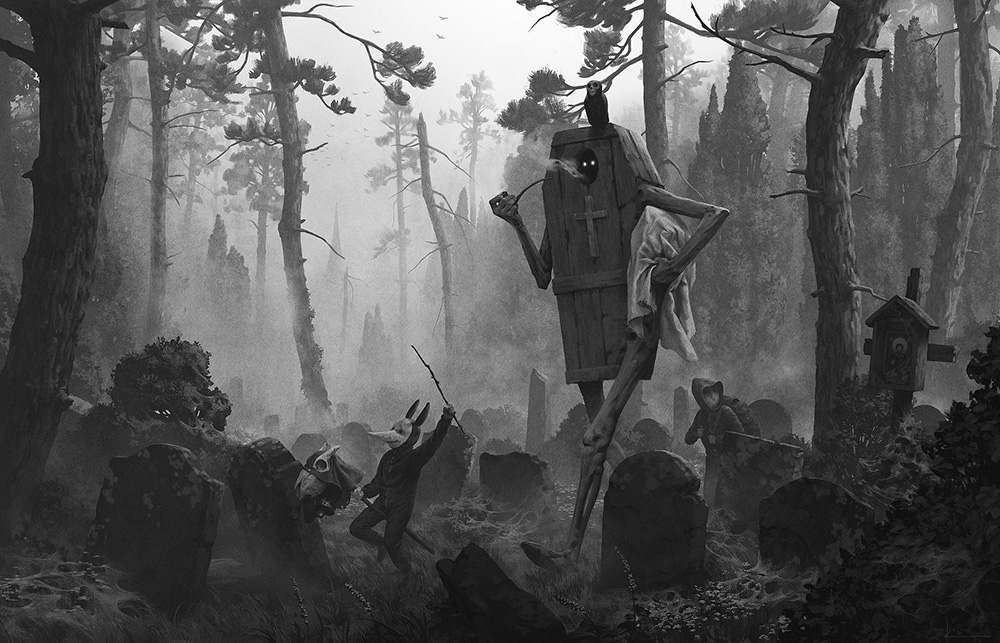
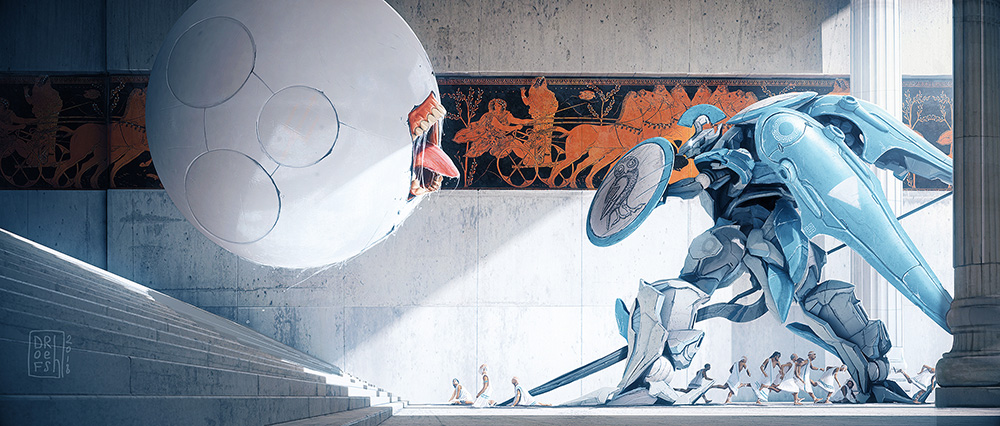
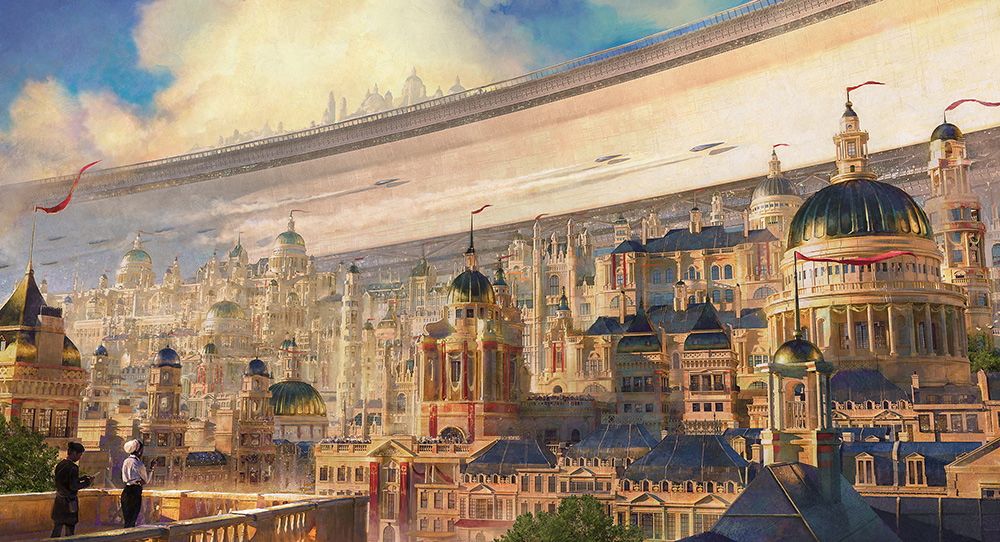
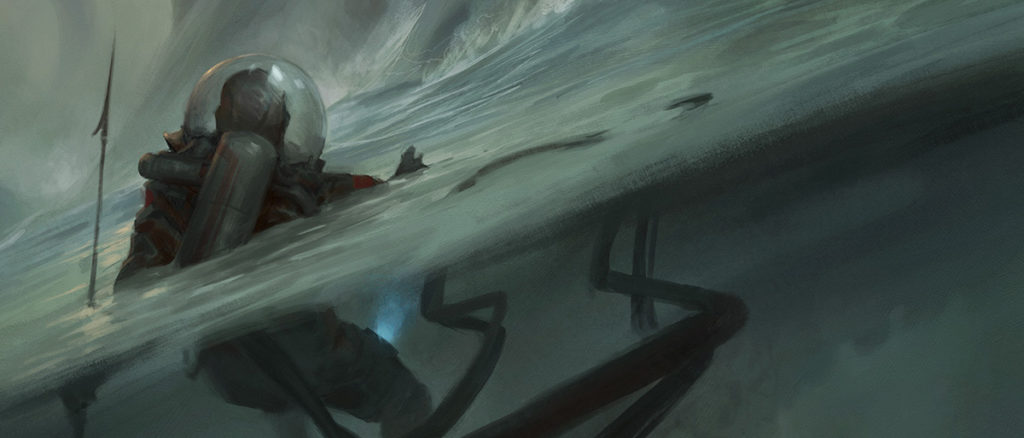
Spectrum 27 Call for Entries poster art by Paul Sullivan
This is an invitation to all professional and student artists, art directors, publishers and artists’ representatives to submit entries to the 27th Annual Spectrum International Competition for Fantastic Art. All artworks in all media embracing the themes of science fiction, fantasy, horror and the surreal are eligible. Fantastic art can be subtle or obvious, traditional or off-the-wall, painted, sculpted, done digitally or photographed: There is no unacceptable way to create art, and there are no set rules that say one piece qualifies while another does not. Imagination and skill are what matters. Work chosen by the jury will be printed in full color in the Spectrum annual, the peer-selected “best of the year” collection for the fantastic arts. Click here to submit.
The Spectrum27 Call for Entries Poster was created by the
renowned artist, Paul Sullivan.
To join our mailing list to receive your complimentary poster, please click here.
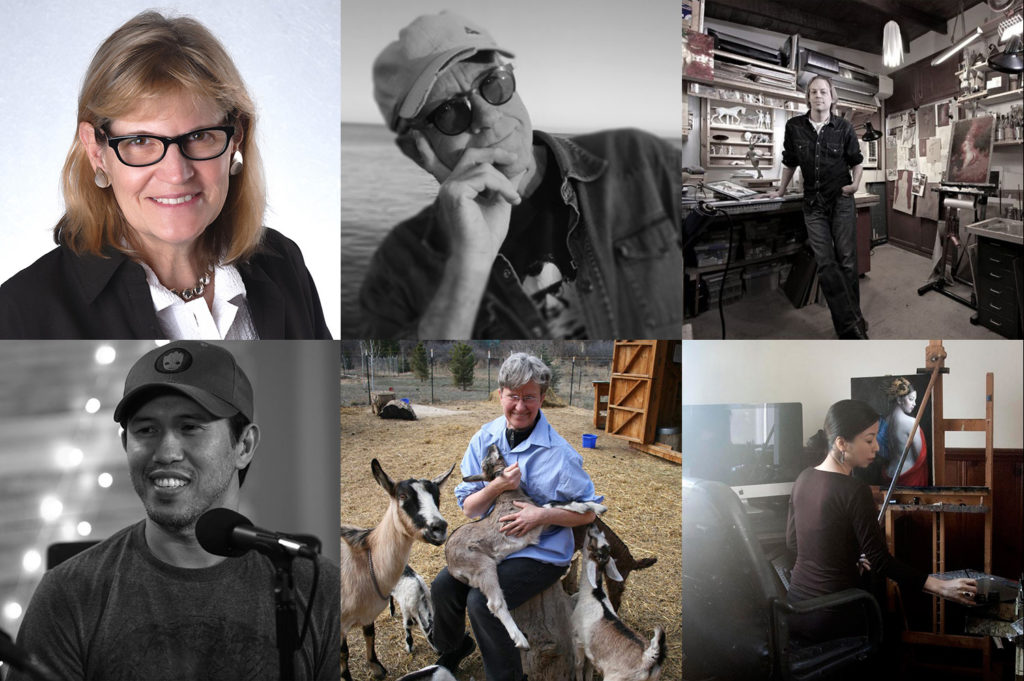
The Spectrum 27 jury is comprised of a six member panel of some of the most exceptional artists and educators working in the industry today consisting of Alice A. Carter, Craig Elliott, Anthony Francisco, Courtney Granner, Forest Rogers, and Chie Yoshii. Find out more about the Spectrum 27 jury here.
Clockwise from upper left: Alice A. Carter, Courtney Granner, Craig Elliott, Chie Yoshii, Forest Rogers, and Anthony Francisco.
“I’m delighted to bring such an esteemed group together,” shares John Fleskes.
“Alice Carter and Courtney Granner have mentored and guided thousands of
students through the San Jose State University’s award-winning
Animation/Illustration program that they co-founded. Craig Elliott has had a
hand in designing many of the most popular animated films from the last 20
years for companies such as Disney and DreamWorks, as well as being a
remarkably well-rounded artist and craftsman. His teaching credentials are
equally impressive. Then, we are pleased to have Anthony Francisco join us, who
is the Senior Visual Development Concept Illustrator at Marvel Studios. Anthony
created Baby Groot and the costumes for the Dora Milaje (Okoye and Nakia) for Black
Panther. We are honored to have Forest Rogers, who is one of the most
admired sculptures in the surreal and fantastic arts genres. Finally, we are
fortunate to have Chie Yoshii join the jury, who’s gorgeous paintings have long
been featured within the pages of Spectrum. We’re are grateful to have this admired
group of artists to select the works for inclusion into Spectrum 27.”
For over twenty-six years the Spectrum annual has been a showcase for the
best and brightest creators of fantastic art from around the globe: it serves
as an invaluable resource book for art directors, art buyers, publishers and
agents world-wide. Our purpose and singular agenda is the promotion of the art and
artists. We believe that Spectrum functions as a cost-efficient promotional
forum and provides a bridge between creator, client, and aficionado as well.
Spectrum is all about facilitating opportunities for creators, about growing
the audience for imaginative work in all its forms, without pretension and
without prejudice.
Thanks to everyone for your continued support of Spectrum! Please let us
know if you have any questions.
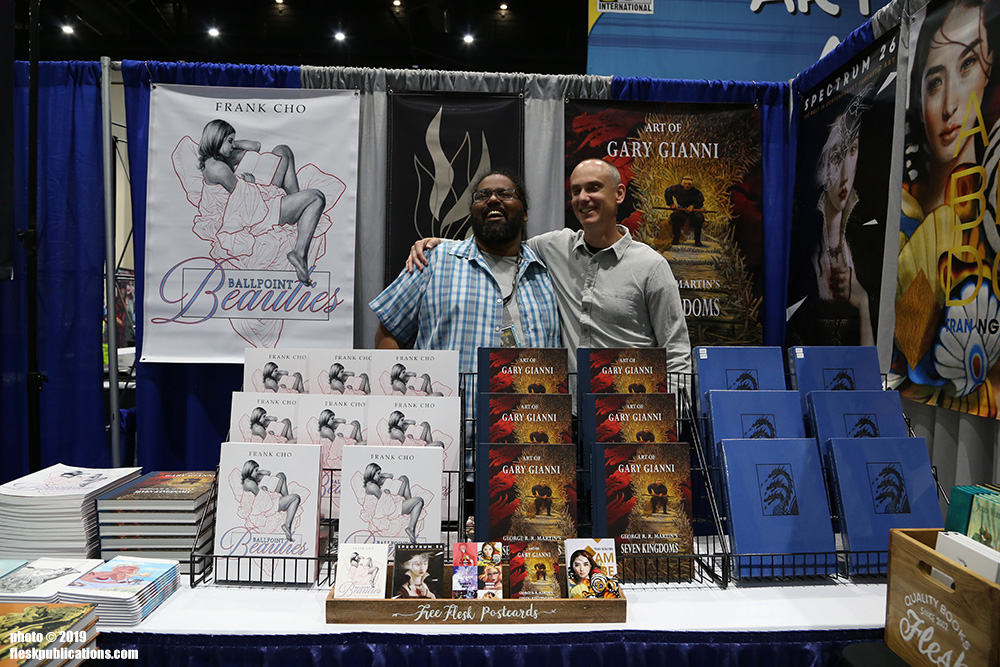
With my buddy James at our Flesk booth at the 2019 San Diego Comic-Con last July.
With the summer winding-down I am turning my focus toward our latest batch of books. There are five titles that form our next wave of art collections. These will be released between this fall and into the spring of 2020. Each of these books has been in some stage of development from anywhere between 1 to 13 years. They include monograms on Frank Cho, Bruce Timm, Brad Kunkle, Edwin Austin Abbey, and Jeffrey Alan Love. Some of the details for each project is outlined here. I’m including Al Williamson and Mark Schultz as supporting guests as I share some behind the scenes stories.
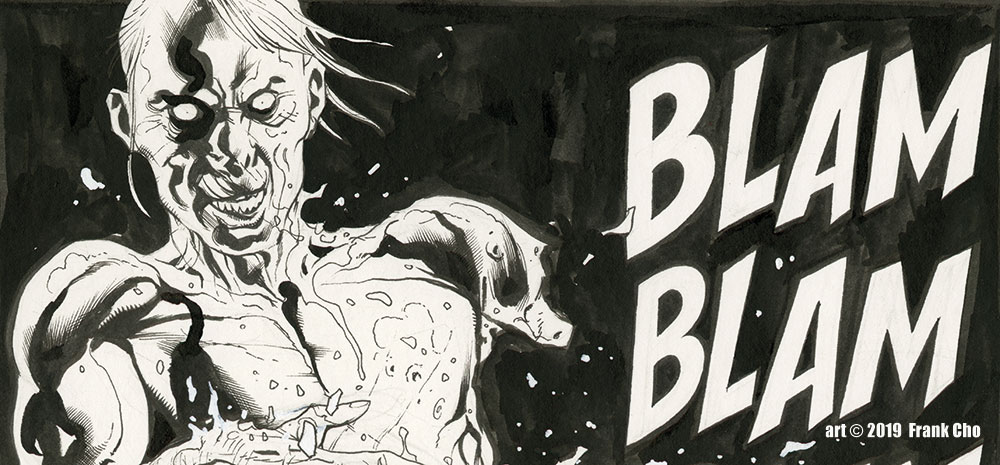
Frank Cho artwork from his Zombie King comic.
The Art of Frank Cho
The first book that I
will share the details about is a big Art of Frank Cho collection. Frank has
brought up the idea of a large book for years. During a quiet period about a
year ago I began to assemble this book. Over the course of a few weeks I worked
with Frank to map out a book that spans his entire career that runs over 300
pages. During my visit to Maryland during the 2018 Baltimore Comic-Con I spent
some extra time with Frank and scanned original art from his archives. Then, in
February 2019 I visited Frank again when we fleshed out the book some more and
I scanned a bunch of more material for the book. It was common to work on the
book for 2-3 days, then to take a few months off before another window opened
where we could align and do some more work on it together. I’m looking at the
book now and realizing how close it is to being done. It’s amazing how a few
days here and there over the course of a year or two can result in a book.
Since we haven’t looked at the book over the summer, we have two fresh pairs of eyes on it. We have tweaked one of the sections by cutting back on the Liberty Meadows section and inserting some of his latest works. At the moment Frank is working full time on his upcoming Fight Girls comic for AWA, his regular Harley Quinn covers for DC Comics, and the occasional comic cover for other publishers. This makes his time available to focus on this book limited. We are squeezing in an hour here and there to wrap it up. I never want to stress Frank out by being pushy, so we are working at his pace to get this done. The only thing that Frank has left to do is the cover and to provide the remaining captions. We’re in a good groove and hope to have it done very soon.
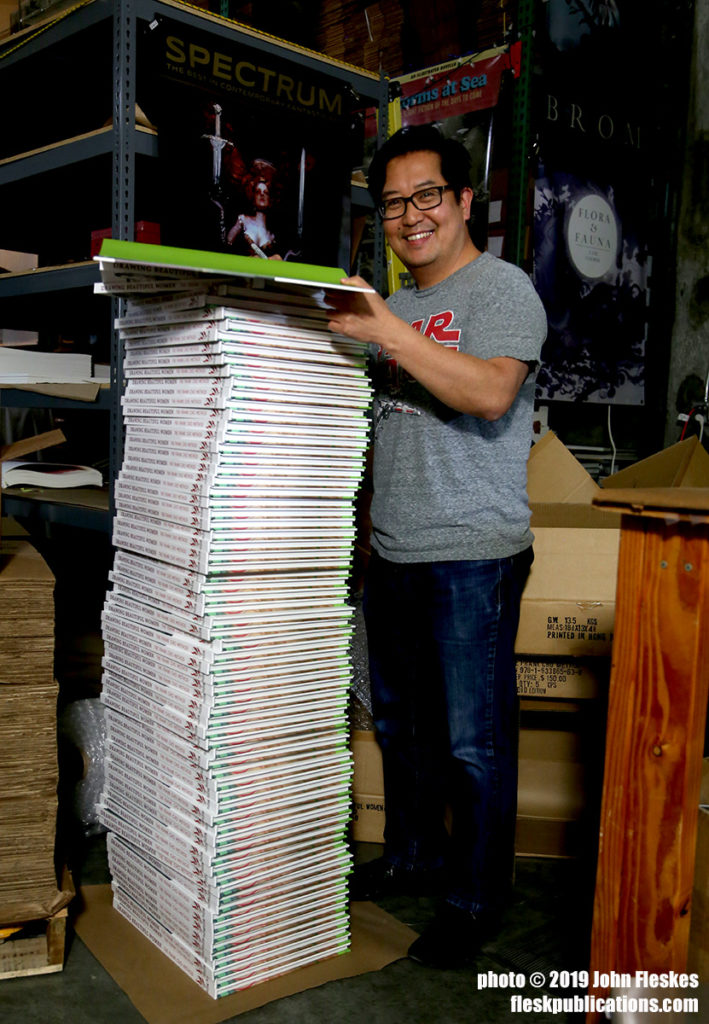
Frank Cho signing books at our Flesk warehouse earlier this year.
The way I work with
every artist is different, yet the same factor of it being very personal is
consistent. With Frank we do everything over the phone. We talk for anywhere
between 1-3 hours at a time, usually chit-chatting about random things as we
both work while keeping each other company. What I’ll do is send Frank a PDF of
the book which he will look over, usually while he is drawing a Harley Quinn cover.
Based on his feedback and our discussion I’ll tweak and adjust things as we
talk about totally random things. I’ll send him a new PDF once I’ve made a
series of fresh improvements. Frank gives it a look, we talk about it, then I
tweak it some more. We go back and forth like this for hours. It’s easy, very
organic, and we are always in sync with one another. It’s a pretty smooth and
enjoyable process. When I work with Mark Schultz and Gary Gianni, it is very
similar to this, with the exception that they are not working on comic covers at
the same time. Frank is always backed up with so many projects, he usually has
to continue working.
With Frank, we usually work and talk late at night. Between 8:00pm to midnight my time, which is 11:00pm to 3:00am his time. We both work best with creative stuff at night—especially since we can focus uninterrupted. For me, the daytime is reserved for running the business and while being on daddy duty. Since we are the same age and in similar family situations, we can relate to one another easily.
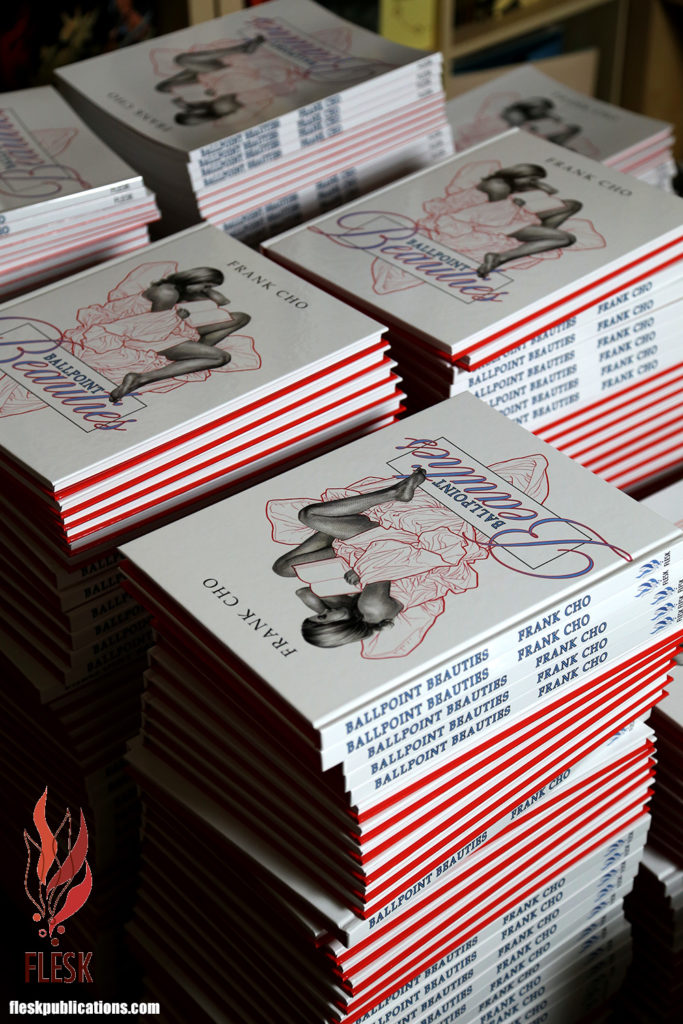
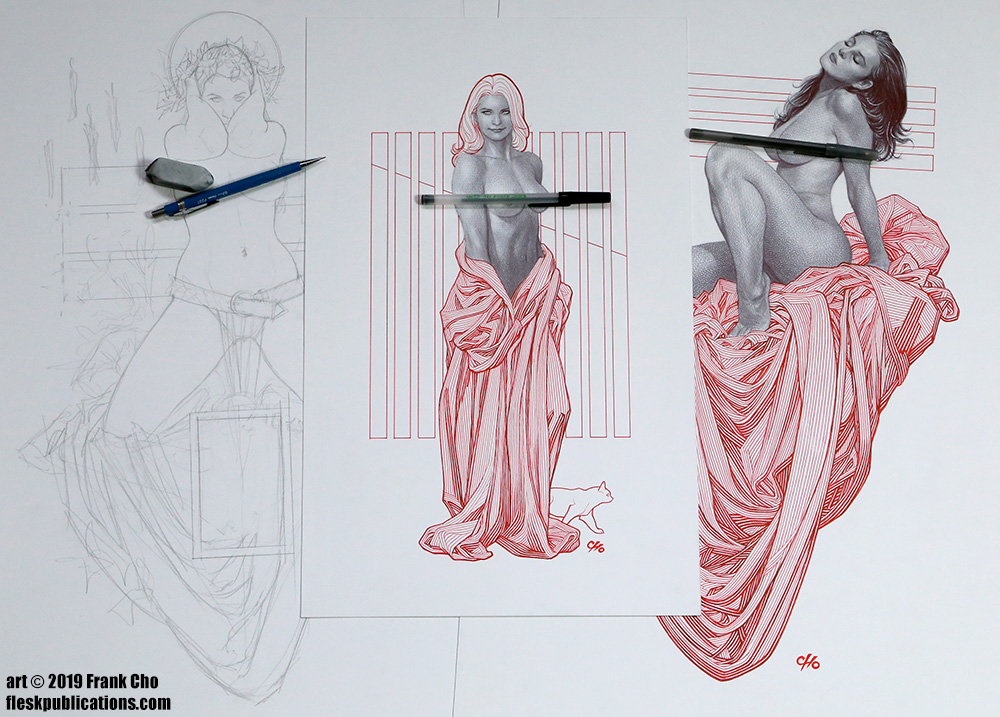
Frank Cho’s Ballpoint Beauties was our biggest seller in 2019.
Working with Frank is a
good experience. Since neither of us likes drama, and we like to keep things
mellow and easy, it’s always worked out smoothly.
The details and release date for The Art of Frank Cho will be revealed soon. I like to have Frank’s books done, or nearly done, before we announce it. Since he is always slammed with work, I don’t want to make an announcement and then have the book delivered late. But, we are very close to being done!
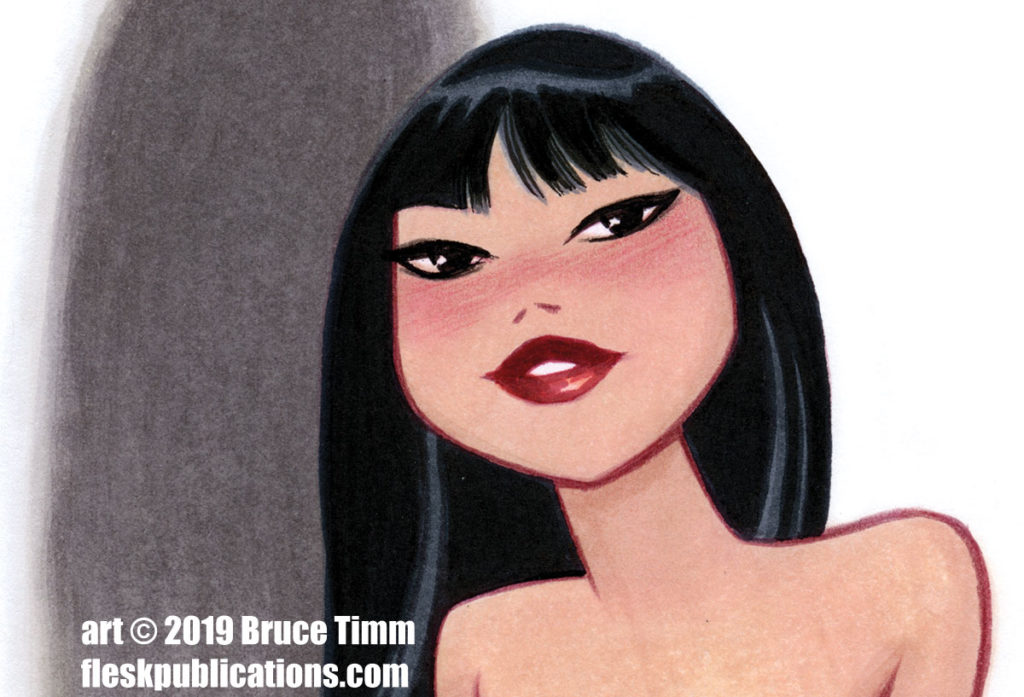
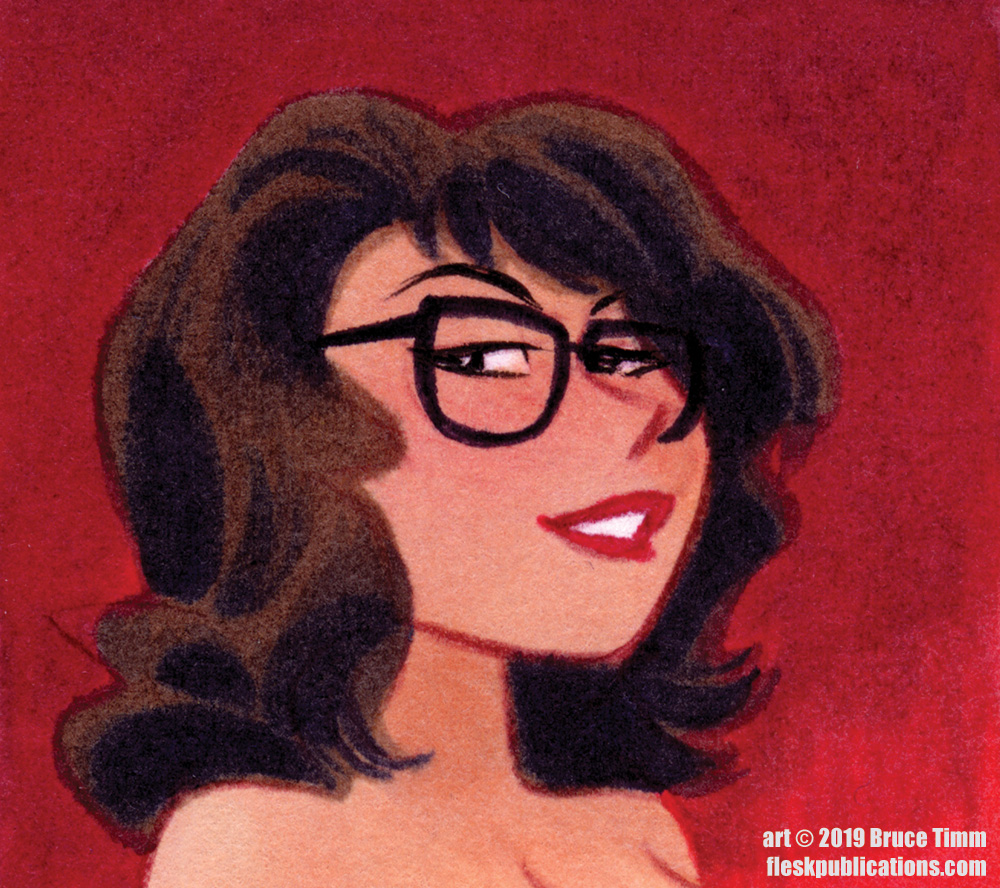
Detail of artwork by Bruce Timm for his next book coming from Flesk.
Bruce Timm
At the same time I am working with Bruce Timm on his new book. This will be a collection of his three sold-out show Teasers, then Surrender My Sweet, and will also include a lot of new material. At 208 pages and 9 x 12 inches, there will be a paperback and a hardcover edition available. Bruce is another artist who is very easy to work with. We started on this collection last year. Like with Frank Cho, Bruce can get very busy with his day job. We tend to work a little at a time in-between other projects. Sometimes when he has the time, I may be fully engrossed in my Spectrum duties. Then, when I’m free, he may be tied-up in a new film. Eventually though, we align and get it done. By not setting a deadline it takes the pressure and stress off of us, while allowing for a book that we are proud of.
Bruce Timm artwork detail. This will be included in his next art book from Flesk.
Bruce and I work
exclusively through email. Like with Cho, Schultz, and Gianni, he is easy and
professional, with the process being very organic. The way we work typically
goes like this. I’ll shoot him an email with a book idea that includes a full
outline to get the brainstorming sessions started. Bruce replies after each of
my paragraphs with notes and thoughts of his own. We go back and forth like this
as the book begins to take form. This is a very enjoyable part of the process.
I’ve written this before, but Bruce has been very impactful on me in terms of
how I design a book. I’ve never worked with him at Warner Bros., or seen him in
action there, but based upon my experience while working with him on his books,
he is very good at bringing out the best in me, while allowing me to be
creative and to try new things.
If you are wondering
how I started working with Bruce, it was as simple as my meeting him at a
Comic-Con in San Diego and giving him a 2-minute pitch. Since I didn’t know him,
I forced myself to keep my book idea with him to just a few minutes. I knew he
was a big name, and I was well aware of his stature in the industry and all
that he has accomplished. I don’t get nervous or feel intimated when I meet
people, so I didn’t practice, or prepare (since both rob me of feeling
comfortable—I’m best when I don’t rehearse in advance), but I simply had a
general idea of making a book on his personal “after-hours” art. I let him know
that I wanted to make a “Bruce Timm” book and never mentioned any of his
superhero or daytime work. A handful of follow-up emails over the next 6-8
months resulted in about 200 originals showing up at my house one day. Suffice
it to say, I feel very fortunate that he continues to work with me.
Back to this new
collection, it is about 95% complete. As soon as Bruce is wrapped up with his
latest film we can wrap it up. I’ll make an announcement once we have a release
date set.
Brad Kunkle
A third book that I am
working on is with Brad Kunkle. Working on three books at a time serves a few
purposes. The first is that it is practical. Many of the artists that I work
with stay very busy. Between commercial assignments, private commissions, event
appearances, exhibits—we all share passion for our dreams and work hard to
achieve our vision. When Frank Cho has a Harley Quinn cover deadline or he is
attending a show, I may jump over to the Bruce Timm book. Then when I am caught
up on Bruce’s book, I’ll send him an email with some notes. Rather than wait
for his reply, especially since it may be a week or two since he is involved in
a new film, I jump over to Brad’s book. The three books keep me moving and I’m
not sitting idle.
Another reason why three
books is the magic number is because it keeps me creatively excited. Each book
has a different tone; each one features different subject matter; and, each is
handled differently. By jumping back and forth between the three, I feel that I
can have continually fresh eyes. Rather than serving as a distraction or
impeding my flow, the variations help with my flow. My goal is to have
contrasting books with different designs so that there are no templates being
used.
Getting back to Brad, I
first met him in 2006 or 2007 (I have to check my notes to confirm the year) during
my first trip to Pennsylvania to visit with Mark Schultz. Mark had invited me
out to visit Al and Cori Williamson. Having the chance to see Al at his home
was a special moment for me. I’m a huge fan of the EC comics line that came out
in the 1950s. Al did a lot of artwork for the Weird Fantasy, Weird
Science, and Weird Science-Fantasy titles. He collaborated with Roy
Krenkel and Frank Frazetta at times, but it was Al’s work that excited me the
most. (This all ties into Brad, I promise.)
After I arrived at
Mark’s house, and after we visited with Al and Cori, Mark and I drove back to
his house. The next day Mark asked me if he minded if a guest joined us for
lunch. Sure, I didn’t mind. This guy pulls up the driveway and Mark introduces
Brad Kunkle to me. It turns out that Brad is related to Mark’s wife, Denise. Brad,
at the time, was in a band and was doing dog portrait paintings on the side. I
recall that he was still deciding which direction to go in.
Brad pulled out a
painting from his trunk. It was of a recent portrait that he did of his
girlfriend at the time. It was stunning! I looked at his dog portraits online
and was amazed at how he captured the personalities of the dogs. We even
discussed possibly doing a dog calendar at the time. But, basically, from that
fortuitous lunch during a time when I was starting to get my publishing career
off the ground, and Brad was beginning to become a painter, we developed a
friendship. Over the years we would meet up in various locations during our
travels when our lives would intersect such as in Santa Barbara, New York City,
and in various cities in Pennsylvania, but never in the same place twice. I was
able to congratulate him as he had his first sold-out exhibit, followed by his
second, and watched how his notoriety and fame grew, while he always remaining
a humble and good guy. Each time we saw one another, we would discuss working
together on a book project when the time was right. Well, 13 plus years later
after our first meeting, we finally decided that the time is right.
At the moment we are
working on his first art book collection. Our main emphasis is for the book to
be an art object. There may be more discussion going into this book than any
other project that I have worked on before. I want this to be something very
special, and unlike anything we have published before. Like all of the books
that we do, there is no rush on this. It will get done when it is done. But, I
can guarantee that it will be beautiful.
Edwin Austin Abbey
A fourth book that is nearly done is an Edwin Austin Abbey pen-and-ink book that is reproduced from old magazines. I recently pulled it off a hard drive and dusted it off. I had done the majority of work on this book 10 years ago. It is in a similar format and style to the Franklin Booth and Joseph Clement Coll books that I did from 2002-2004. I had lost interest in the Abbey book when I was working with living artists and direct from original art full time. The chance to work with Al Williamson was more exciting! After looking over the Abbey book I realized that it was about 80% done and I liked it a bunch. I asked Kathy to finish cleaning up the remaining art that I hadn’t got to yet, and she put the final polish on the book. All that’s needed is for me to write an introduction or essay. I just need to find the time to write a brief piece to open the book. I’ll leave a detailed essay on Abbey to a future historian. Taking the time to research and write extended essays is not available to me at this stage in my life.
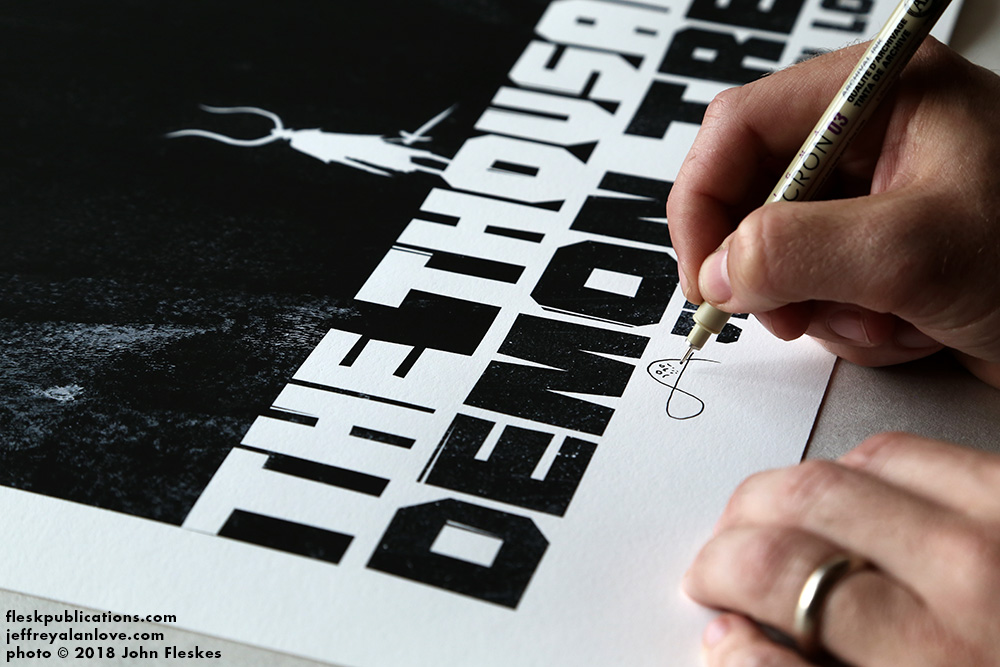
Jeffrey Alan Love signing his cover print for The Thousand Demon Tree.
Jeffrey Alan Love
A fifth book in development is a Jeffrey Alan Love sketchbook. Jeff ran this idea by me last year, which I liked and agreed to publish. The concept is simple in that Jeff would paint a piece in his sketchbook of whatever idea came to his mind that day. Once the sketchbook was full, he passed it along to me. Rather than scanning the pages I took it to my friend Greg Preston to get photographed. When scanning art, it projects a bright flat light against the art surface. This works fine in most cases, however I wanted to have more control over the lighting for this object, rather than treating it as a flat surface. There are textures and variations in the way Jeff applies his paint and I didn’t want these nuances to be lost in the scanning process. Jeff was the one who initially suggested that the sketchbook be photographed. My mind immediately began spinning with ideas and techniques for a unique approach to reproducing his sketchbook. With the photography done, I’ve been playing around with two very different approaches to the book and will make a final decision soon. There’s not too much work left to do on this book. I simply need the time to focus on it. My goal is to have it done in the next few months, then I’ll plan a release date.
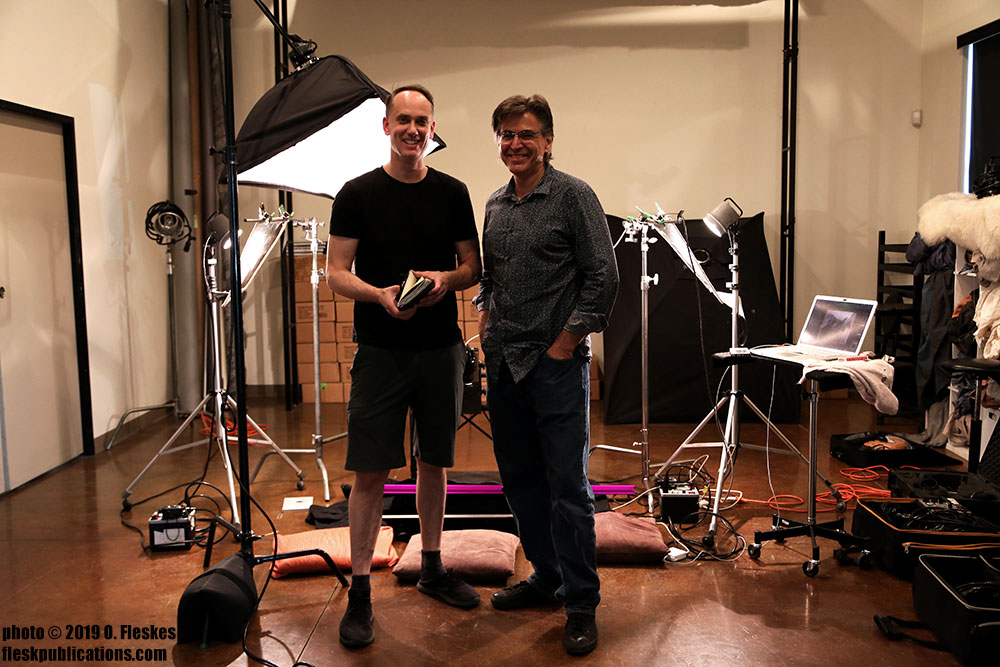
With Greg Preston while photographing Jeffrey Alan Love’s latest sketchbook.
Making a Book
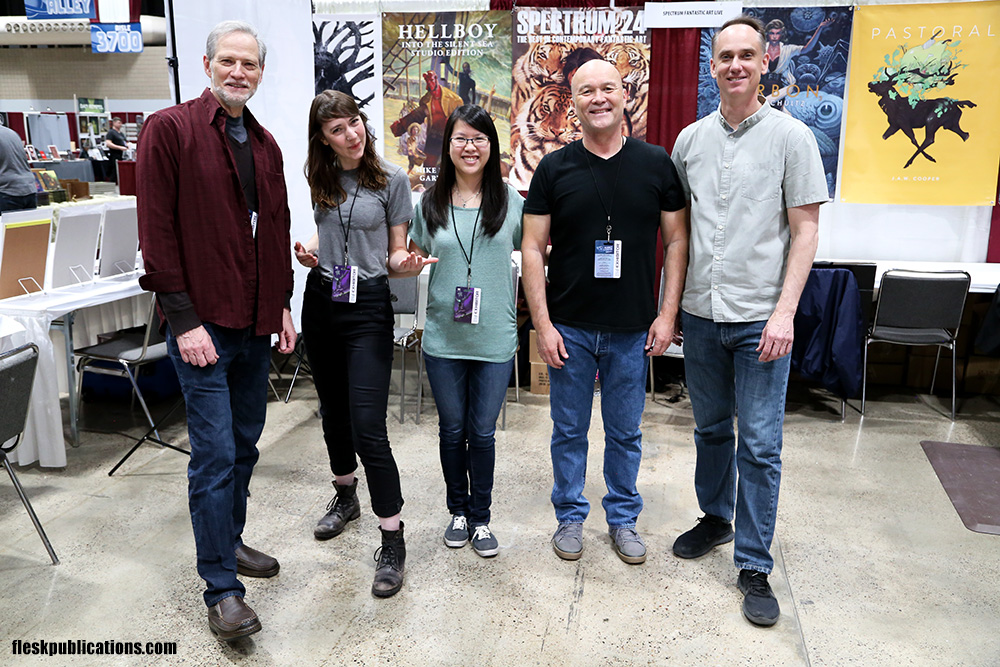
From left to right: Gary Gianni, J.A.W. Cooper, Kathy Chu, Bill Carman, and John Fleskes during the Planet Comicon at the Spectrum Fantastic Art Live pavilion.
Publishers typically make new book announcements 10-12 months in advance, then work hard to hit their target dates. I prefer to work in a different way. I like to either finish or have a book 95% done before I advertise and offer a release date. This allows me to take my time and to let the book dictate its own schedule. I can pull this off since I am a small publisher. Once a publisher gets to a certain size and has a larger staff–mapping out schedules is imperative to making sure the business runs smoothly. I can work in both environments, however, lately I’ve been focusing on the book first, followed by advertising it once it is complete.
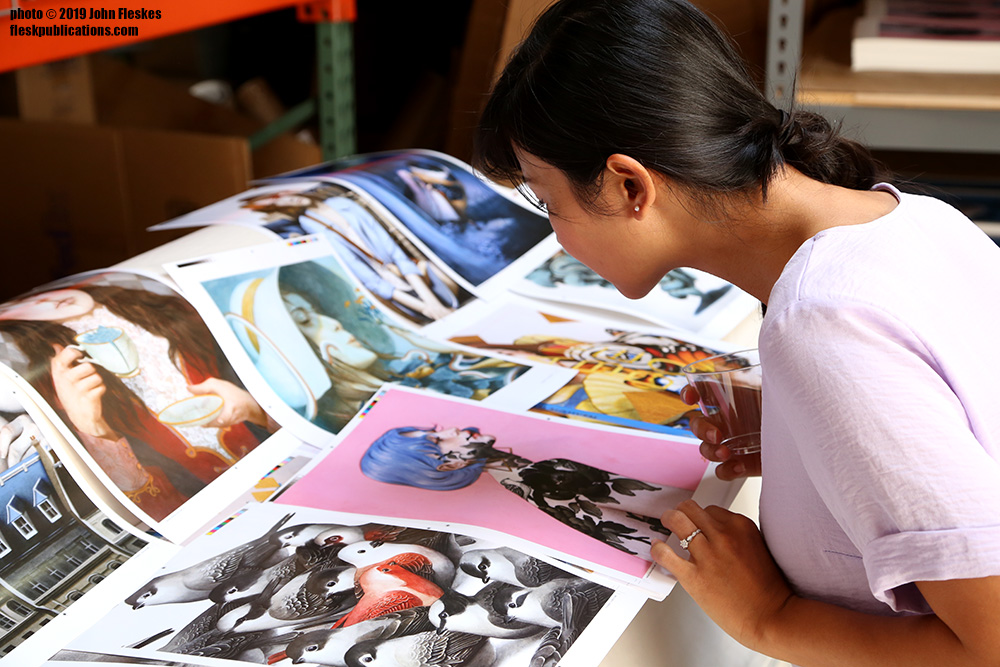
Tran Nguyen reviewing the book proofs for her upcoming book, Ambedo. As a small publisher, we can work very closely with the artists to make very personal books.
The high majority of
the book work is done by me, although Kathy is quickly growing as a fine
bookmaker and will be running her own projects as soon as we can find a new
office manager to free up her time. Currently, Kathy runs the office and
assists me throughout the week. Some books, like Spectrum, she plays a major
role in and does most of the heavy work, and other books, like the Bruce Timm
collection where she has a very small hand in. Then, there are other books
where we work side-by-side like this new Frank Cho book. The new Tran Nguyen
book Kathy did not see until I asked her to give it a final review before I
sent it to the printer. We work very organically and fall into a smooth groove
based on what is going on in the office and what book work needs to be done.
When we start a new
book, I’ll take the first step which is to make something which I call a book
map. I do a rough layout with no design in place. It looks as simple as art
placed on pages just to get an idea of the flow and placement of how the tone
and order of the book will look. Actually, before I do this, I visually scroll
through the artwork quickly on the computer to take a mental snapshot and to
memorize all of the imagery. I shuffle and organize the images in my head, then
place them in the order that I want on the pages. Once this is done, I’ll send
a PDF to the artist for them to look at for feedback. This avoids wasting time
and effort by streamlining the book early, before the design stage begins.
Either through email or over the phone we’ll go over the PDF together. Based on
their comments and reactions I’ll tighten up the book further, shift pages and
art around, and I may group things differently, until we have a solid book map
to work with.
At this stage I’ll start inserting text, if any. Again, I’m not paying any attention to design. I’m simply dropping text on pages next to the art that it is associated with. Before the text is dropped into the book it is fully edited and finalized. I don’t write in the design program, or make changes to the text after it is inserted into the book. I want to be efficient and not waste time by repeating unnecessary steps. I’d rather spend time with my kid than do something a second time. Once the text and art for each page is finalized, then I’ll start designing the book. I’ll only design a handful of book spreads first, then send it to the artist for their feedback. That way we can nail the theme and design elements early, before applying it to the full book. After we settle on the design, I’ll go in and apply the master design to the full book. I’ll send PDFs regularly to the artist to give opportunities to make changes and to provide feedback in the early stages. The last thing I want to do is to make big radical changes after I’ve already applied the theme to the book. It’s about doing the heavy lifting early on, really paying attention to the early mapping and design foundation to make sure that the rest of the process is smooth and easy. I actually enjoy the heavy creative lifting in the beginning stages, then fall into cruise control for the middle stage. The final stage includes all double checks on the art and text to look for mistakes. Then I package it up and send it off to the printer.
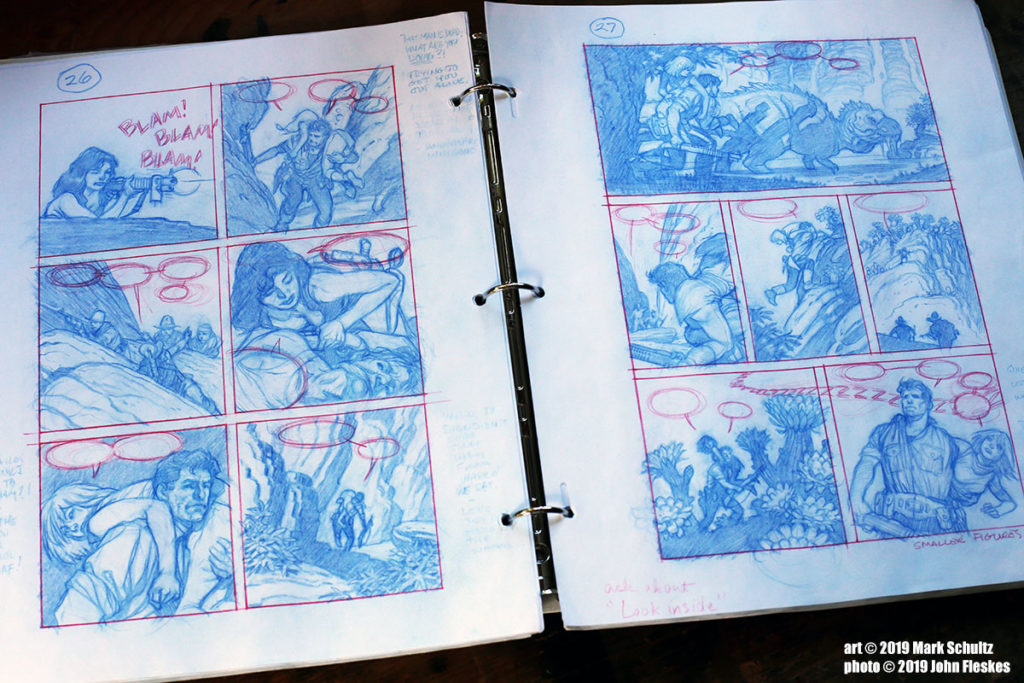
Mark Schultz preliminary pages for Xenozoic.
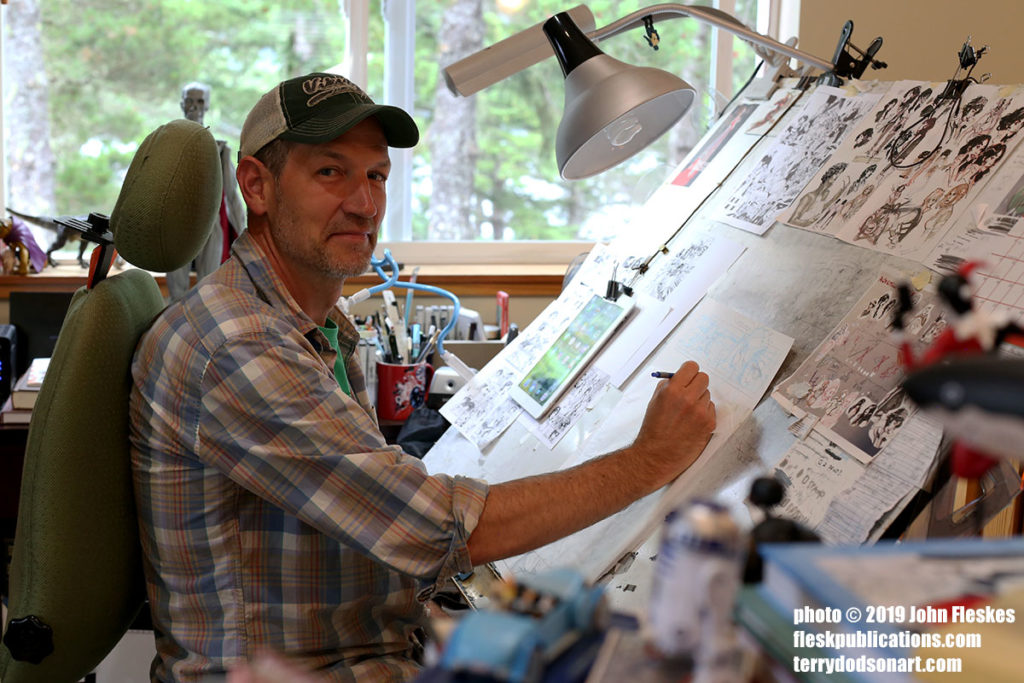
That brings you up to date on our next five books. Lots more to come! I have a backlog of 10 more that I am pretty excited to move forward with after these. They include the next Arthur Adams, J.A.W. Cooper, Terry Dodson, Mark Schultz, William Stout, and Al Williamson titles—along with Spectrum 27.
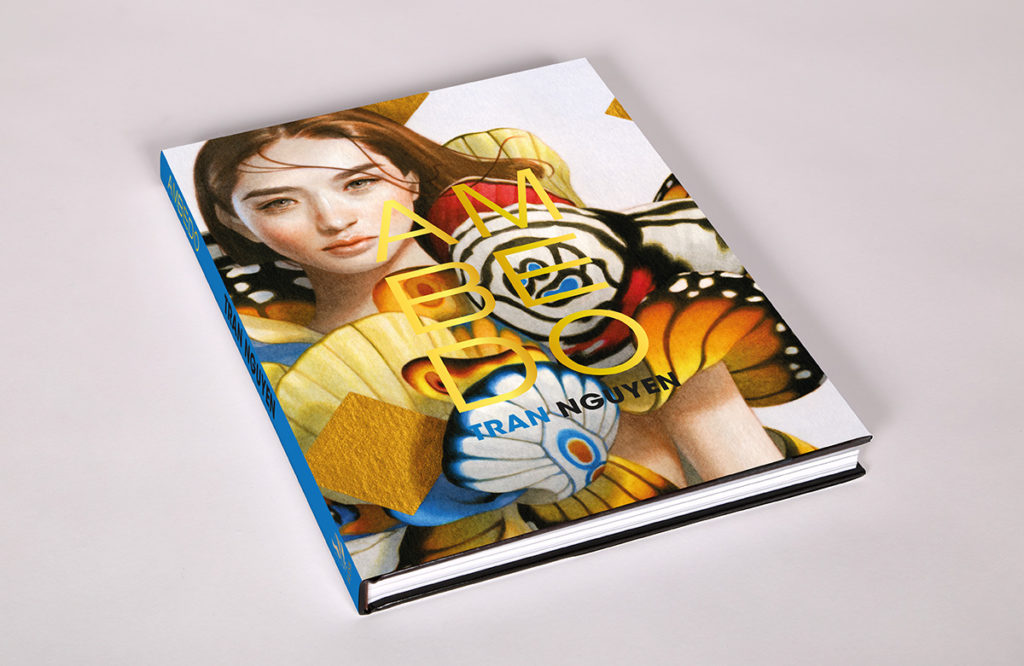
I’m thrilled to announce that we have launched our Ambedo: The Art of Tran Nguyen Kickstarter campaign. This book is available as an affordable signed hardcover. In addition, limited and open edition signed prints are on hand, plus enamel pins and original art are also available.
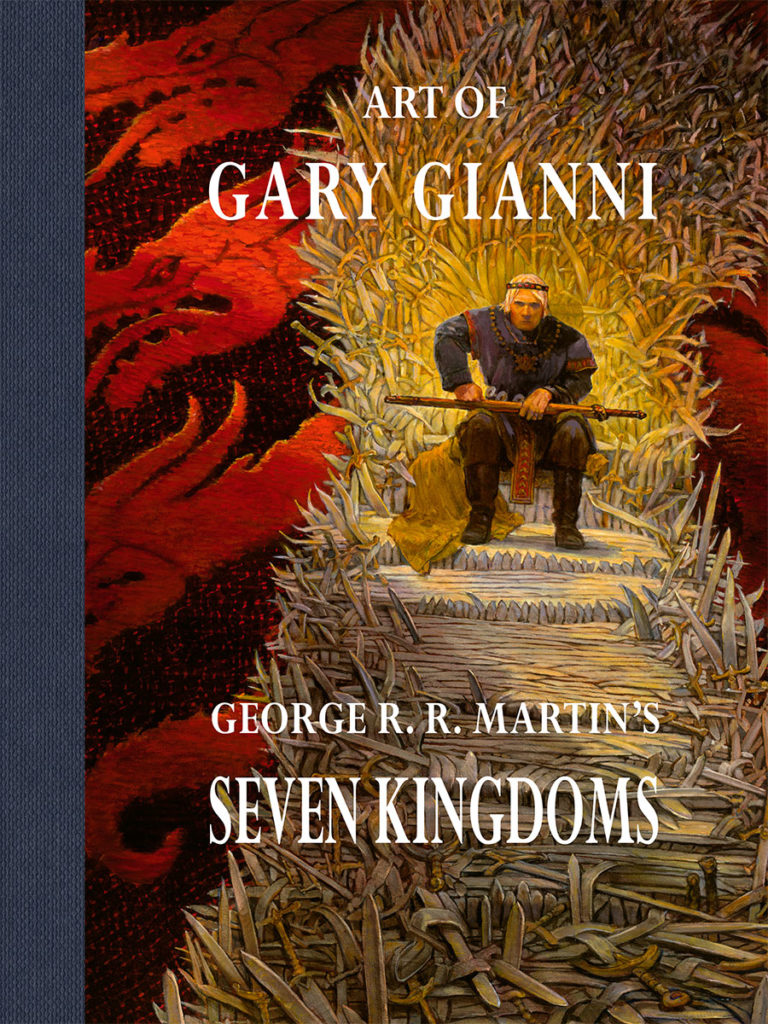
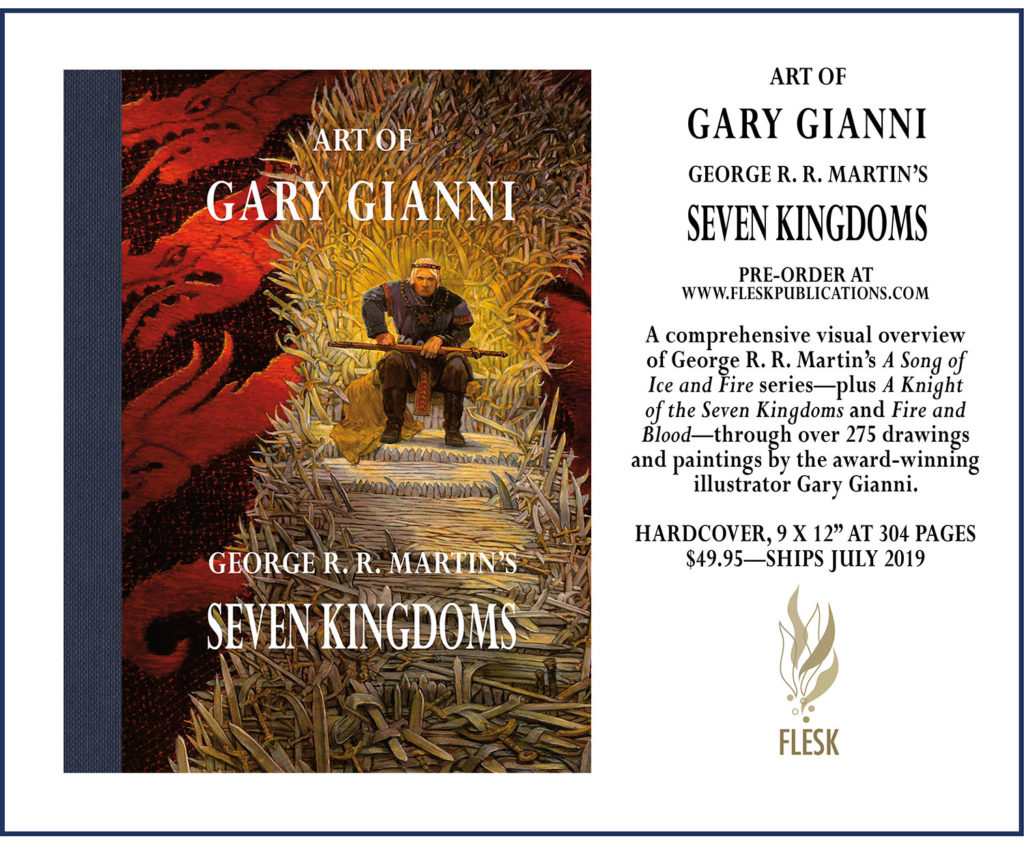
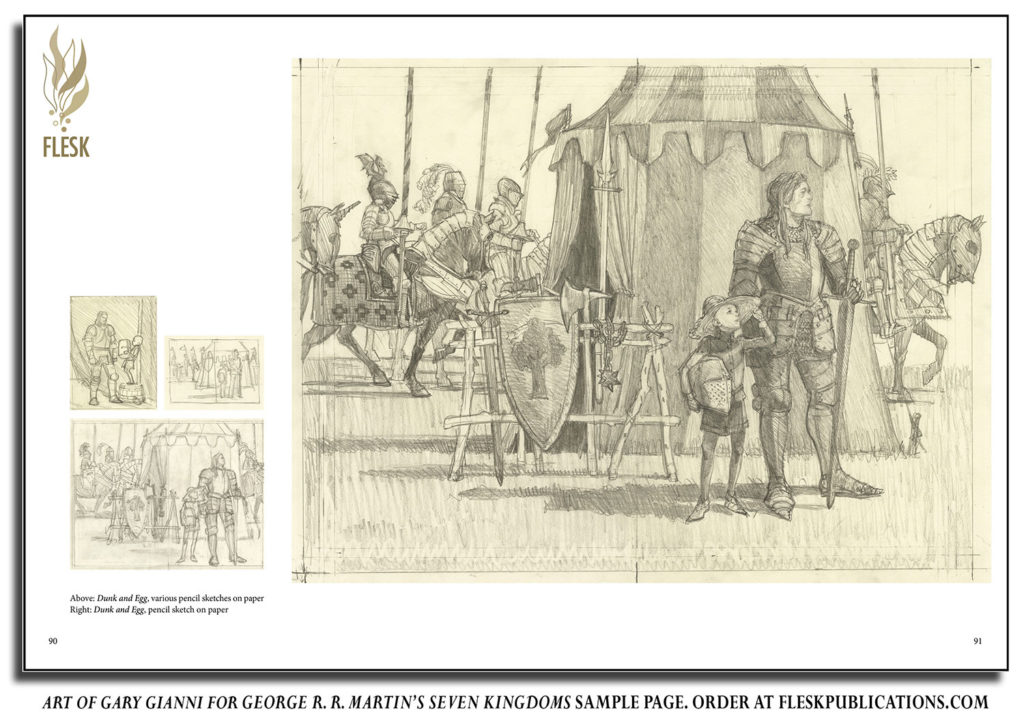
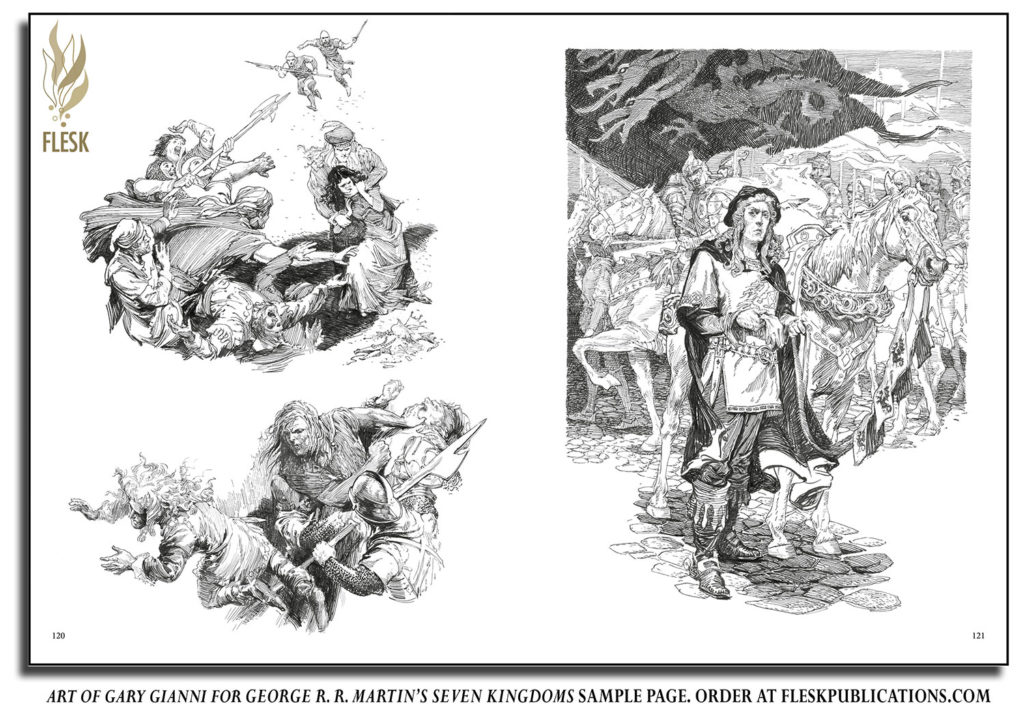
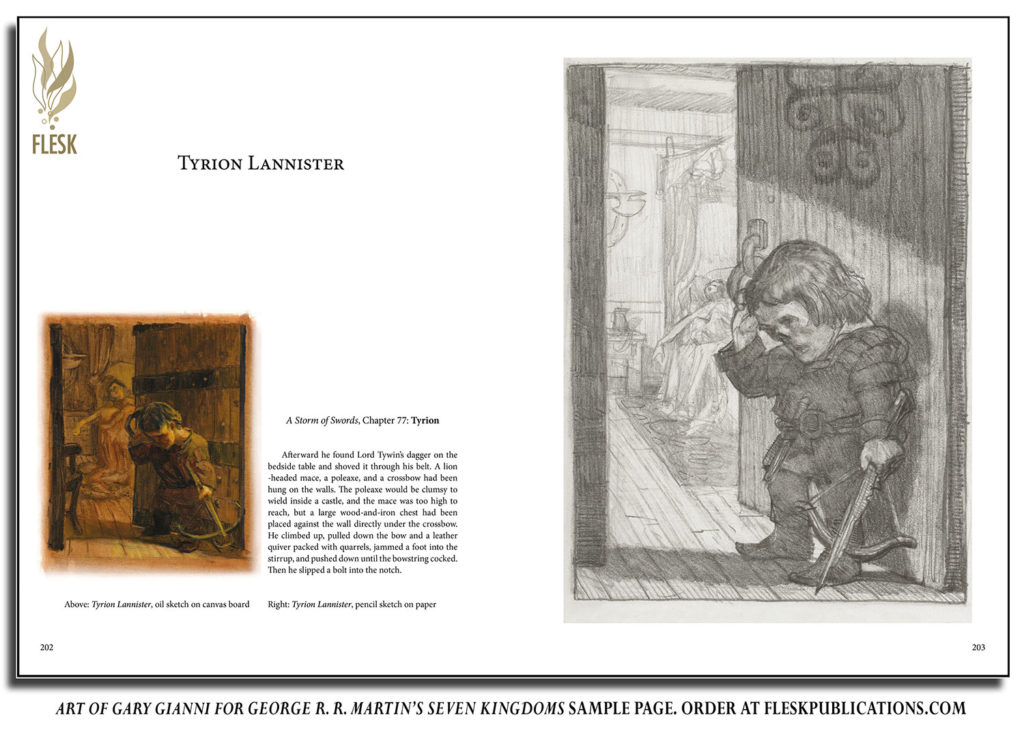
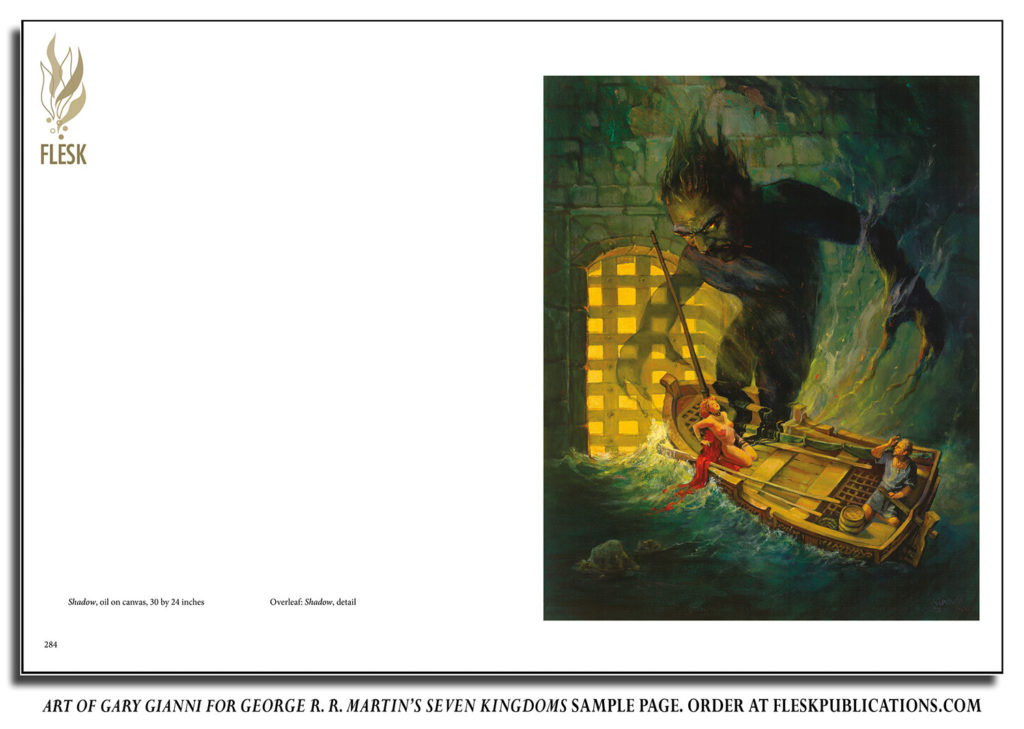
A comprehensive visual overview of George R. R. Martin’s A Song of Ice and Fire series—plus A Knight of the Seven Kingdoms and Fire and Blood—through over 275 drawings and paintings by the award-winning illustrator Gary Gianni.
Art of Gary Gianni for George R. R. Martin’s Seven Kingdoms This new premium art book is now available for pre-order at www.fleskpublications.com.
This hardcover edition and signed deluxe edition are only available direct from Flesk.
Shipping in July 2019
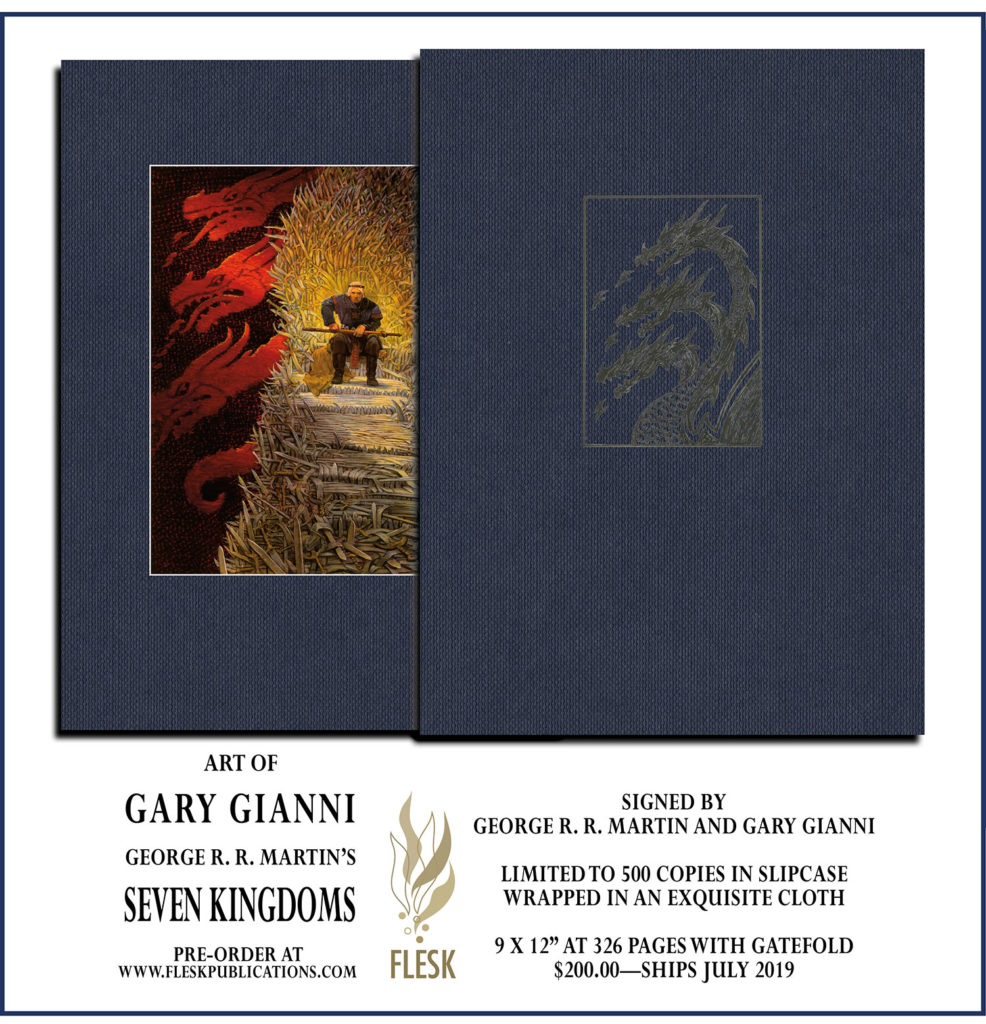
Afterword by George R. R. Martin Introduction by Cullen Murphy Art by Gary Gianni Designed and edited by Marcelo Anciano The Hardcover edition is 304 pages The Deluxe signed edition is 326 pages and includes a gatefold 9 x 12 inches Over 125 pen-and-ink drawings Over 100 pencil drawings 19 paintings, plus color studies $49.95 — Hardcover ISBN: 978-1-64041-022-0 $200.00 – Deluxe edition signed by George R. R. Martin and Gary Gianni ISBN: 978-1-64041-023-7
About the Deluxe Signed Edition: The deluxe edition comes signed by author George R. R. Martin and artist Gary Gianni on a unique signature page that is highlighted with the reproduction of a pen-and-ink drawing by Gianni. This version is limited to only 500 copies in slipcase. It features a bonus 22-page section with a gatefold highlighting bonus artwork that is reserved specially for this edition. This premium hardcover book with slipcase is wrapped in an exquisite custom-ordered cloth. The front side of the book is treated to a color plate that reproduces a new oil painting by Gianni. This special edition is receiving the full Flesk treatment to serve as a treasured book for the sophisticated collector.
About the Art of Gary Gianni for George R. R. Martin’s Seven Kingdoms
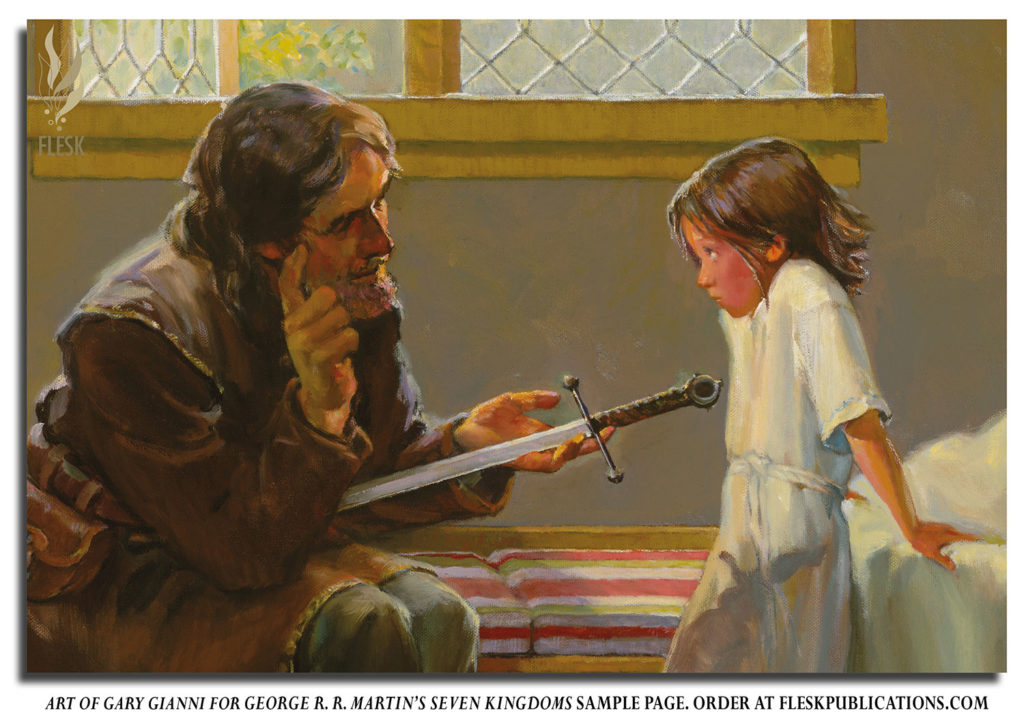
This book contains all of Gary Gianni’s artwork for George R. R. Martin’s A Song of Ice and Fire series. Over 300 pages of beautifully illustrated scenes from the five novels in the series—A Game of Thrones, A Clash of Kings, A Storm of Swords, A Feast For Crows and A Dance With Dragons—are featured alongside passages from the books themselves. Also included are illustrations from the two prequels of the series, A Knight of the Seven Kingdoms and Fire and Blood. All together, the paintings and hundreds of drawings in pencil and pen-and-ink provide a unique view of the Seven Kingdoms of Westeros as seen through the eyes of the award-winning illustrator. Describing Gianni’s artwork, George R. R. Martin says it’s “as if I am looking through a window into Westeros, that I am there with Tyrion and Daenerys, with Ned and Arya, with Dunk and Egg.”
All of Gary Gianni’s previously shown pencil sketches and paintings have been tightened up and polished for this collection, making them appear as new works. In addition, over 35 pencil drawings appear for the first time. The artist draws on his longtime experience in comics and illustration to offer a unique perspective into Martin’s universe.
The book also includes an introduction by Cullen Murphy, who discusses the art of illustration and adds context to the pictures by providing an overview of Gianni’s career. Notes from the artist reveal insight concerning his methods and the creative process of working with Martin, a relationship that has spanned five years to date.
About Gary Gianni:
Gary Gianni began as an illustrator for Chicago newspapers and as a courtroom artist for television. He has received the Eisner and Spectrum awards and has illustrated books by authors ranging from Melville and Stevenson to Robert E. Howard, Michael Chabon and Ray Bradbury. His comics include The Shadow with Michael Kaluta, Batman with Archie Goodwin, Tom Strong with Alan Moore and Indiana Jones. He is also known for his own mystery comic book The MonsterMen. Gianni teamed up with Mike Mignola to craft the graphic novel Hellboy: Into the Silent Sea, and he drew the syndicated newspaper comic strip Prince Valiant with Mark Schultz for eight years. Gianni has produced the paintings for George R. R. Martin’s A Song of Ice and Fire calendar as well as illustrations for Martin’s novel A Knight of the Seven Kingdoms. He continues to work with Martin to illustrate future collections.
About George R. R. Martin:
George R. R. Martin sold his first story in 1971 and has been writing professionally ever since. He spent ten years in Hollywood as a writer-producer, working on The Twilight Zone, Beauty and the Beast and various feature films and television pilots that were never made. In the mid-’90s he returned to prose, his first love, and began work on the epic fantasy series A Song of Ice and Fire. He has been in the Seven Kingdoms ever since. Whenever he’s allowed to leave, Martin returns to Santa Fe, New Mexico, where he lives with the lovely Parris and two cats named Augustus and Caligula, who think they run the place.
About Cullen Murphy:
Cullen Murphy is the editor-at-large of The Atlantic. For twenty-five years he wrote the comic strip Prince Valiant, working with his father, the illustrator John Cullen Murphy. He is the author of Cartoon County: My Father and His Friends in the Golden Age of Make-Believe.
Frank finished the last piece of art for the book on March 21st. Kathy and I then ran our series of final checks and delivered it to the printer on March 24th. The printer has already output the proofs and sent them to me. They should arrive any day now. The book will go on the press as soon as I review and approve the proofs.
The printer gave me a tentative shipping date of mid to late June for its arrival in our warehouse, depending on any customs or dock delays. This would start to put the book in your hands in early July since we will begin to ship immediately once they arrive. That’s a little later than I initially expected, (sorry for the delay!) but we hope you won’t be disappointed once the book arrives. I’ll update you all just as soon as I learn more.
I want to thank you all again for your patience and support. Frank truly outdid himself on this book. The final eight pieces of art that he completed over these last two months are stunning. We can’t wait to get this book into your hands.
Spectrum 26 Awards Recipients! Congratulations to all!
For 26 years Spectrum: The Best in Contemporary Fantastic Art has been celebrating imaginative works by creators from around the world.
The Spectrum Awards Ceremony was held in Kansas City, Missouri on Saturday night, March 30, 2019. Entry was free for all Planet Comicon and Spectrum Fantastic Art Live event ticket holders and exhibitors. Nearly 500 people were in attendance.
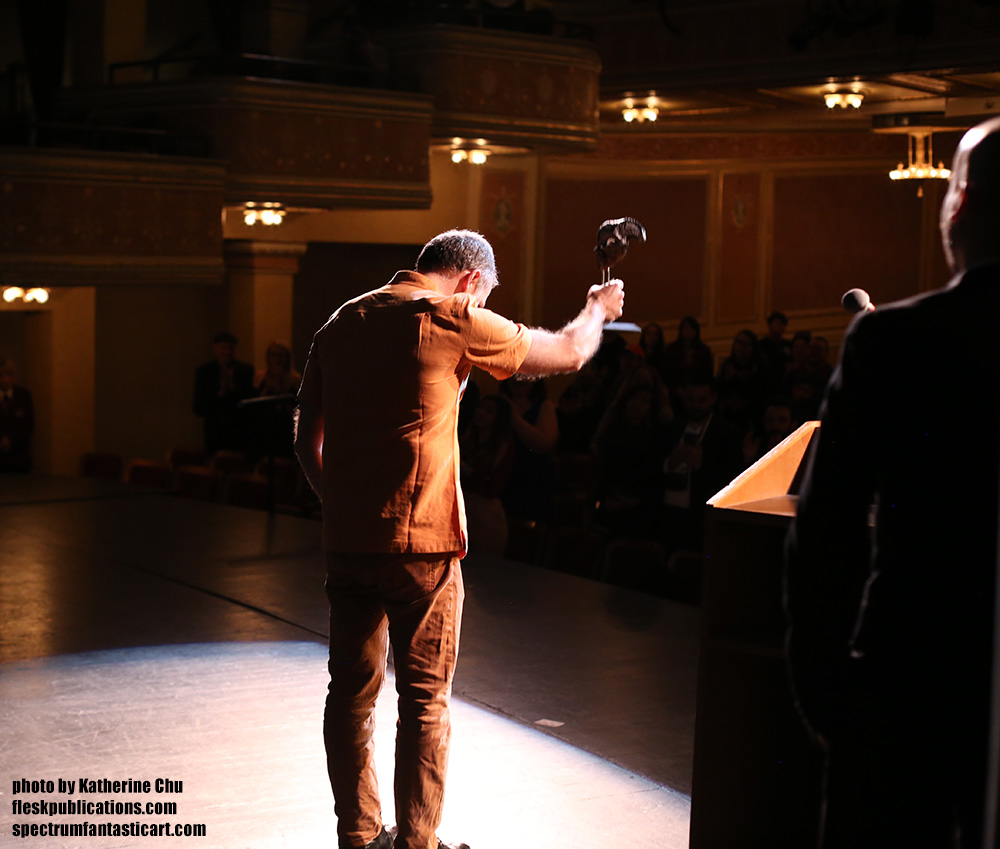
The celebration included the presentation of Gold and Silver Awards for exemplary art from the previous year in eight categories: Advertising, Book, Comics, Concept Art, Dimensional, Editorial, Institutional, and Unpublished. The ceremony was held in the historic Folly Theater. Presenters included such luminaries of the art community as Patricia Briggs (Book category), Bill Carman (Institutional category), John English (Advertising category), Dan dos Santos (Grand Master award), Gary Gianni (Comic category), Cory Godbey (Unpublished category), Iain McCaig (Concept Art category), Colin and Kristine Poole (Rising Star and Dimensional category), and Zoë Robinson (Editorial category). Spectrum founders Cathy and Arnie Fenner introduced a memorial video devoted to the creatives who had passed away in the previous year. Bob Self and Lauren Panepinto served as the hosts during the ceremony. John Fleskes and Katherine Chu offered a thank you speech to close the ceremony, while “Stand Up Magician” Derek Hughes performed during the evening.
The 5 finalists and award-recipients in each category were selected by the jury consisting of Kei Acedera, Wesley Burt, Bobby Chiu, Edward Kinsella III, Colin and Kristine Poole from over 4000 artworks submitted to the twenty-sixth annual competition. Also presented at the ceremony were the Rising Star Award, created and presented by sculptors Kristine and Colin Poole and intended to encourage a young artist, and the Spectrum Grand Master Award which honors the career accomplishments of a living artist. This year’s Grand Master recipient was Donato Giancola, who was present to accept his award.
The Spectrum 26 awards were designed and made by J. Anthony Kosar and his team at Kosart Effects Studio.
The award-winning art will appear with over 500 other pieces selected by the judges in the Spectrum 26 book, which will be published by Flesk Publications in November 2019.
Congratulations to everyone who was nominated and to the recipients!
On January 22, 2009, I
was called into my managers office at Sun Microsystems. I was informed that due
to the economic downturn I was being laid-off. (Thousands of people lost their
jobs that day.) I remember the meeting vividly. I did everything that I could
to not break into a big smile. In my mind I was doing cartwheels of joy out the
front door of the office building. I was free to pursue publishing full time. A
plan that was put into place in the fall of 2001 had reached fruition. I went
home, sat at my computer and worked on the Al Williamson Flash Gordon book
without any fear or worry about hunting down a new job. On my first day off, I
took my son to Seabright beach and felt the sand and cool ocean air and dreamed
about the future. I didn’t foresee, though, how difficult it would be to launch
a full-time publishing business without the safety net of a salary from my now
absent day job.
This is how it
happened.
In 1997 I was employed by
my good friend, Dick Swan, at his Big Guy’s Comics store in Mountain View,
California. For roughly a year and a half I was working on Wednesday’s for new
comic book day, then also on Fridays and Saturdays. We had a regular customer
named Patrick. The first day that Pat came into the shop he asked me if we had
any Adam Hughes comics. Since I was a fan of Hughes, and that we had one of the
largest comic backstock inventories in the area, I pulled out just about every
mainstream and obscure title that Adam worked on to start off Pat’s collection.
We became friends and I looked forward to his visits when we could talk comics
and artists. In the fall of 1998, I had quit Big Guy’s to move to Santa Cruz. This
had been a big goal of mine for years. Before I left, Pat had told me that he
may have a job position to offer me. I had no idea where he worked, or what
this would involve, but he let me know that he would keep in touch.
During my first few
months in Santa Cruz I was strongly considering a few options for my future. I
had been buying and selling old and collectable books on the side for years,
and the idea of starting my own book business or opening a comic shop were on
my mind. Another option which I was thinking about was becoming a fire fighter
or joining a search and rescue team. These latter options would put into
practice my experiences and knowledge gained while working at the commercial bungee
jumping business for 5 years, Bungee Adventures (this is a whole post in itself
for a later time), and from my years of rock-climbing. Plus, it would give me
an opportunity to help people, which is a huge motivator for me. I was leaning
heavily toward a book business on the side, then fire-fighter as my day job.
Then, in October or
November of 1997 I received a call from Pat that he would like me to come in to
his work and meet his colleague, Colleen. The two of them managed a group
together. As I drove in from Santa Cruz to Cupertino to meet with them I had no
idea what the significance of this moment was about to place on my life. Pat
and Colleen managed the Java Sustaining engineering team at Sun Microsystems.
At the time there was only eight people in the group. I was being brought in to
be a Quality Assurance (QA) tester for the Java Development Kit (JDK) and Java
Runtime Environment (JRE). As the engineers would create a patch (to fix a reported
bug) for Java, a pair of us would run a series of stress tests to verify that
the patch corrected the reported issue.
I had no college degree
and had a very basic understanding of computers. I had no idea what Java was,
or why people would be shy when this guy James Gosling would walk by. (Inventor
of Java, if you did not know.) I was teamed with an incredibly brilliant
engineer, teacher and mentor there, Selvi, who was patient with me and guided
me as I learned the basics of the tech on hand and the corporate work
environment.
I was brought in as a
contractor. I had three months to prove myself. If I did well, I would be
converted to an employee. If Pat was wrong about his gut feeling about me, I
would be let go. I had three months to learn everything that I could about
Java, Sun Microsystems, computer software and hardware (primarily for Sun, PC/Windows,
and Mac platforms), Solaris (including Unix and Linux), the corporate world, basic
scripting, you name it! Whatever Pat saw in me to take me from a comic book
shop to sticking me in the Java sustaining group was something I did not see in
myself. I ended up being there for 10 years and two months.
Just a couple of years
after I started working at Sun, in 2001, I began working on my first book Franklin Booth: Painter with a Pen. My
passion for books and art needed an outlet. I wasn’t content buying, collecting,
and selling books on the side for fun. (I’ll write a separate long version of
this at some point, but for now I’ll keep this part of the story brief.) I
never intended to be a publisher. I was simply making one book. There was no
big vision to have a line of books, work with living artists, or to even do a
second book. I was just working on the one book. I self-published it, then
decided to work on a book on Joseph Clement Coll for 2003, then a second Coll
book for 2004. By 2005, when I published Mark Schultz’s Various Drawings Volume One I realized that this may actually turn
into something. That’s when the vision of actually being a publisher started to
cement itself. I suppose it was already there in 2001, but now it was tangible
and not just a dream.
As I worked by day at
Sun, I was working nights and weekends on books continuously. The nice thing
about having a day job was that I could channel my salary into the books and
not worry about profits or loses. I was able to learn the publishing business
slowly on the side and let the tree and roots grow into a solid foundation.
While I was at Sun I was working with incredibly brilliant people, so I had growth
by day, and a creative outlet by night. Most importantly my confidence in
myself was growing. It was going well.
By the midpoint of my
decade at Sun I had shifted over from the QA team to the systems administrator
team that supported the Java engineering and sustaining teams. Our sys admin group
managed thousands of computers and dozens of labs. I supported hundreds of
engineers and was fortunate to work with some of the smartest people who I have
ever met.
Our sys admin team grew
from a small handful of people to roughly 15 individuals before layoffs began
chipping away at us. By the time I left there was only 6 of us, and that was
the leftovers from two consolidated teams. It was brutal. As an aside, a year
after I was gone, I saw the news that Oracle had bought out Sun Microsystems on
January 27, 2010. Many of those who I had worked with for years lost their jobs
due to redundant positions. I felt very lucky to make it out and to have publishing
waiting for me.
My first 5 years at Sun
Microsystems I truly enjoyed. I was working hard and thrived in my role. I was
very grateful to be there. I was in a position where I was helping people,
whether it was the Java engineers to test a recent patch, or as a sys admin to
keep the engineers going as we maintained and fixed the labs and machines. We
handled the network, the lab environment, hardware, OS’s–everything that you
could imagine. It was a very diverse job that pulled and stretched you in all
directions. I enjoyed the variety and the constantly shifting duties. It was
perfect for feeding my brain that craves off of challenges, growth and change.
I had eight managers in
ten years. In this order, there was Pat and Colleen, Rose, John, Sheryl, Bruce,
Rajan, and my final manager who I won’t name. Most of these managers were short
term, lasting just a year or less. I worked for Rajan the longest. While I
liked and learned from all of them, (except my last manager), Rajan was my
favorite. He was recommending and prepping me for a management position before
he left, but that plan dissolved when he found a new position with another
company. His direct manager took over our team. This is when things changed
quickly for the worse.
All of my managers I
liked, respected, learned from, and felt privileged to work for, except the last
one. As cold and harsh as the corporate world can be, I always had managers who
supported me, turned me loose to do what I do, and who trusted me to get things
done. I was, for the most part, completely left alone to do my job. That’s when
I thrive. I’ll work to the bone to please my managers, team and those who I
support. But, if you try and assert control over me or don’t support me, I
leave and use it as an opportunity to find something else that motivates me and
where I can thrive mentally. I don’t stay in hostile or negative situations.
My last year at Sun was
painful. Moral was low and stress levels were high throughout the groups due to
the company doing poorly and the economy beginning to tank. I heard through the
grapevine that a new round of layoffs was coming. I made it clear to my final
manager that I was no longer interested in working there. I was essentially
volunteering myself to take the hit. I had Flesk running in the background. I
had something to fall back on. I had a vision to pursue. I wanted to follow my
own passions and utilize my own creativity. I never told anyone, except for a
couple people at Sun that I had a publishing business on the side. I was very
careful to keep Flesk and Sun separate.
Long story short, I was
laid off that January in 2009. I was grateful to be gone, and I was also happy
that the rest of my team could stay and was not laid off. As far as I knew, I
was the only one with a backup plan. I did this since I knew how volatile the
tech industry was. I’d seen dozens of co-workers let go. I knew I needed to
take care of myself since Sun was showing signs of problems. At the same time,
I was never a good fit for the corporate structure.
So, on January 23, 2009
the dream began, but the realities also began to set in. For those who worked
through 2008 and 2009 you will not forget just how tough this period was. For
me, book sales dropped significantly, and book returns were high. Book stores
ordered large quantities that I delivered, then months later the stores would return
mass quantities. I was left with printer bills and piles of boxes of unsold
inventory. Within a year I was seriously in debt and in a tough spot. By 2010 I
took a significant loan and got a little smarter about making decisions. I
believed in myself and thought that if I just kept on working it would all work
out. Then I spent three years essentially chipping away at the loan and debt to
get back to a stable place. I was doing what I loved, but it came with a lot of
stress. None of this was easy, and it was a very difficult time. I made a lot
of mistakes, which is not a crime. It would have been a sin to not get back up
and learn from those mistakes. My passion and determination got me through in
the end.
Benefits to running my
own business included my ability to raise my son, to be with him every day and
not put him in day care. I get to live on my own terms, fail or succeed based
on my own actions, and I get to work with artists and do things for others. I’m
not driven or motivated by money, but instead by doing something that I think
benefits others and that I enjoy being a part of.
Despite all of the
struggles, hardships, difficulties, disappointments, and setbacks—it was all
worth it. I wish it was easier, but I never expected it to be easy. I don’t
expect handouts. I don’t expect anything to be given to me, and I don’t expect
that I should get a pass. I have high expectations of myself, and believe that
I should not feel pity for myself when something bad happens. I think all
experiences are lessons to learn from and to use to move forward to something
better. I see every instance as an opportunity for improvement and that I was
meant to experience it for a reason. That reason is oftentimes unknown to me
for years, but eventually I learn the reason why—even if it’s 5-10 years later.
I have trust in myself that everything will work out and that as long as I
don’t quit or give up, that what I do will make things better for my son, for
others, and for myself. For those reasons (and more) I refuse to quit.
Life has always been
about the journey for me. I love it. The time we have, the options we have, the
chances we get, and the opportunities that are presented to us. I like that I
am just discovering my gifts, and knowing what I can do with them, and how they
will provide opportunities to others who I will never meet.
This is just the
beginning for me. I’m greatly looking forward to the next 10-20 years.
The jury for Spectrum 26: The Best in Contemporary Fantastic Art has nominated the top five artworks in eight categories for consideration for either a silver and gold award. Judges Kei Acedera, Wesley Burt, Bobby Chiu, Edward Kinsella III, and Colin and Kristine Poole debated the merits of hundreds of pieces of art before finalizing this list on Saturday, February 9, 2019 at the Flesk Publications offices in Santa Cruz, California.
Established in 1993 by Cathy and Arnie Fenner, the first Spectrum annual appeared in 1994 from Underwood Books; for over a quarter of a century it has attracted participants from around the world and has set the standards for excellence in fantasy and science fiction art. John Fleskes became the Director and Publisher of Spectrum in 2014 with volume 21.
The recipients will be announced at the Spectrum 26 Awards Ceremony that will be held at the historic Folly Theater in Kansas City, MO on Saturday, March 30, 2019 . The 2019 Spectrum Grand Master Award honoree will also be announced during the ceremony.
Congratulations to all of the artists who have been nominated!
Text only list is followed by the list showing the art.
ADVERTISING CATEGORY
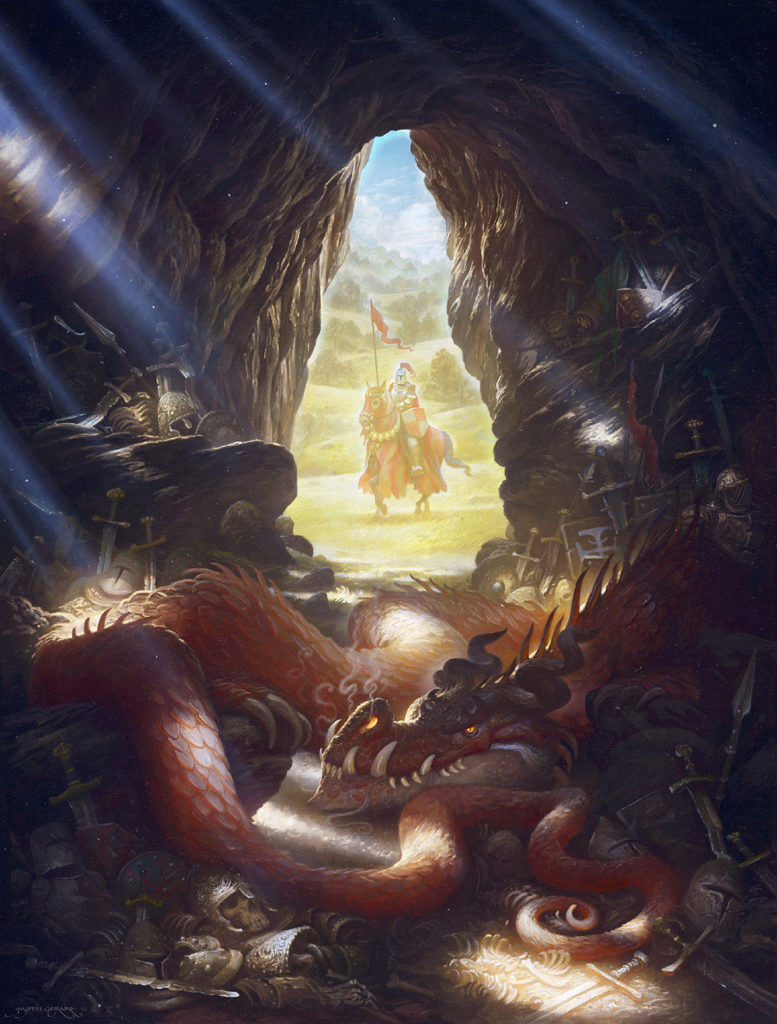
Justin Gerard – Lair of the Firebreather
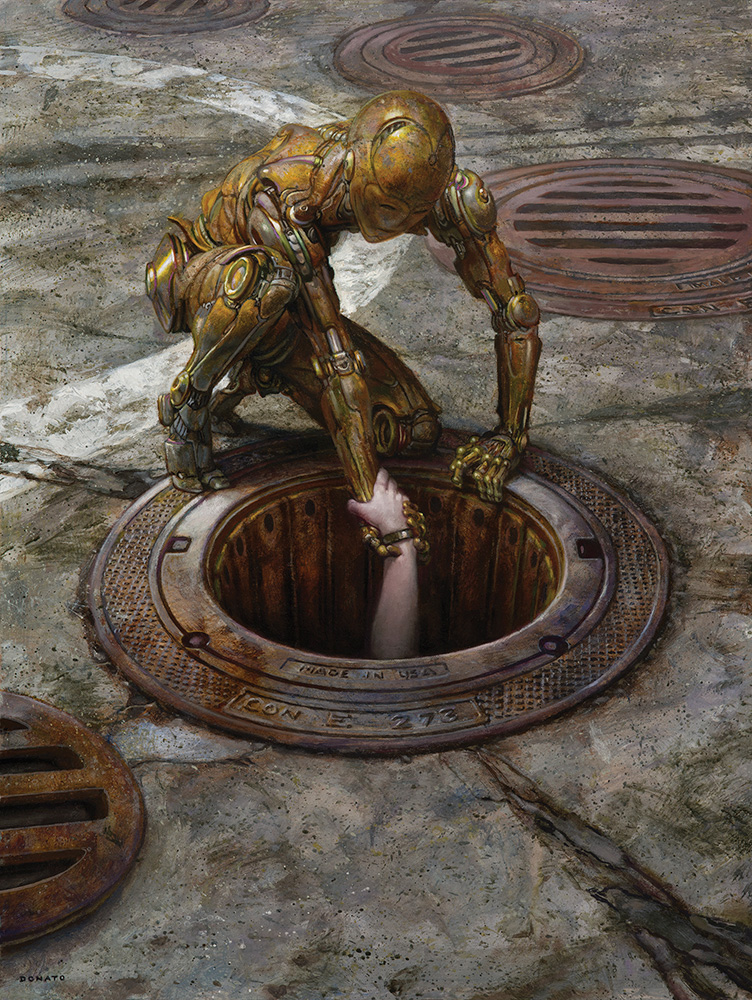
Donato Giancola – Reach
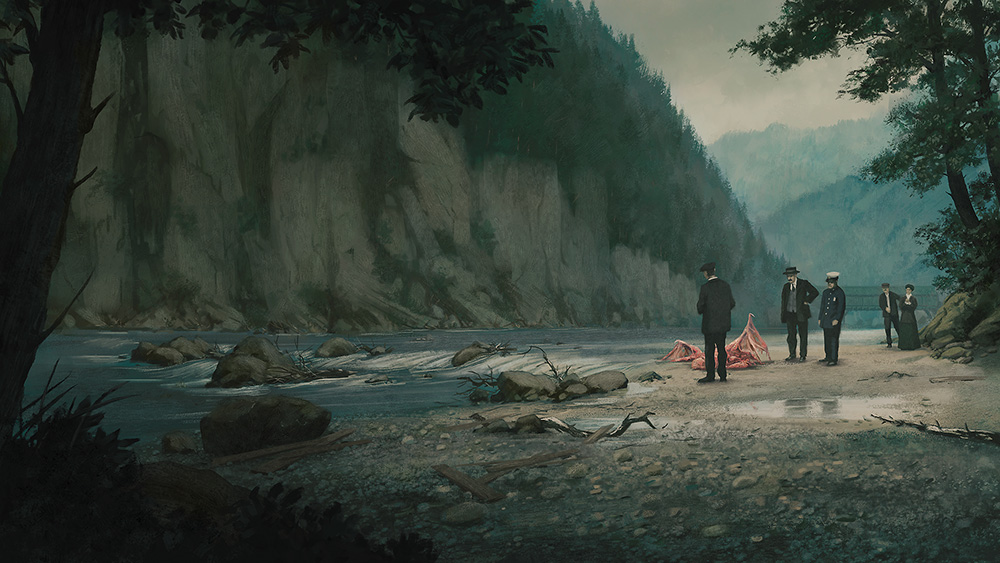
Valentin Kopetzki – After the Flood
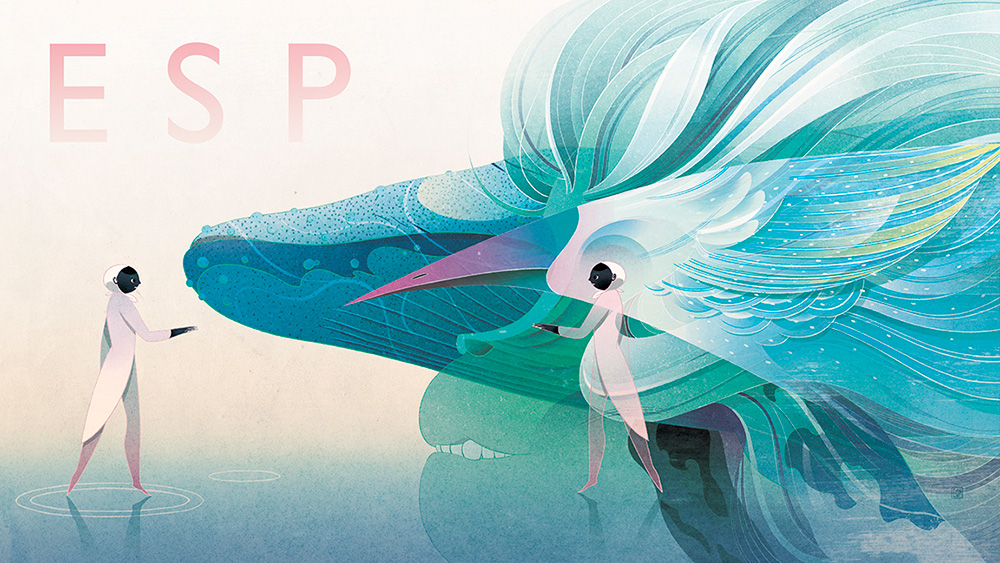
Victo Ngai – Earth Species Project
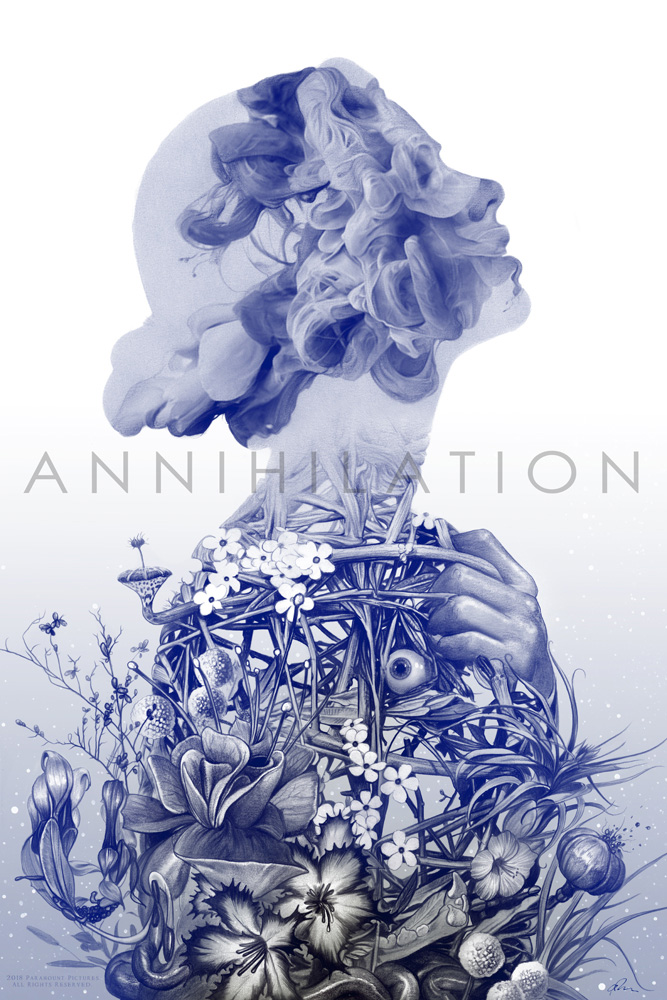
Greg Ruth – Annihilation variant
BOOK CATEGORY
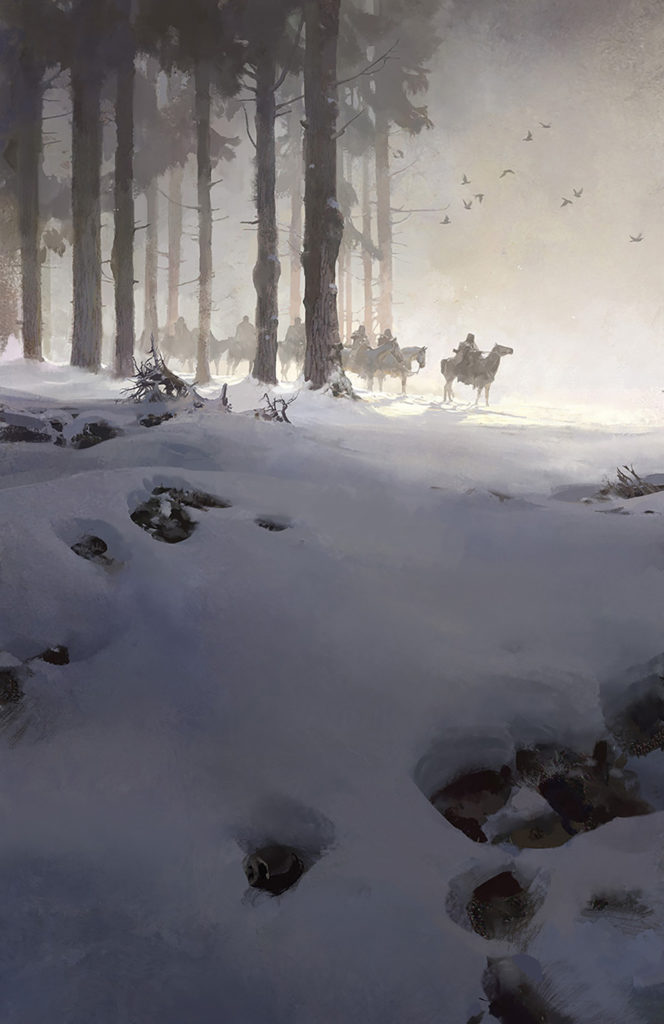
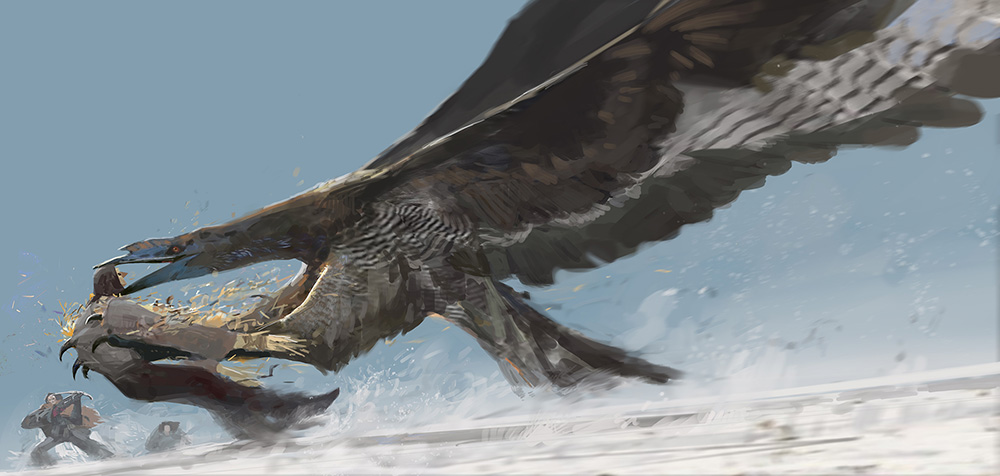
Jaime Jones – Winter Road
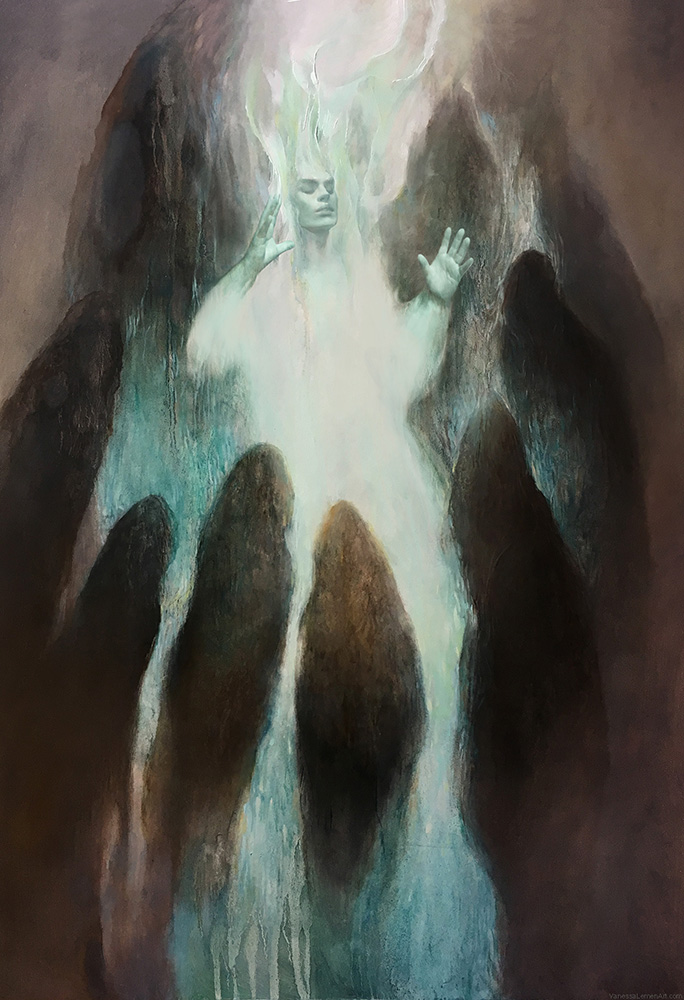
Vanessa Lemen – I am the Light
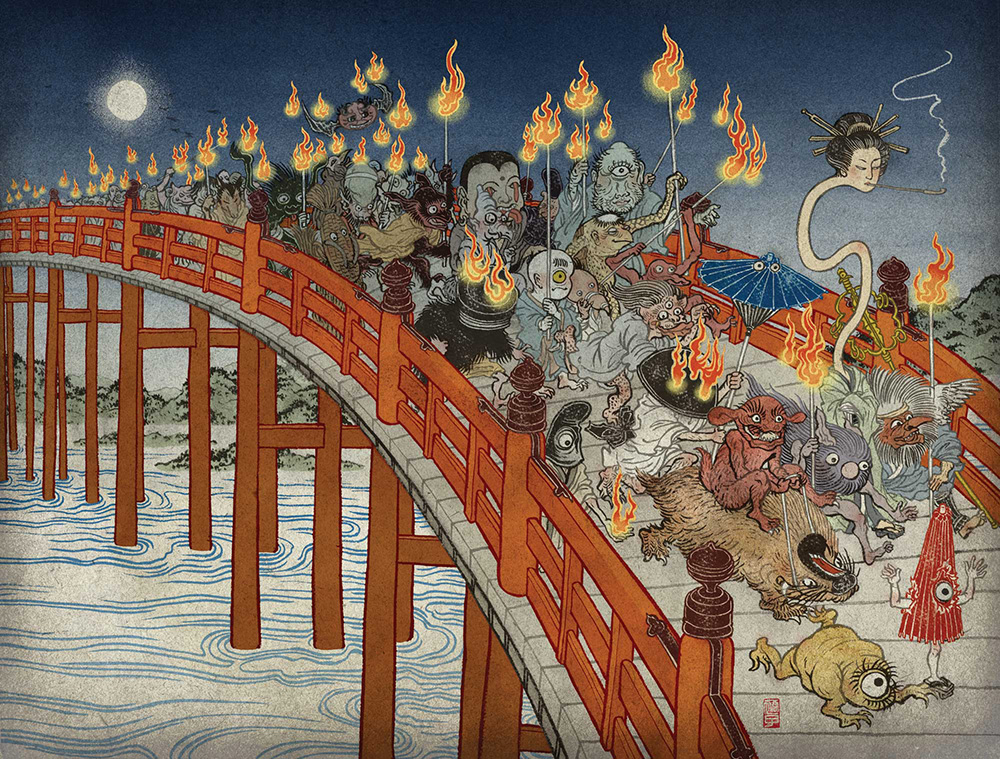
Yuko Shimizu – Japanese Tales 1: The Invisible Man
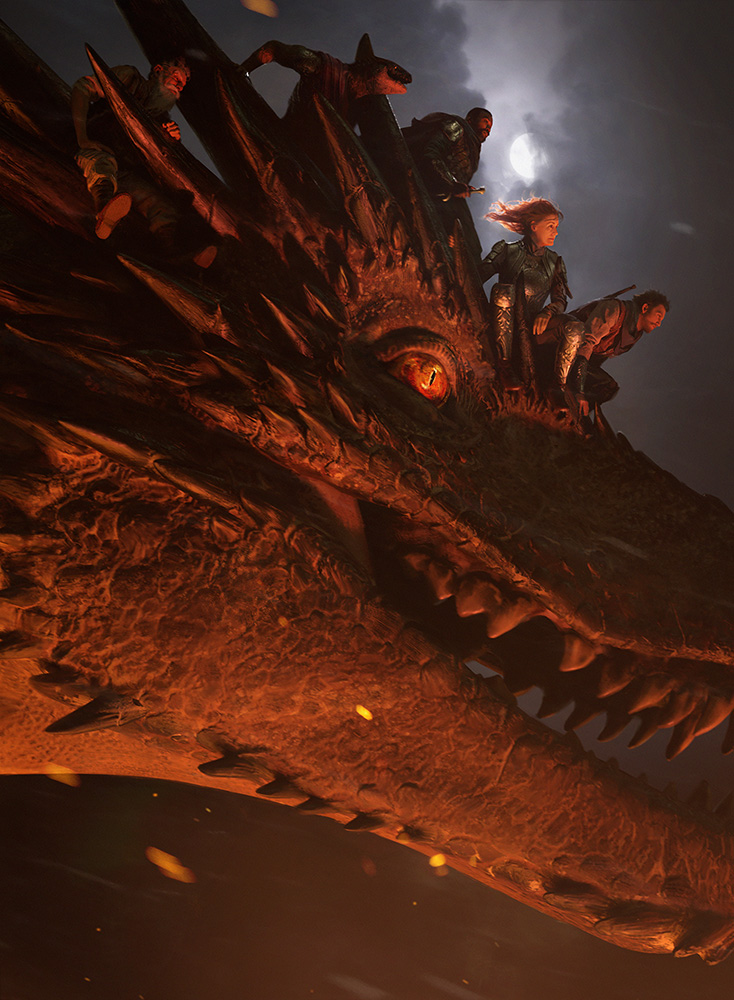
Chase Stone – Dragon Lords: Bad Faith
Francis Vallejo – Charlie Florida
COMIC CATEGORY
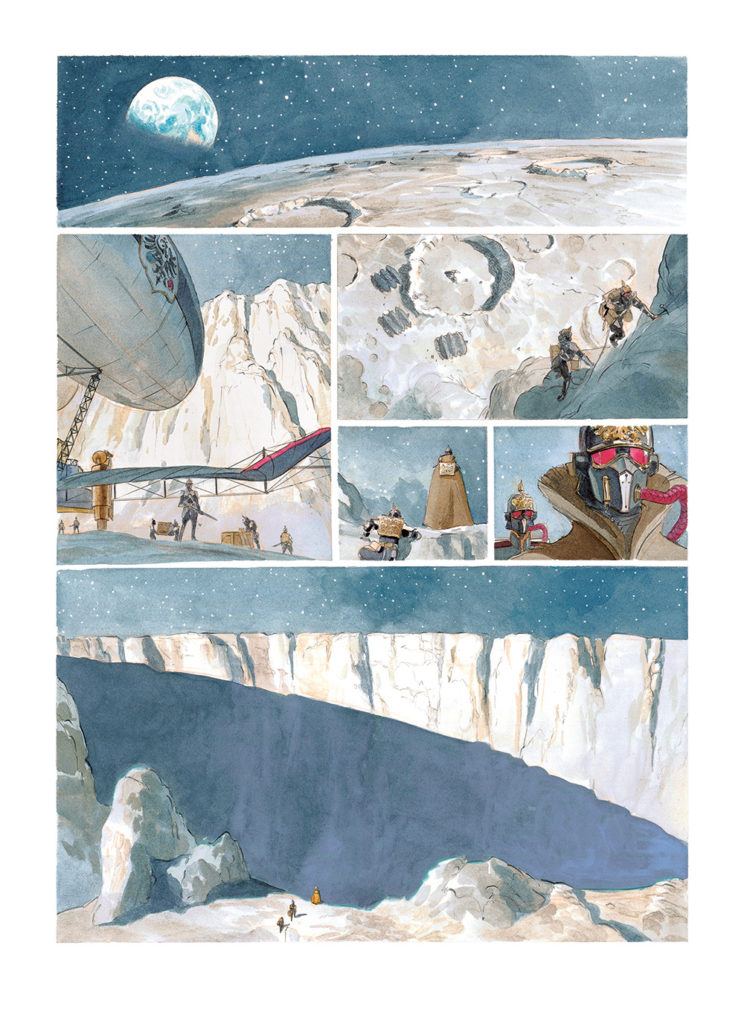
Alex Alice – Castle in the Stars: Book 4, page 1
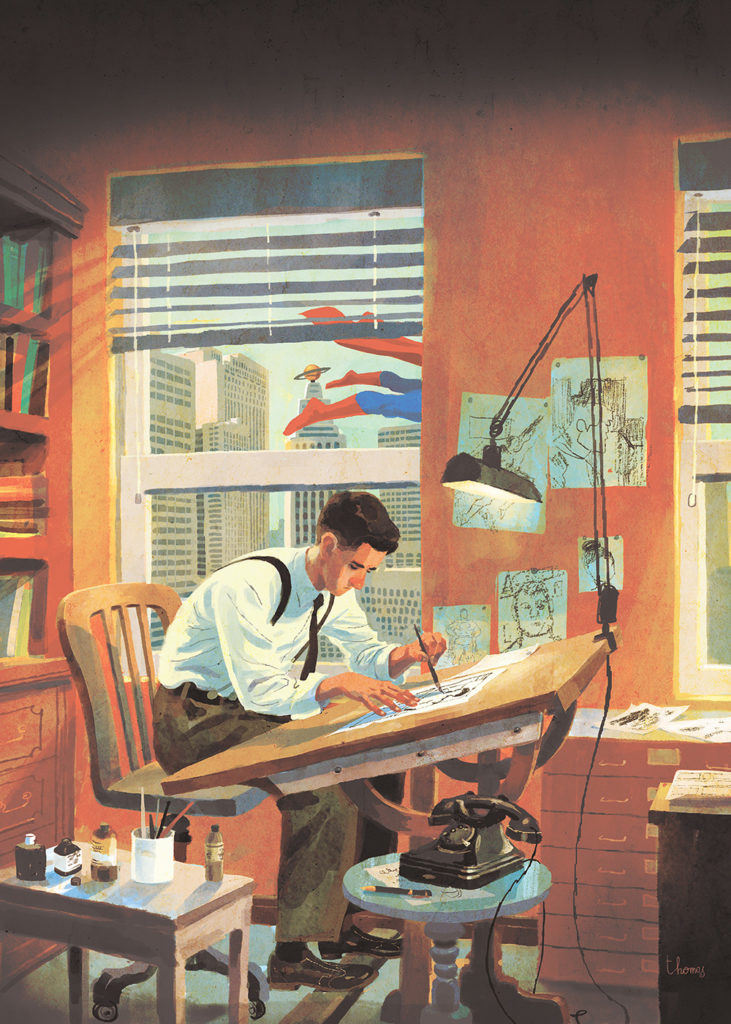
Thomas Campi – Joe Shuster: The Artist Behind Superman cover
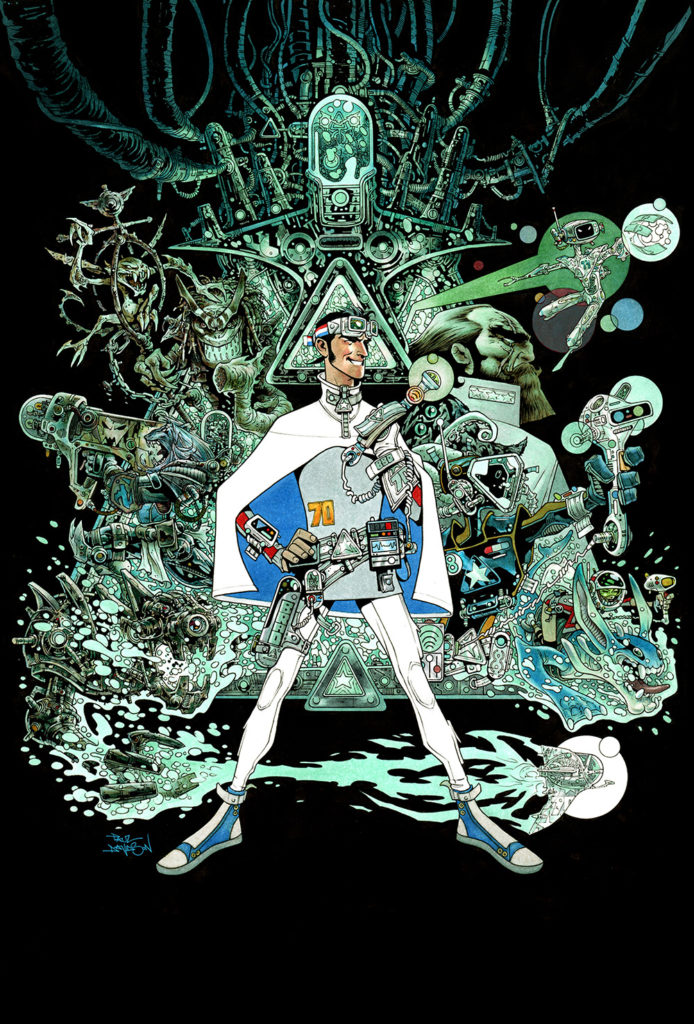
Paul Davidson – Blue Vortex 1
Kang Minjung – Kang Hearts Out 1
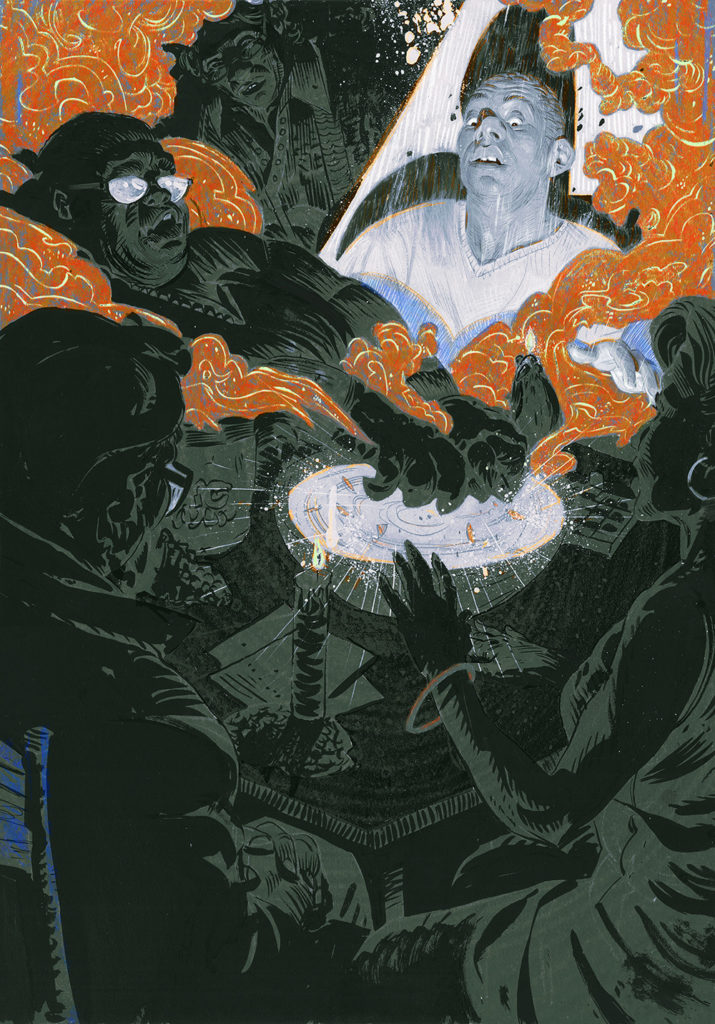
Jeffrey Alan Love – The Thousand Demon Tree
CONCEPT ART CATEGORY
Te Hu – Golden Temple Through Time we Converge: End
Carlyn Lim – Dwarf
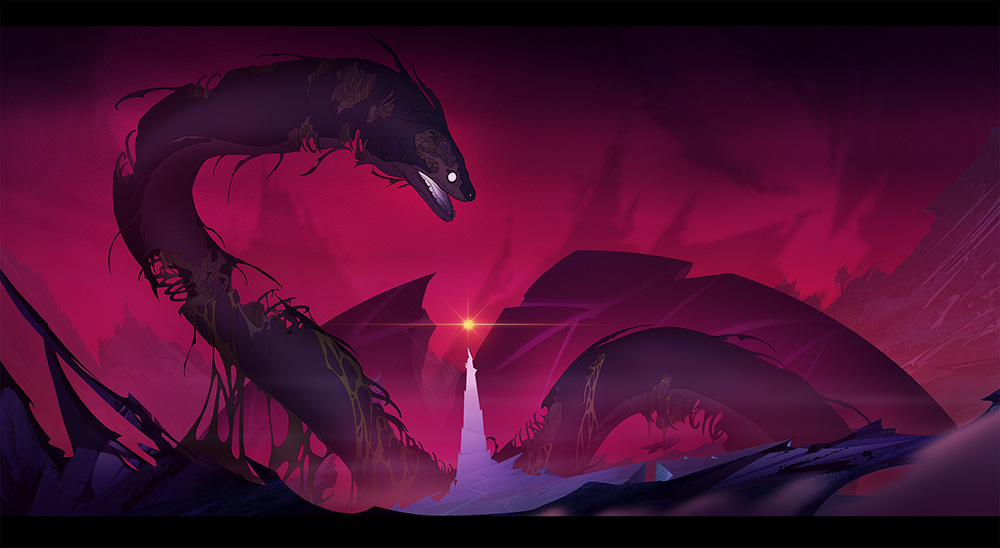
Danny Moll – The Banner Saga 3: Juno in the Black Sun
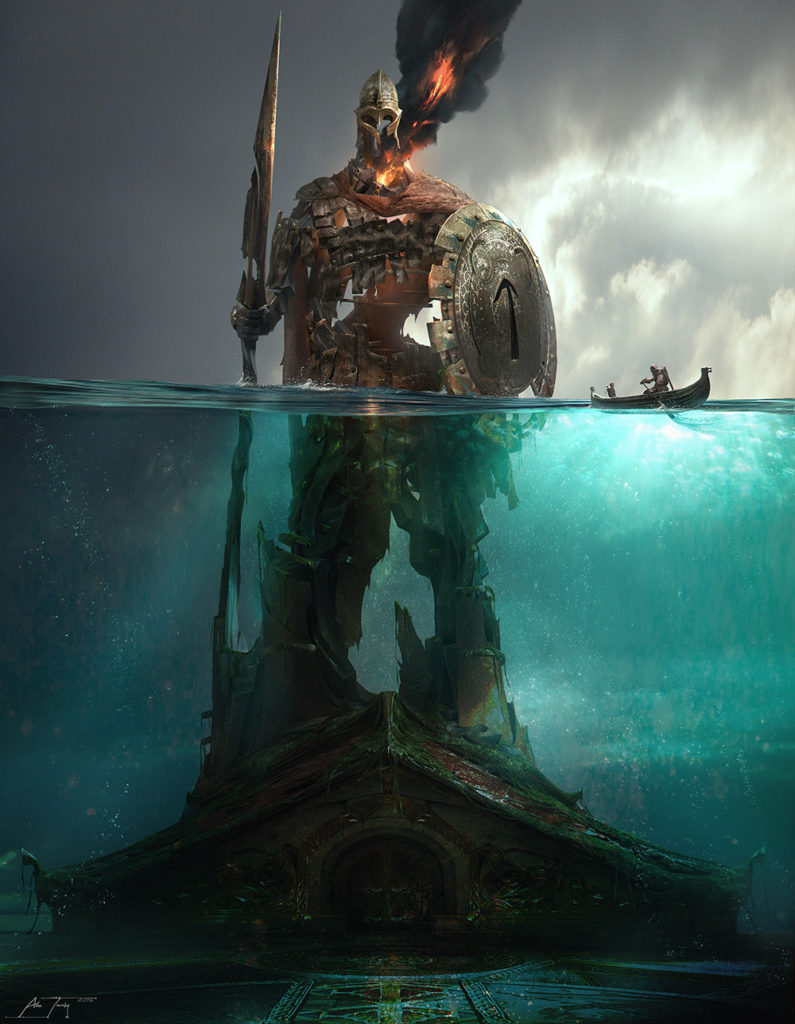
Abe Taraky – Submerged Statue of Tyr
Zhengyi Wang – Big Hunt
DIMENSIONAL CATEGORY
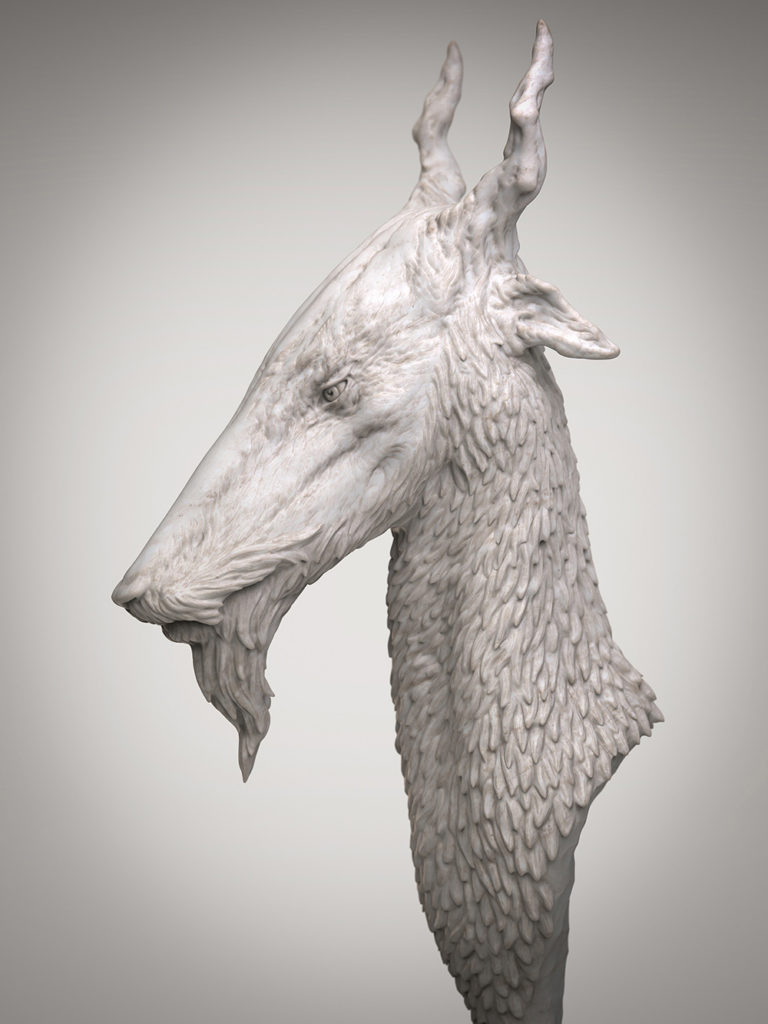
Matthew Corcoran – Vivicus
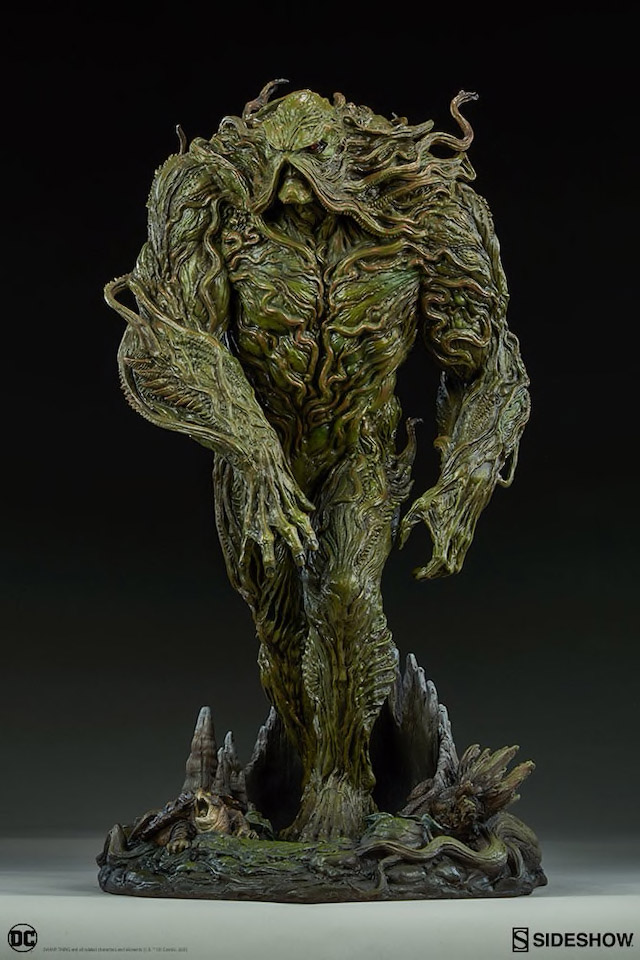
Paul Komoda – SwampThing
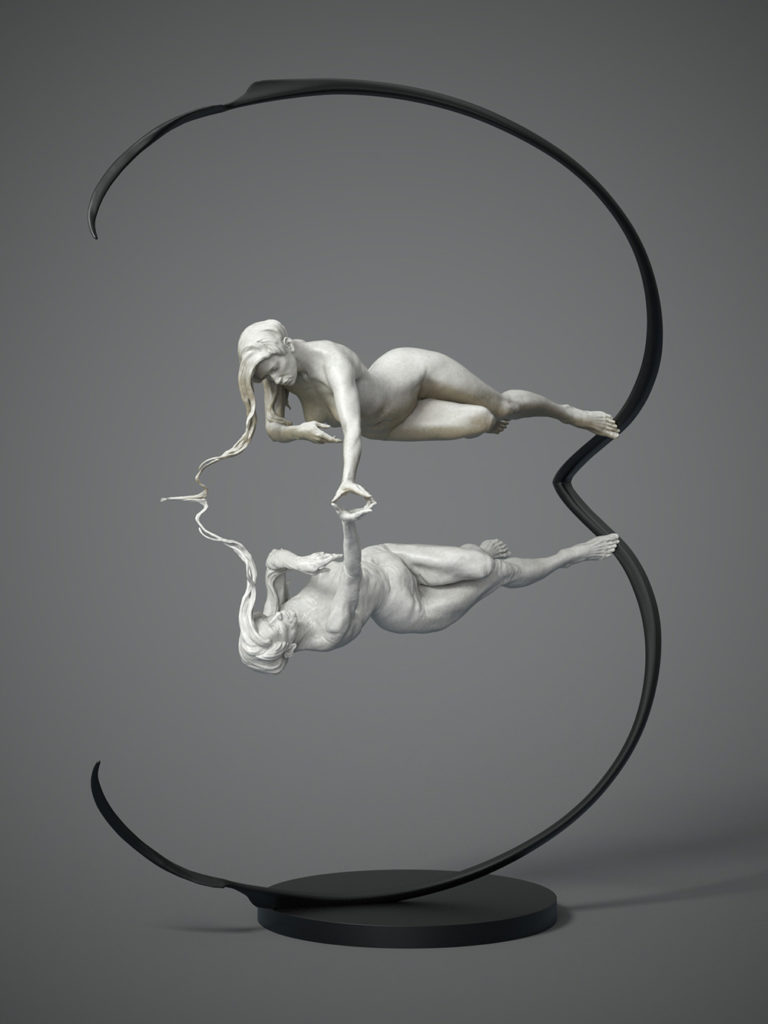
Patrick Masson – Reflection
Mark Newman – Gallevarbe
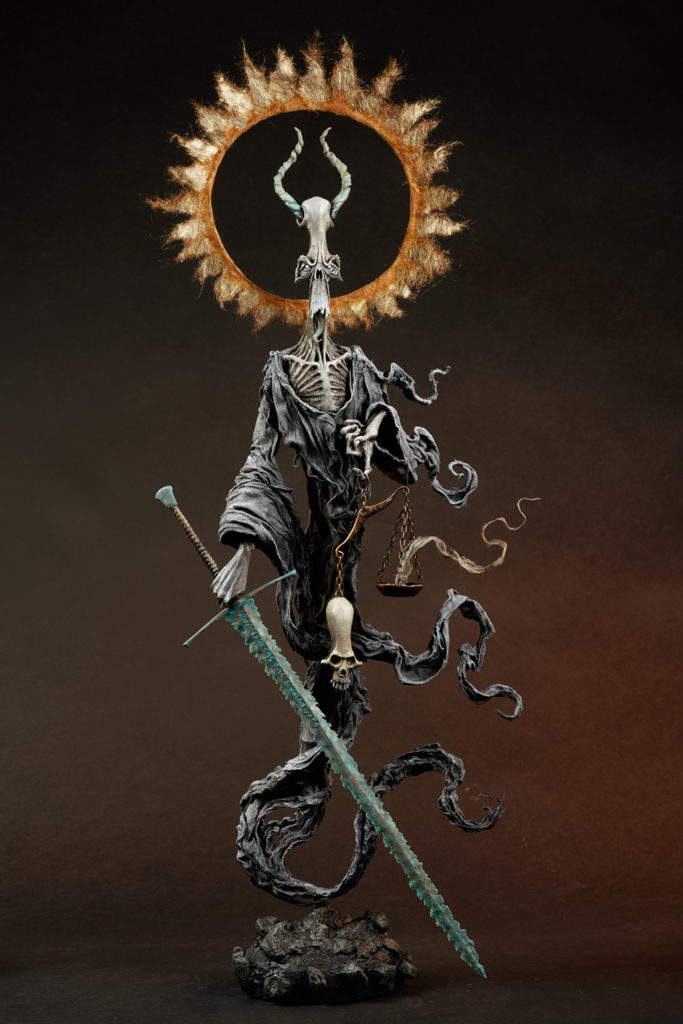
Dug Stanat – Justice
EDITORIAL CATEGORY
Chris Buzelli – Structure
Qiuxin Mao – The Remains
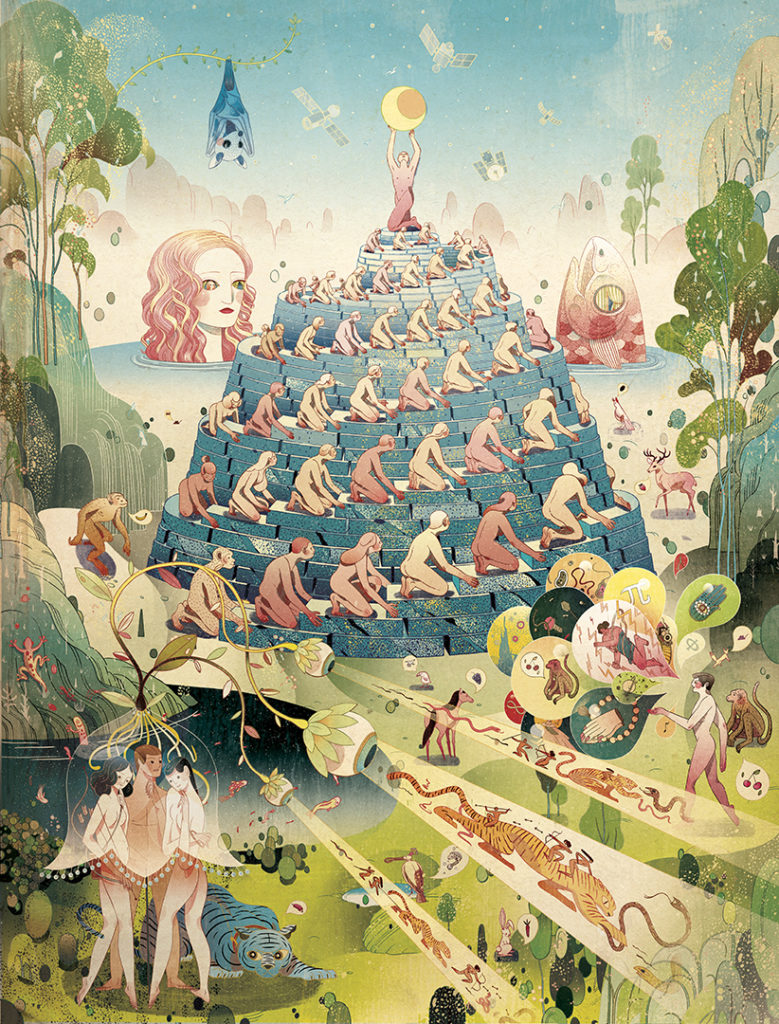
Victo Ngai – Human: Opener
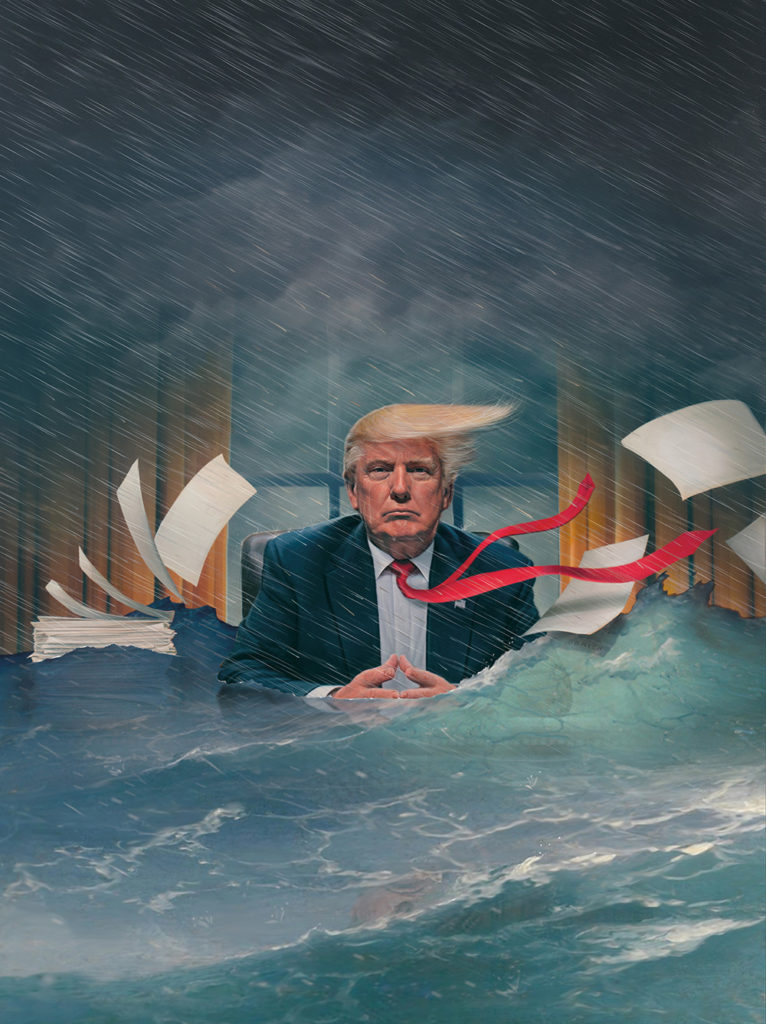
Tim O’Brien – Stormy
Leonardo Santamaria – How to Collect Customer Feedback the Right Way
INSTITUTIONAL CATEGORY
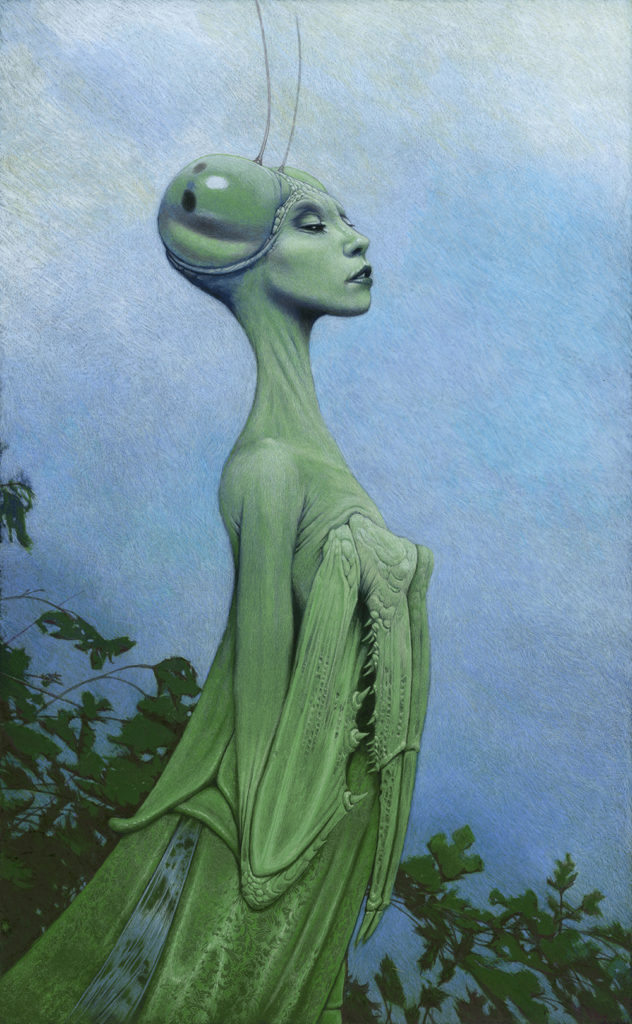
Ed Binkley – Mantis
Bastien Lecouffe Deharme – Etrata
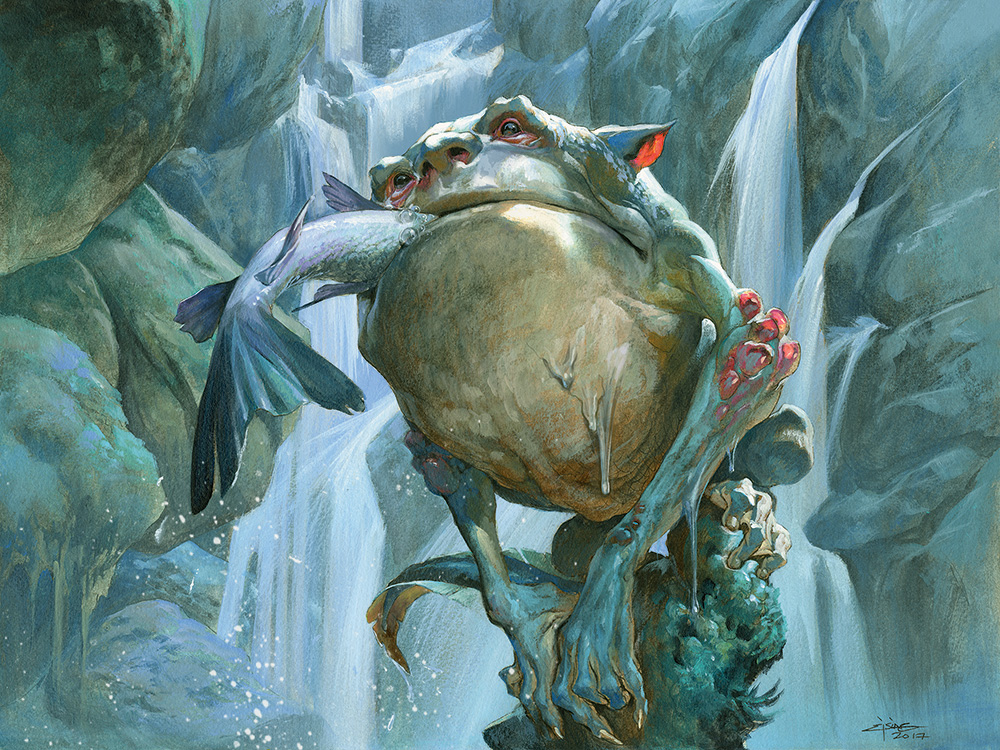
Jesper Ejsing – Slippery Bogle
Tyler Jacobson – Opt
John Jude Palencar – The Nights Watch
UNPUBLISHED CATEGORY
Julien Delval – The Stranger
Konstantin Marinov Kostadinov – A Walk in the Woods
Ronan LE FUR – Sent by the Gods
Eric Pfeiffer – Racing Season in Empire City
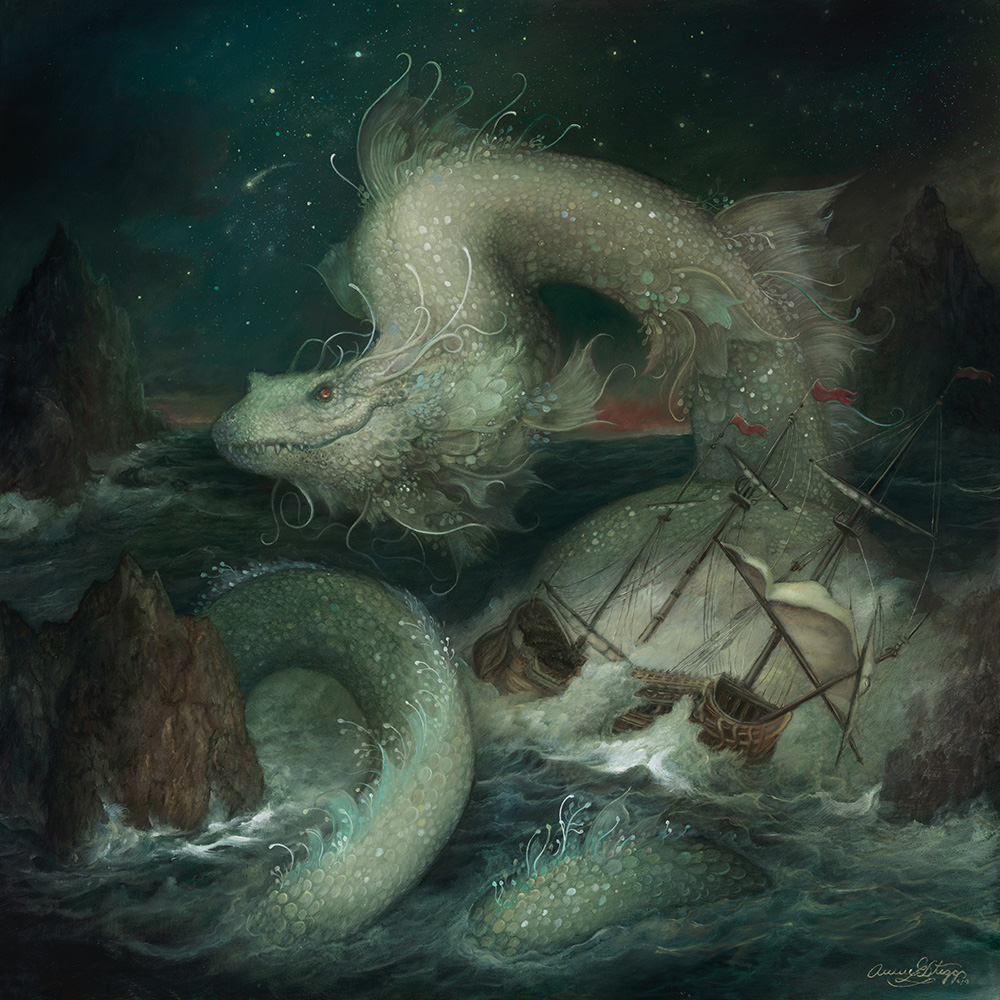
Annie Stegg Gerard – The Serpent
ADVERTISING CATEGORY
Justin Gerard – Lair of the FirebreatherDonato Giancola – ReachValentin Kopetzki – After the FloodVicto Ngai – Earth Species ProjectGreg Ruth – Annihilation variant
BOOK CATEGORY
Jaime Jones – Winter RoadVanessa Lemen – I am the LightYuko Shimizu – Japanese Tales 1: The Invisible ManChase Stone – Dragon Lords: Bad FaithFrancis Vallejo – Charlie Florida
COMIC CATEGORY
Alex Alice – Castle in the Stars: Book 4, page 1Thomas Campi – Joe Shuster: The Artist Behind Superman coverPaul Davidson – Blue Vortex 1Kang Minjung – Kang Hearts Out 1Jeffrey Alan Love – The Thousand Demon Tree
CONCEPT ART CATEGORY
Te Hu – Golden Temple Through Time we Converge: EndCarlyn Lim – DwarfDanny Moll – The Banner Saga 3: Juno in the Black SunAbe Taraky – Submerged Statue of TyrZhengyi Wang – Big Hunt
DIMENSIONAL CATEGORY
Matthew Corcoran – VivicusPaul Komoda – SwampThingPatrick Masson – Reflection Mark Newman – Gallevarbe Dug Stanat – Justice
EDITORIAL CATEGORY
Chris Buzelli – StructureQiuxin Mao – The RemainsVicto Ngai – Human: OpenerTim O’Brien – StormyLeonardo Santamaria – How to Collect Customer Feedback the Right Way
Julien Delval – The StrangerKonstantin Marinov Kostadinov – A Walk in the WoodsRonan LE FUR – Sent by the GodsEric Pfeiffer – Racing Season in Empire CityAnnie Stegg Gerard – The Serpent
Congratulations again to all of the Spectrum 26 nominations!
Spectrum 26 Call for Entries Poster by Tyler Jacobson (detail)
The complete list of artist names selected for inclusion into the twenty-sixth volume of Spectrum: The Best in Contemporary Fantastic Art is now available!
The five member jury selected over 600 works works by 335 artists that will make up Spectrum 26. These creators that work in every style and medium–both traditional and digital–represent the finest in the fantasy, horror, science fiction and the surreal genres from around the world. You will find top industry names who serve as the current definition of excellence and discover the rising stars who are being published for the first time.
Individual emails to those artists accepted will begin to go out this week. Full details regarding the next steps will be provided.
From everyone here at the Spectrum and Flesk offices, we would like to thank all of the artists who submitted to Spectrum 26. We couldn’t do what we do without your support. This includes putting out the Spectrum annual each year, organizing and running the Spectrum Fantastic Art Live event, putting on the Spectrum Awards Ceremony where we hand out the Spectrum awards, and making the artist feature videos that we post online. You have our most sincere gratitude. Thank you!
A
Rob Alexander
Sara Alfageeh
Alex Alice
Evan Amundsen
Eren Arik
Tommy Arnold
Fian Arroyo
B
Daren Bader
Kathryn Beesley
Douglas Bell
Julie Bell
Steve Belledin
Julie Benbassat
Audrey Benjaminsen
Ed Binkley
Steven Russell Black
Chelsea Blecha
Jori Bolton
Paul Bonner
Zoltan Boros
Noah Bradley
Andy Brase
David Brasgalla
Bruce Brenneise
Brom
Lane Brown
Thomas Haller Buchanan
Christopher Burdett
Kirt Burdick
Wesley Burt
Chris Buzelli
C
Rovina Cai
Thomas Campi
Antonio JavierCaparo
Bill Carman
Kai Carpenter
Allan-Diego Carrasco
Robert Carter
Leslie Casilli
Clint Cearley
Milivoj Ceran
Sidharth Chaturvedi
Lynn Chen
Marcos Chin
Frank Cho
Yongjae Choi
Jehan Choo
Dylan Choonhachat
Alex Chow
Dan Chudzinski
Christina Chung
Sebastian Ciaffaglione
Hasani Claxton
Miguel Co
J.A.W. Cooper
Matthew J. Corcoran
Stephanie Cost
D
Sarah Dahlinger
Jessica Dalva
Paul Davidson
Olivia De Berardinis
Andrea De Dominicis
Peter de Steve
Bastien Lecouffe Deharme
Julien Delval
Kring Demetrio
Jieyu Deng
Luc Desmarchelier
Mark Dewes
Peter Diamond
Anna Dittmann
Daniel Dociu
Andrew Domachowski
Dan dos Santos
Allen Douglas
Pierre Droal
Chris Dunn
Crystal Fae
Rita Fei
Lyli Feng
Diego Fernandez
Fesbra
Thomas Fluharty
Jessica Fong
Jon Foster
G
Cosimo Galluzzi
Reinier Gamboa
Su Gao
Axel Rangel Garcia
Caroline Gariba
Shaun Gentry
Annie Stegg Gerard
Justin Gerard
Donato Giancola
Lamnho Giang
Gary Gianni
E. M. Gist
Anke Gladnick
Cory Godbey
Kevin Zamir Goeke
Oleksiy Golovchenko
Lucas Graciano
David Greco
Nicholas Gregory
Julia Griffin
James Gurney
Scott Gustafson
H
Mary Haasdyk
Brian Haberlin
Marie-Alice Harel
Dwayne Harris
Michael C. Hayes
Alex Herrerias
Stephen Hickman
Cleonique Hilsaca
Michael Hirshon
Alexandra Hodgson
Sijia Hong
John Howe
Limei Z. Hshieh
Te Hu
Lu Hua
Robert Hunt
Lake Hurwitz
I
Frazer Irving
J
Tyler Jacobson Mate Jako He Jie (Mona) Jaime Jones Romain Jouandeau
K
Will Kalkanis
MinJung Kang
KARAKTER Design Studio
Gomesh Karnchanapayap
Sam Keiser
Priscilla Kim
Edward Kinsella III
Nic Klein
Chris Knight
Fernanders Koak Chan Sam
Julian Kok
Paul Komoda
Alex Konstad
Michael Kontraros
Valentin Kopetzki
Bartosz Kosowski
Konstantin Marinov Kostadinov
Maxim Kozhevnikov
Svetlana Kudakova
Guido Kuip
Sudarshan Kumar
Anita Kunz
Eelis Kyttanen
L
Luis Lasahido
Mathieu Lauffray
Ronan LE FUR a.k.a DOFRESH
G-host Lee
Doug Lefler
Elizabeth Leggett
Vanessa Lemen
Andrew Leung
Meagan Lillich
Carlyn Lim
Jason Liu
Todd Lockwood
Loopydave
John Loren
Yoann Lossel
Travis Louie
Jeffrey Alan Love
Ashly Lovett
Howard Lyon
M
Lawrence MacDougall
MAD
Elliot Mallon
Greg Manchess
Qiuxin Mao
Victor Marin
Matteo Marjoram
James Martin
Juan Pablo Corredor Martinez
Patrick Masson
Victor Maury
Iain McCaig
Seb Mckinnon
Tara McPherson
Miranda Meeks
Gustavo Mendonca
Eddie Mendoza
Petar Meseldzija
Brett Mich
Victor Adame Minguez
Danny Moll
Ivan Montoya
Allen Morris
Sarah Morris
Jason Mowry
Iris Muddy
Meris Mullaley
Reiko Murakami
Scott Murphy
Sean Andrew Murray
Muhammad Mustafa
N
David Auden Nash
Alexandru Negoita
Greg Newbold
Mark Newman
Yin Shian Ng
Victo Ngai
Tran Nguyen
Terese Nielsen
Irina Nordsol
O
Tim O’Brien
Takeshi Oga
Ben Oliver
Yuta Onoda
Gal Or
P
Roberto Ribeiro Padula
JJ Palencar
David Palumbo
Ryan Pancoast
Dustin Panzino
Richard Pellegrino
Lucas Pina Penichet
Eric Pfeiffer
Ismael Pinteno
Alessandra Pisano
Colin Poole
John Powell
Brian Pratt
George Pratt
Luisa J. Preissler
Jeff Preston
Theo Prins
Q
Shan Qiao
QueenStudios
R
Andrea Radeck
Chris Rahn
Henrique Rainha
Chris Rallis
S. W. Rand
Omar Rayyan
Corinne Reid
Rob Rey
Wayne Reynolds
Brad Rigney
Aaron Riley
Pablo Rivera
Zack Rock
Virginie Ropars
Jakub Rozalski
Feifei Ruan
Steve Rude
Tim Von Rueden
Shawn E. Russell
Greg Ruth
Oliver Ryan
James Ryman
S
Leonardo Santamaria
Dominick Saponaro
Rafael Sarmento
Phil Saunders
Christopher Schenck
Paul Scheruebel
Mark Schultz
Audre Schutte ‘Charamath’
Danny Schwartz
David R. Seeley
Arantza Sestayo
Cynthia Sheppard
Yuko Shimizu
Jessica Shirley
Kaysha Siemens
Douglas Stanat
John Stanko
Stephen Stark
Matthew Stewart
Alex Stone
Chase Stone
William Stout
Paul Sullivan
T
Shaun Tan
Stacy Tang
Abe Taraky
Ken Taylor
John Tedrick
Thom Tenery
Kyriakos Theodossiou
Andrew Theophilopoulos
Allison Theus
Viktor Titov
Paul Tobin
Anthony Trujillo
V
Gavin Gray Valentine
Francis Vallejo
Randy Vargas
Svetlin Velinov
Erin Vest
Armando Veve
Beatriz Martin Vidal
Magali Villeneuve
Johannes Voss
W
David Wachter
Yiyi Wang
Zhengyi Wang
Tatsang Wang
Marisa Ware
Jonathan Way$hak
Owen William Weber
Sam Weber
David Thorn Wenzel
Taylor Wessling
Sam White
Allen Williams
Jeremy Wilson
Stijn Windig
Rob Wood
Sam Woodfin
Ben Wootten
Bayard Wu
X
Zi Xu
Y
Joy Yang
Kieran Yanner
Lixin Yin
Chieh Ying Yu
Z
Mark Zahaczewsky Eytan Zana Amir Zand Luye Zhang Aaron Zonka
Thank you again to everyone who submitted artwork to Spectrum 26 this year! We are excited to present your work to the judges this upcoming Saturday, February 9that our Flesk offices in Santa Cruz. We will be hosting this year’s panel of judges consisting of Kei Acedera, Wesley Burt, Bobby Chiu, Edward Kinsella III, and Colin and Kristine Poole who will be reviewing the Spectrum Call for Entries submissions.
The first phase of the day consists of the judges voting
anonymously on the works they feel have achieved a standard of excellence for
inclusion into the book. A majority consisting of three of more votes from the
five member panel guarantees the art for inclusion into Spectrum 26. This year,
Colin and Kristine will be voting as a pair.
Phase two of the day brings the jury together for a group
discussion to determine the silver and gold awards nominations for each of the
eight categories.
We feel that it is essential to have a group of diverse and
exceptional artists working together to select the art for Spectrum. Together,
they represent all aspects of the art industry and community. This is important
because the jury is an example of what Spectrum stands for: a community working
together to help create a collection of art to inspire others.
We have spent the last few days cleaning our office and
turning into a studio space for our judges. We will have everything set up in
time to welcome the judges and will be excited to share the day’s activities
with everyone during the event as well.