Flesk Update: “Spectrum Fantastic Art Live!” Art Book. The Making of the Book.

I just approved the final proofs for the “Spectrum Fantastic Art Live!” commemorative art book that I edited and designed. There are five artists featured along with an introduction by five different writers to each gallery section. The book opens with an introduction by Cathy & Arnie Fenner and closes with an afterword that I wrote.

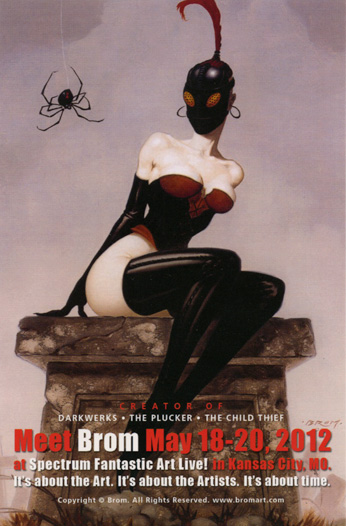
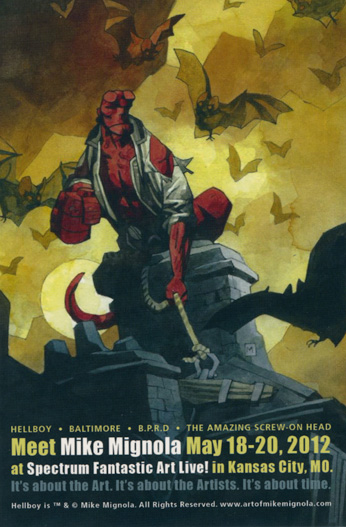
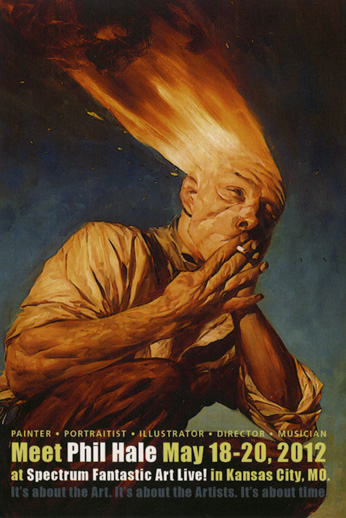
This Spectrum Fantastic Art Live! hardcover collection explores the work of the five special guests at this year’s event: Android Jones, Brom, Iain McCaig, Phil Hale and Mike Mignola. Introductions to each gallery are by industry greats Christopher Golden, Lorne Lanning, Christopher Paolini and William Stout, plus a short interview with Phil Hale by Tray Batey. The book is limited to 2000 copies and it will premiere at Spectrum Fantastic Art Live! in Kansas City, Missouri on May 18-20, 2012.

Since I was working with a dozen people I mapped out every page before I contacted everyone. Then I gave everyone a blueprint in PDF form. I detailed exactly what I needed from each person and provided a due date. The schedule is very important as the “Spectrum Fantastic Art Live!” show is coming up in May and the books have to be there. They can’t show up a day late. The book is done. It is going on the press next week. Then it is a matter of me staying on top of the printer and shipper to make sure they arrive in time.

I spent some time pushing, challenging and driving myself to do something new with the design of the book, when compared with my previous book designs. I felt I really needed to grow. I applied much of what I learned from working with Bruce Timm on the Naughty and Nice book. And I also forced myself to stop answering emails, stop writing blogs and just focus on the book. I get very distracted running Flesk Publications and I had to just shut myself off from the world for a little while and focus on experimenting. This effort added an extra couple weeks to the timeline, but I think it was worth it. I came up with enough new design ideas to apply to the next few books.

The way I started is much in the same way as you see artists draw out thumbnails for book covers or illustrations. I like to use a red or blue pencil, something soft—dull or sharp, it doesn’t matter, and make little two to three inch cover, book spread, title pages and introduction page designs. Like I said before, I rarely have time for this sort of thing but one evening I just sat down and started drawing. Within an hour I had a dozen section spread ideas, a handful of cover ideas and most of the book worked out in miniature form. At this point the book is totally in my head. I never referenced the sketches again. I fine tune any details in my head while running errands, waiting in line at the Post Office, driving to the beach or any other moment that I have a moment to myself.

Another hour to two hour session I spend is going through fonts for the book. Again, it is very hard for me to find this moment focus, but once I do, one to two hours is the most time it takes. I go through hundreds of fonts to find what I am looking for. I never know what font I will choose, or what I really want, but once I see it I know it is the right one. It’s usually very obvious when I see a font and know I want to use it. For all of the non-body text fonts, I wanted to make sure I used selections that I had never used before. Once the fonts were selected, I moved on to designing the book.

As I was designing the cover, I sent my concept to Mark Schultz for his opinion. It’s good to have a guy like Mark to call and run ideas by. It’s fun! Sometimes a ten minute call can result in a good handful of ideas, or cement something in my head I was unsure about. So, I sent him the cover and before I knew it his wife, Denise (a solid artist and designer in her own right) was on the phone to offer ideas. I found myself tweaking the cover as we talked and sending PDF’s through email. I must have sent them fifteen samples with different color variations, font placements, line thicknesses—all very subtle variations to “see” how different ideas would apply to the cover. We had a good time. Before we knew it we had one we all liked the best. There was no arguing or debates, the right cover naturally evolved and we all leaned towards it. A few weeks later I decided to add the burnt paper “look” to replace the flat colors. I spent about three hours making the swatches that are used for the backgrounds on the jacket, but I think it was worth the time. The flat color looked too boring to me and was not harmonizing with Brom’s terrific cover art.

Brom was the first person to get me all of his art and captions, so I started with his section. He gave me more art than I needed so I never felt limited by what would go on each page. This allowed me to design the section by balancing the art on the spreads just how I wanted to. From the start I already knew I wanted every section to have a different feel that represented each artist directly, almost like five chapbooks in one book, and not one single design to run through the whole book. The book does have unity, but each section is unique as well.

By the time I actually start laying out the book in InDesign, if you were to stand over my shoulder and watch you would think I am working very fast. At this point I’m bouncing around the pages and book, adding this, moving that, dumping one idea to start another—I’m on autopilot and am just sticking things in place. It feels very subconscious and I don’t feel that aware of what I am doing. It doesn’t seem like work. I can have music playing, kids screaming, it doesn’t matter. I’m just in the groove. All my preparatory work was done in advance making the actual work seem like a breeze.

Mignola’s section came second. This went fast as well, since I had a very clear vision for how to present his art. I sent it to Mike to look over, took his feedback and made some slight adjustments for the better. It’s very important to me to represent the artists’ energy in the book. Each personality and style is so different from one another and I want to capture some of that uniqueness into the book. It really isn’t about me and my ego. It’s about the artists and the book.

I continued to put together and send each artist their chapters for review. No major changes were made, just little tweaks—mostly by me later on.

Phil Hale requested that he design his section. Sure! I took it as an opportunity for me to learn from him. He sent me a detailed layout for his gallery. I really dug what he sent me. It was very much in line with how I envisioned his art to be showcased. I had studied his previous books so had a good feel for what he would want. He breaks boundaries and really pushes design in subtle, simple and powerful ways. I just love what he did.

I wasn’t too familiar with Android Jones before I started the book. As I worked on his section I grew an intense appreciation for him and his work. He is absolutely amazing! The way he pushes electric art and fuses colors together is unbelievable.

Iain McCaig’s section went together quickly as well. I had a certain idea for his section from the start and ran it by Iain. He sent me some very special pieces. I can’t talk about it yet, but just wait until you see what Iain is sharing with us.

Arnie Fenner suggested Christopher Paolini to write Brom’s introduction. I was crossing my fingers, but not getting my hopes up. I thought he was surely too busy. Turns out I was wrong and Christopher was more than happy to write one. Christopher Golden, another recommendation by Arnie, came through like champ too, writing a piece about Mignola. Lorne Lanning delivered for Android, and William Stout for Iain. Phil Hale supplied an interview extract with Tray Batey. Each is a delight to read and I am grateful to all of these gentlemen for their time and help.

I am very happy with how this book turned out. I was asked last June by Arnie if I would be interested in producing some sort of simple and modest souvenir book for the show. Well, I have a bad habit of taking a simple request and having my way with it. What you will see is something atypical of a souvenir book. In fact I’m not labeling it as such and am focusing on this being a high end art book commemorating the event. At first it was going to be 8.5 x 11 inches at 48 pages. It grew into 64 pages at 9 x 12 inches. I wanted the dimensions to match the Spectrum books and the extra 16 pages added some weight.

I would like to thank Cathy & Arnie Fenner and all of the artists and writers for this opportunity and for their trust.

So there you go–a bit of background information on how the book was made. I’m looking forward to the “Spectrum Fantastic Art Live!” show and having this book available there. See you soon.

Enjoy,

John

John Fleskes
Flesk Publications
Text © 2012 John Fleskes. All rights reserved.

Links:
Spectrum Fantastic Art Live! commemorative art book details
Spectrum Fantastic Art Live! event website
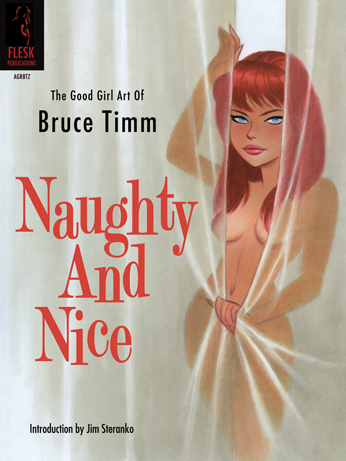
“Naughty and Nice: The Good Girl Art of Bruce Timm” and instant Flesk bestseller!

After Flesk record-breaking sales, Naughty and Nice: The Good Girl Art of Bruce Timm deluxe hardback edition sold out in early February. Our distributors have sold out of the paperback edition as well. A fresh printing of the paperback is scheduled for release in May.

Naughty and Nice represents our largest initial print run for any Flesk book. I knew it would be popular and for it to sell out in the matter of a few short weeks is amazing. All of us at Flesk are celebrating the stellar success of Timm’s book!

Diamond’s January 2012 Previews catalog has announced Naughty and Nice: The Good Girl Art of Bruce Timm as the #1 bestseller in the books section, making this our first bestselling book! Congratulations to Bruce Timm on this well-deserved acknowledgement of a truly stunning collection of work.

I have held on to a small batch of the first printing of the paperback edition which is available for direct purchase on our online store. Furthermore copies will be on hand at our booth at WonderCon held in Anaheim, California on March 16-18. Wholesale requests to the book trade can be made through SCB Distributors and through Diamond Comic Distributors for the comic store specialty market, with copies becoming available through them in late May.

Thanks to everyone who purchased the book! I’ll be working with Timm to have a new limited chapbook ready for Comic-Con International in July.

Enjoy,

John

John Fleskes
Flesk Publications
Text © 2012. All rights reserved.

Links:
Naughty and Nice: The Good Girl Art of Bruce Timm book details
Order Naughty and Nice: The Good Girl Art of Bruce Timm at the Flesk Store

Flesk Publications New Facebook Page

We’re now on Facebook! I’ve wanted to start a page for quite a while now, but have not been able to find the time to get it going. Enter Jonathan Leveck, the latest gentleman to join the Flesk ranks, who has graciously volunteered to build and administer the page on an ongoing basis for us. Thank you Jonathan! He has already been very busy adding news items, book pages and all sorts of cool stuff. Check it out here.

Enjoy,

John

John Fleskes
Flesk Publications

Link:
Flesk Publications Facebook page

“Naughty and Nice: The Good Girl Art of Bruce Timm” Almost Sold Out!

I printed what I thought would be plenty of the new Bruce Timm book to last through the year. Well, I was way off. In just its first full month since we released the book we are almost sold out. As of this writing I am down to 42 copies of the deluxe edition. How long will these last? Eight copies sold today, so you can do the math. I held back on some cases of the paperback to save for WonderCon and direct orders from us. These should be around for a little while longer. If you are looking to eventually get the deluxe edition, or even the paperback, I wouldn’t wait too long. You’ve been warned!

Also, our few remaining copies of the Naughty and Nice Bruce Timm Teaser are gone. This is officially sold out!

John

John Fleskes
Flesk Publications

Links:
Naughty and Nice: The Good Girl Art of Bruce Timm book details
Order Naughty and Nice: The Good Girl Art of Bruce Timm at the Flesk Store

“Spectrum Fantastic Art Live!” Event Commemorative Art Book. Coming May 2012!


Arnie and Cathy Fenner have asked me to produce the commemorative art book for their upcoming “Spectrum Fantastic Art Live!” event happening this May 18-20, 2012 in Kansas City, Missouri. I am thrilled to have been trusted with this project. The Fenners’ have high expectations for anything that carries the Spectrum name; and for good reason. Spectrum is the world-wide phenomenon dedicated to promoting the best in contemporary fantastic art that is the result of their hard work, diligence and smart decision making. I find this pressure inviting as I edit and design this collection.

This 64-page, 9 x 12 inch hardbound keepsake collection will begin with an introduction by Arnie and Cathy Fenner. The focus of this art book will be on the five guests of the show. Each will be showcased with a gallery and accompanied with an introduction by a prestigious member of our fantastic art-loving community.


Brom, with an appreciation by Christopher Paolini.


Mike Mignola, with an appreciation by Christopher Golden.


Iain McCaig, introduction by William Stout.


Phil Hale, with a short interview excerpt from his upcoming art book coming this summer


Android Jones, with a feature by Lorne Lanning.

I’ll have individual biographies for each artist and writer posted on my blog in the near future. It’s an amazing experience to work with this esteemed and respected group. The book will premiere at Spectrum Fantastic Art Live! and be available direct from our website.

Enjoy,

John

John Fleskes
Flesk Publications

Links to official websites:
Spectrum Fantastic Art Live!
Brom
Mike Mignola
Iain McCaig
Phil Hale
Android Jones
Christopher Paolini
Christopher Golden
William Stout
Lorne Lanning

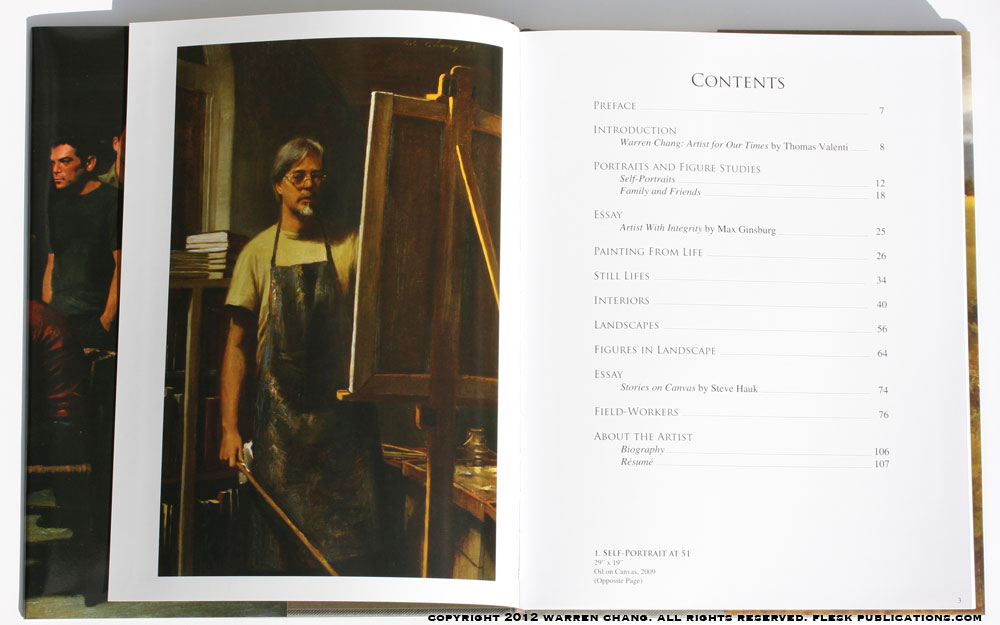
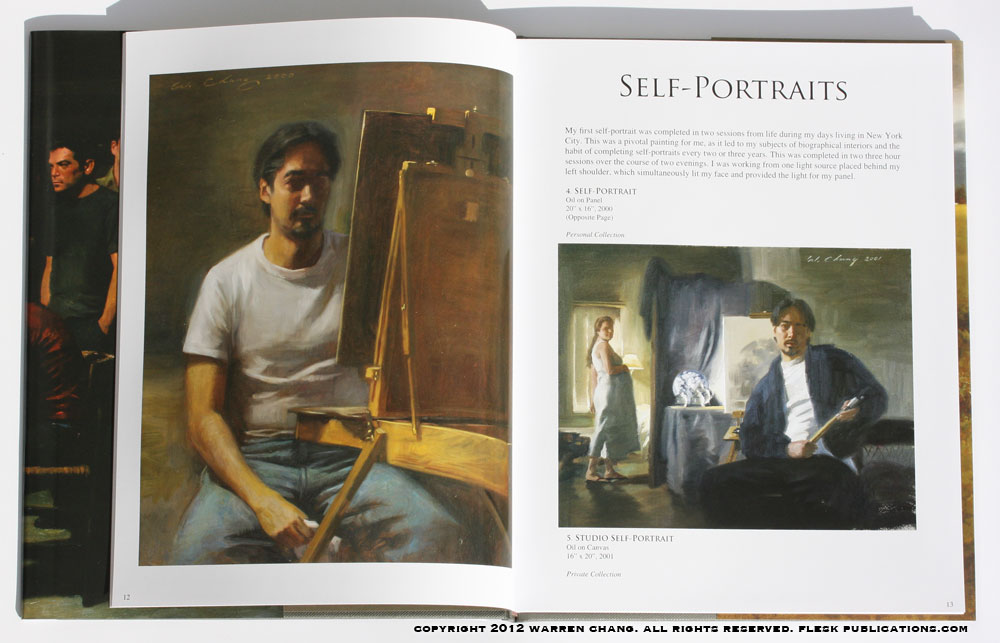
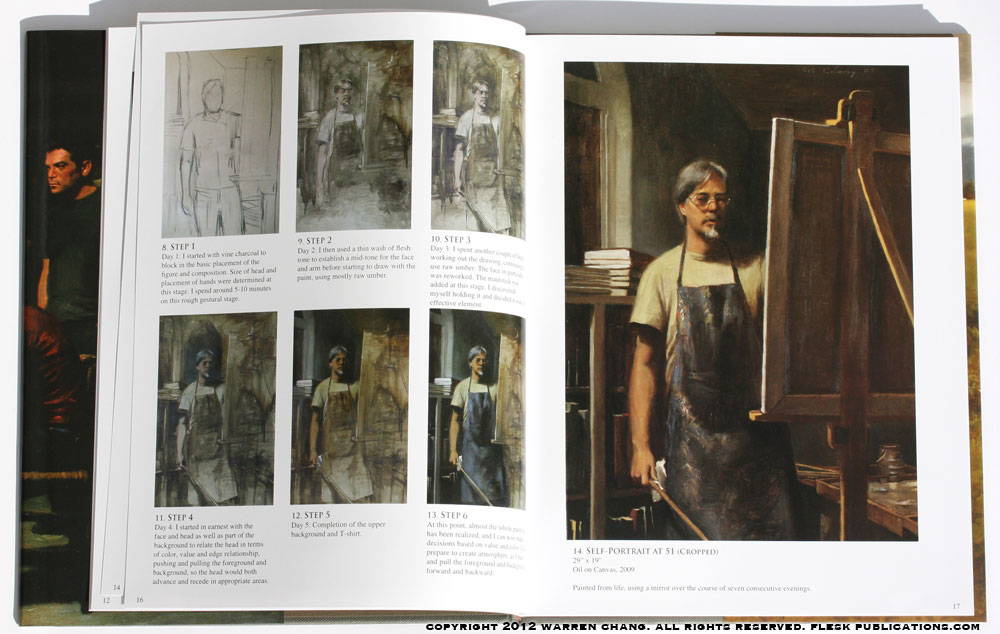
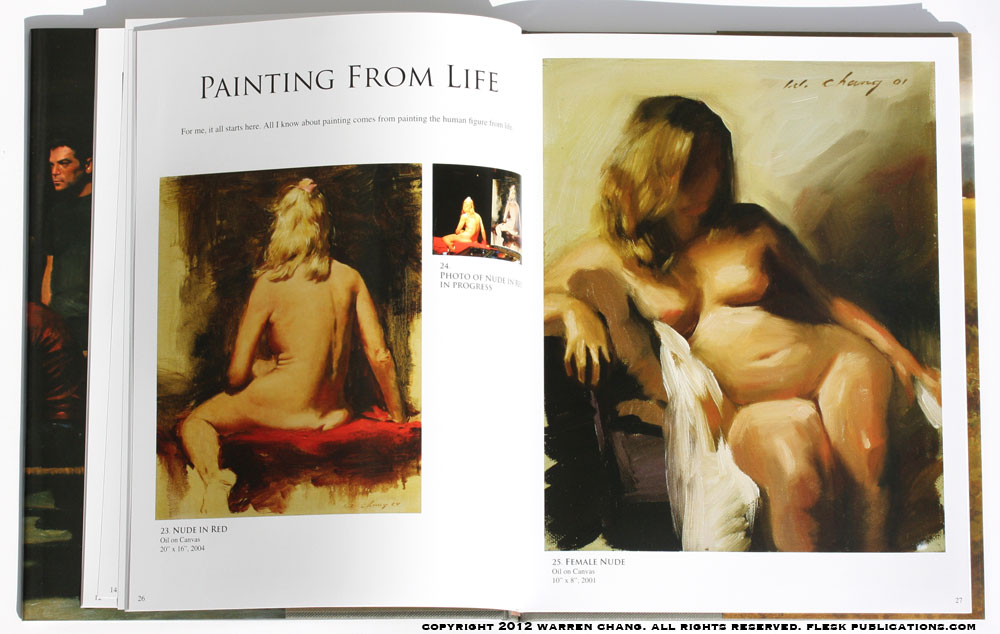
Warren Chang Narrative Paintings Book Interview

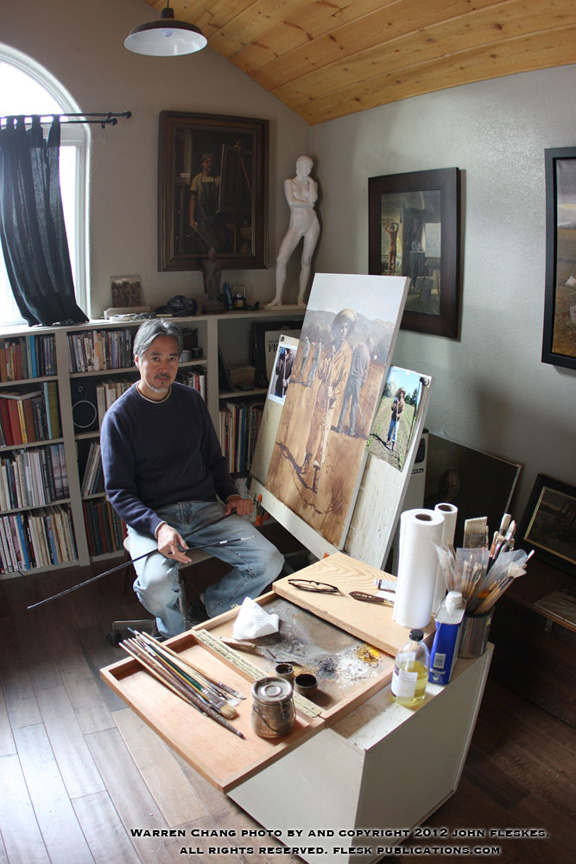
Warren Chang in his studio.

With our new book, Warren Chang: Narrative Paintings, available, I thought it a good time to sit down with Warren Chang and ask him some questions. The time spent with him in producing this book has been one of pleasure. I’ve found Warren to have a deep knowledge of himself and his paintings. We talk about sincerity, balance, choice of subjects, family and more to find how all of these ingredients make Warren the painter that he is.

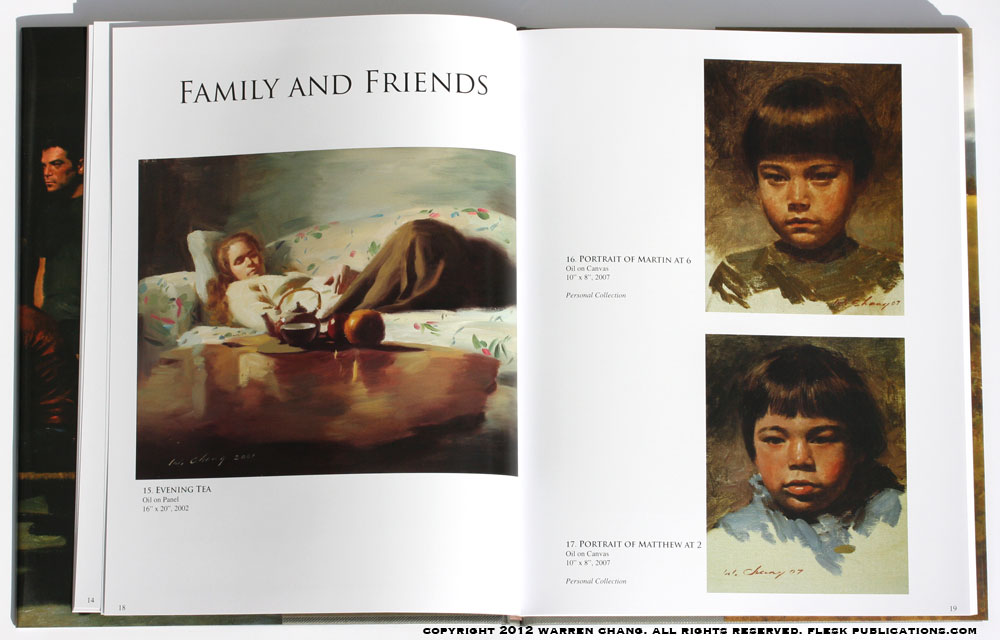
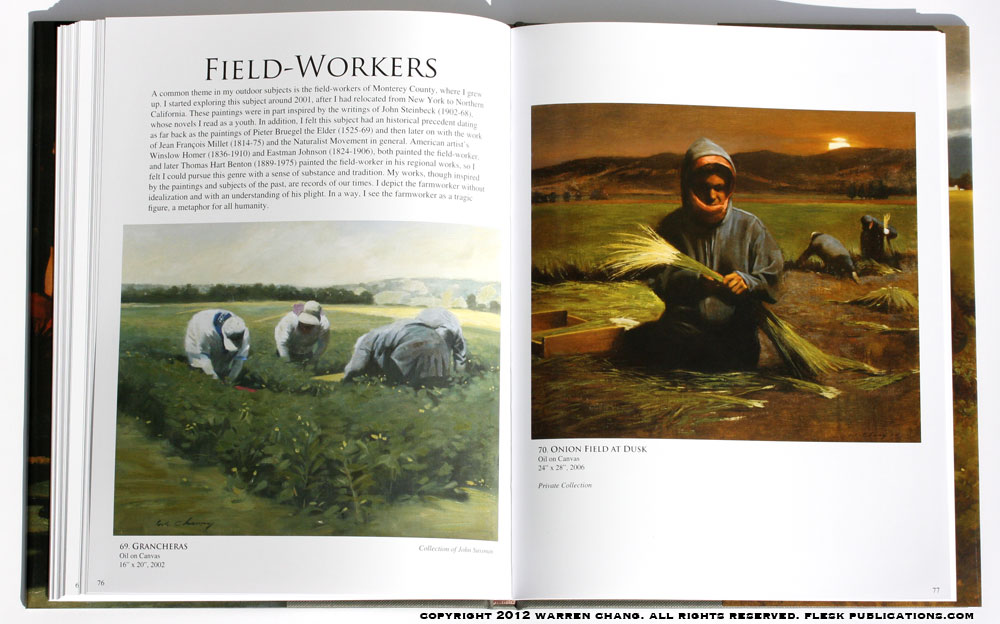
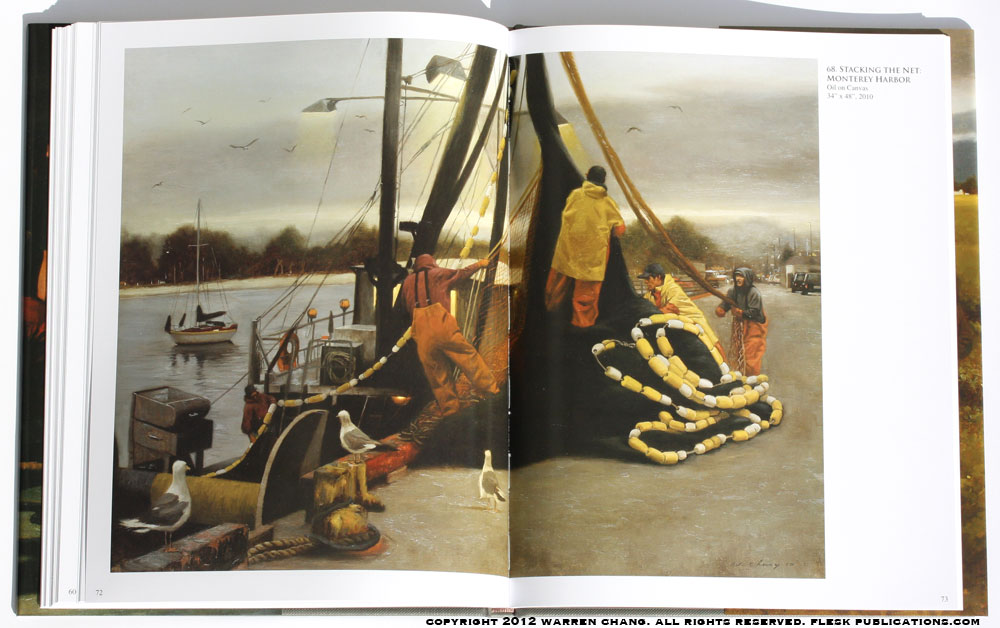
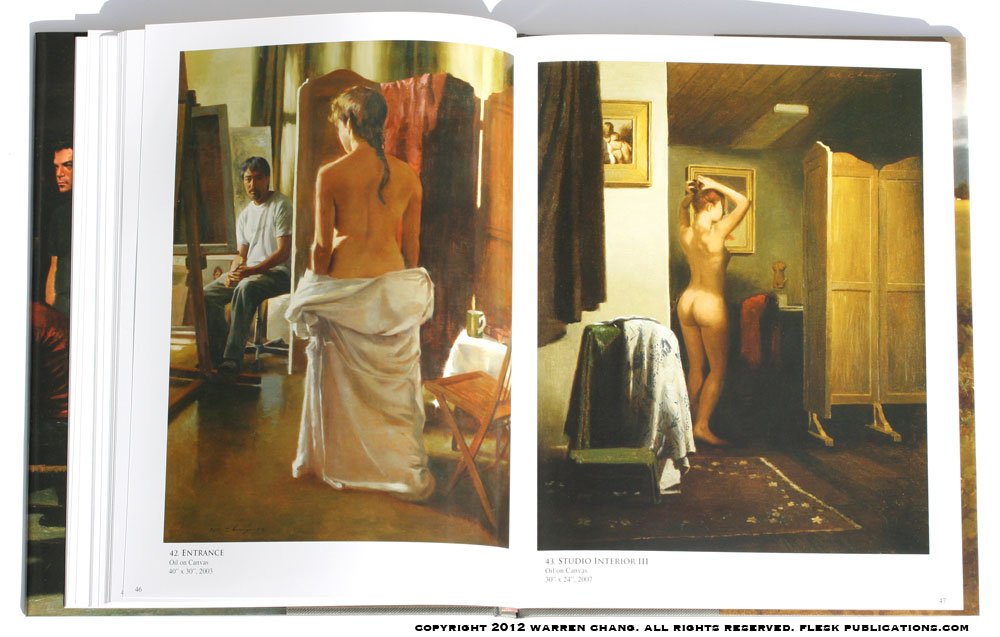
Sample spreads from the book are interwoven throughout. They can be clicked on for larger views.

Warren Chang: Narrative Paintings Book Interview
Copyright 2012 John Fleskes and Warren Chang. All Rights Reserved.

John Fleskes: Why select the title “Narrative Paintings” for your new book collecting your fine art paintings?

Warren Chang: I addressed this subject to some extent in the preface of my book. I think it describes the kind of painting I do well. Frankly the word “narrative” implies to the contemporary art world that the art is “illustrative,” not to be taken seriously. I wanted to embrace my roots and take ownership of the narrative and illustrative nature of my artwork. My work is narrative in nature but not obvious. I think a work of art is more powerful when there is an air of mystery. It’s more open to interpretation and the story is not too spelled out.


Fleskes:
When people view your paintings what do you hope they get out of them?

Chang: I hope they “get it.” Now what exactly that is, I’m a little reluctant to talk about, but certainly there is a certain mood; a feeling that I’m trying to convey. If I have to spell that out, then it’s probably not working. The art should speak for itself.

I do feel it’s open to interpretation and the viewer, as participant, is also part of the creative process in that the viewer also must be an artist in how they view any work of art.


Fleskes: As a painter, do you intentionally attempt to project feelings through the use of color and imagery into people when they view your art?

Chang: Yes, absolutely, nothings an accident.


Fleskes: I hear you speak of “honesty” and “sincerity” with your paintings often. What do you mean by this and why is it important to you?

Chang: If a piece of art is honest and sincere then it will connect with some part of your audience because we all share a common humanity. I can only paint or communicate what I feel or believe and only hope that others will relate. In that way, an artist bares his soul, it can be a little unsettling observing the reactions to one’s work.


Fleskes: With “Narrative Paintings,” besides this being a gallery of your fine art spanning the last decade, you incorporate your own text with each work. What is your goal with this collection? Who do you envision this book is for?

Chang: The accompanying text is simply there to help shed more light on the thinking and process of each painting. If we look back historically, we can only wish we knew what motivated the great artists’ of our past. So with a contemporary painter, like me, it’s nice to have the opportunity to convey these thoughts in a book.

The one word I can think of for the goal of this book is to “inspire.” I hope this is not asking too much but I hope this book will inspire artists and would-be-artists around the world.


Fleskes: How does family and a balance in your life relate to your paintings? What do you need in your life to paint to the best of your abilities?

Chang: I think these two questions can be addressed at the same time. A good friend and fellow artist once remarked to me that perhaps my family was a bit distracting to my art. In fact he was correct, but honestly, without them I’d be lost and even less productive. I owe everything to my family. They give me the stability and purpose to focus on the work at hand. In fact, much of my work is really about “family.” The interiors are pretty much biographical and my family seeps into the subjects and focus of many of my paintings.

So if my family gets in the way of my work at times, I wouldn’t have it any other way.


Fleskes: Do you have a favorite piece that is reproduced in “Narrative Paintings” and what makes it successful to you?

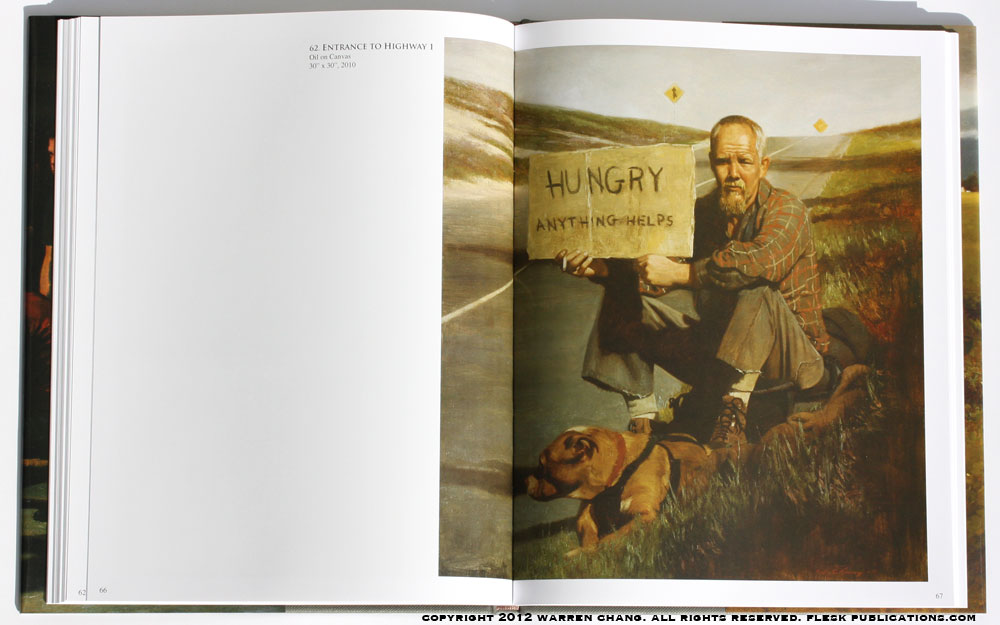
Chang: That is a hard question. There are many I’m fond of and for so many different reasons. Right now, I would have to say its “Entrance to Highway One,” The painting depicts a homeless drifter on the edge of a highway. It was painted specifically for a traveling exhibition titled “Hard Times: An Artist’s View” in 2010. We were asked to paint are reactions to the current economic times which seemed to mirror, to a lesser extent, the Great Depression of the 1930’s which inspired so many great paintings from that era.

The model and painting seemed to epitomize the theme of the exhibition. I was greatly inspired by the theme of the exhibition; a theme of what seemed to me of much substance and in the company of so many artists I had admired, such as Burt Silverman, Harvey Dinnerstein, Max Ginsburg and Steven Assael.

A friend upon observing my two painting of homeless men for this exhibition, one being “Entrance” and the other “Portrait of Bill,” which depicted an old homeless man, remarked that in “Portrait of Bill” you see this kind of a homeless man in all times, while in “Entrance” the man is able bodied and capable of work, yet drifting and homeless. “That’s me if I lose my job,” he remarked. “I would be right there alongside him along with my family and dog.” It dawned on me that the character I had portrayed was “every-man” and that the common man could relate to the plight of this man. So in that way, it succeeded.
I can’t tell you how much I searched for just the right homeless man for these two paintings; the extents I would go to find the right subject. More often than not finding the right subject, or in this case, the right model, can contribute so much to the success of a painting.


Fleskes: You often portray the every-man and every-women, field-workers, and sometimes the disenfranchised. What is it about them that are attractive to you? Why is it important that you document them?

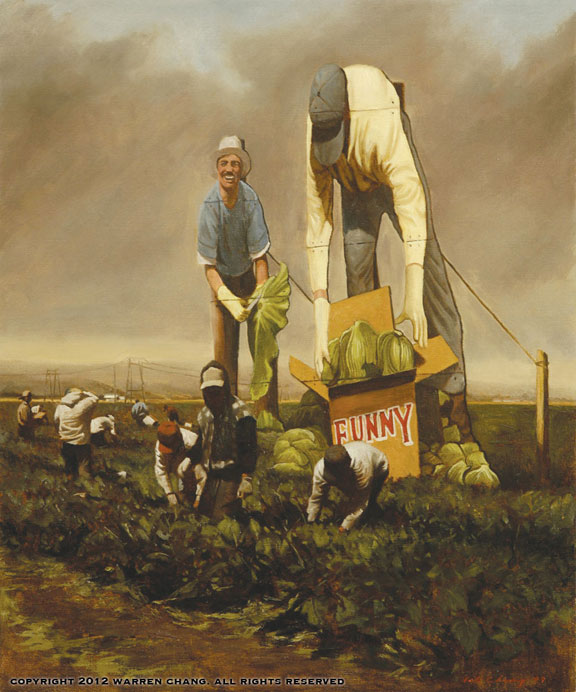
Chang: Good question. I don’t have a background of hardship, of having worked in the fields, or anything like that. I grew up relatively comfortable, although as a minority in America. I grew up in and continue to live a normal middle class life, so my attraction to the struggling class of people comes from something. But, I’m not exactly sure. I somehow do relate to their plight as I feel it’s the plight of all man throughout history.

Philosophically, I feel in great art, the struggle for life, even tragedy, as demonstrated by the plight of the field-worker for example, goes deeper, has more substance in terms of the sense of humanity that we all share.


Fleskes: Why do you think people find your choice of subjects so appealing? Is the connection formed between them and your paintings intentional, or are you being purely true to yourself and people connect to that instead? (The honesty?)

Chang: I don’t know that people do find my choice of subject appealing. If they do, that’s great.
I paint what I paint regardless of the reaction or whether or not it “sells.” I have found that some people connect with my paintings of the fieldworkers and usually for different and varying reasons. And it’s these reactions that actually inform and educate me on the subject, so it’s an ongoing process.


Fleskes: Your compositions vary from painting to painting making each truly unique. There appears to be a lack of redundancy. Each one is a singular statement. Can you talk about this and why is this important to you?

Chang: Yes. I once was told by a gallery director that, “I don’t need to reinvent the wheel every time I paint a picture.” For me, almost every painting is an entirely new project and undertaking. It’s like I’m writing a new novel or making a new movie.

It often takes me months, if not years, to formalize an idea for a painting. I envy those painters who seem to repeat the same theme over and over again, varying little from one painting to the next. It’s this direction the commercial galleries prefer once they discover a product that sells, and perhaps that may be why I’ve had little success there.


Fleskes: I’ve heard you say that you value the “thinking” behind your work more than anything else, such as the skills behind a painting. Can you explain?

Chang: What I was just elaborating on, kind of explains that. There is an old Chinese proverb, “Read 100 books and paint one picture.” I find a lot of truth in this statement. You have to think before you can create anything of substance and meaning.

I’m alarmed with the over preoccupation with style, and technique and skills in art today. We forget that these are only the tools to creating great art, not an end in itself.

Warren Chang.

Fleskes: What have you discovered about yourself through painting?

Chang: I’ve discovered that art is life. Searching for the meaning of art is the same as searching for the meaning of life. There are no answers but that does not mean we don’t keep searching and trying to figure things out.


Fleskes: Thank you for your time, Warren.

Enjoy,

John

John Fleskes
Flesk Publications

Links:
Warren Chang Narrative Paintings at Flesk Publications
Warren Chang official website

Craig Elliott Interview Discussing “The Art of Craig Elliott”

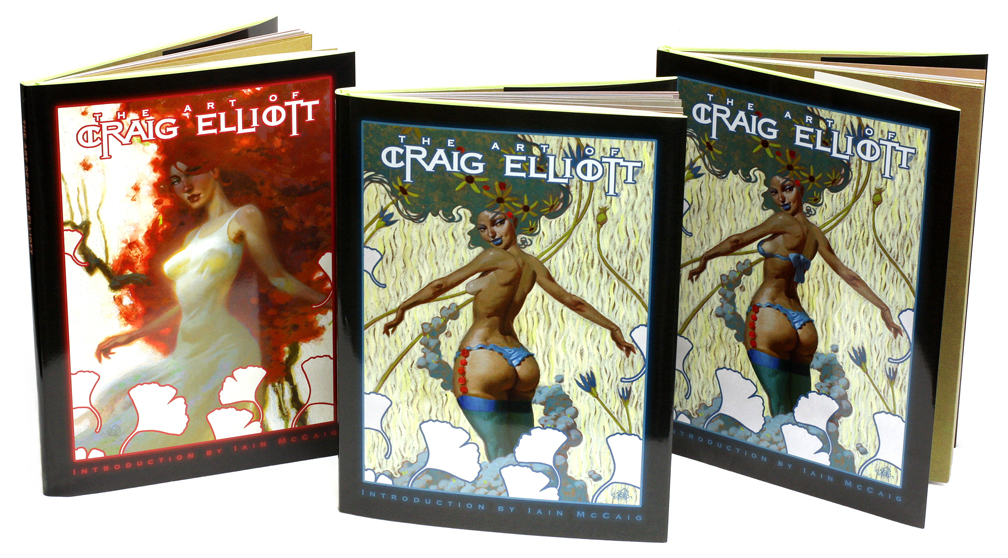
With the release of The Art of Craig Elliott, I thought it a good time to ask Craig Elliott a few questions regarding his new book and his philosophies regarding his art and life. I would like to extend a special thank you to Craig for taking the time to respond.

Craig Elliott “The Art of Craig Elliott” Interview
Copyright 2012 John Fleskes and Craig Elliott. All Rights Reserved.

John Fleskes: You obviously have your own creative and artistic style. Do people sometimes make references to other artists that share your same sensibilities when viewing your work? How do you feel about this?

Craig Elliott: People occasionally mention other artists they “see” in my artwork when they meet me at shows or gallery openings. I find it fascinating that people choose other artists that have the same interests as I do. Our interests and motivations are the things that really create our art. People will point out artists that have, or had a strong interest in Japanese art, a deep love of nature, and of women, especially women in their “natural” state, without much influence of modern society’s specific demands upon their looks. These interests that I have combine to create my art, and combine in other artists to create their art. I think people respond to a feeling that is transmitted by those interests. We almost all will have had different teachers, teaching different drawing methods, ways of applying paint, preparing canvases, etcetera, so the specific techniques and details are different, but these interests that flow beneath the art are shining through.

Fleskes: What is it about women and nature that inspires your fine art that is featured in The Art of Craig Elliott? Why not men and nature?

Elliott: I think women are just about the most beautiful thing in the universe for a human male. Evolution and time have made it so there is no equal to them in all the world for us. Nature also is built on many of the same principles of beauty and design that women are, but can never quite overcome women in a man’s mind. It is a very strong second though!

Fleskes: You stay very busy with visual development work, character designs and conceptual art for the film industry. How do you find the time and energy to work on your personal fine art? And why is it important for you to create work that reflects your own inner vision, rather than purely the film and commercial assignment work that you do?

Elliott: I don’t really have an opportunity on a daily basis with my concept design work to put my own ideas to paper. I work to realize and flesh out the ideas of writer’s story artists and directors, and I consider their ideas the paramount consideration when I am doing a job. Only if they ask me to fill in a gap in their own minds do I step in and offer my own ideas. I can remember a time on Treasure Planet when the directors, John Musker and Ron Clements had a problem they had not yet solved in the story. This problem was how the main characters were going to escape from the stockade with the pirates sitting outside the door all night. I had an idea inspired by a type of plumbing valve, when it was mentioned that they had no solution for this problem! I adapted the valve to create these mysterious half spheres in the floor of the stockades interior. Our characters could, with a little initiative, fool around with them and discover that they would rotate, and eventually align an opening in the floor to let them escape. I drew up some simple plans and pitched the idea to the directors, and they used it!

Aside from these little ideas I don’t have an outlet at work to express the other ideas that come to me. Ideas for my art come to me while I am sketching compositions for work, taking a walk, driving, watering the plants, looking at books, all sorts of times. These ideas reflect my own story, the things that strike a chord for me. I don’t know what it would be like to not express my own vision in some way. It is hard to say why it is important, when it is just something that I do, or am. It really is like magma in a volcano, bubbling up from below, if not released it can explode. I have had stretches of time where I have not been able to do much art of my own. I remember once I had to go a month or two without doing anything because I was buying and moving into a new house. I had no furniture, dirty carpet and torn up linoleum. I had no art supplies either. I bought food and some sculpting supplies and sculpted for days, sleeping on the floor! I had to get it out or I would blow up! After that I could move in my stuff and get more settled. As for having the time or energy to do my own work as well, I guess the compulsion makes the energy and time for me. I have no choice!

Never the Twain by Craig Elliott.

Fleskes: Is your fine art created to satisfy and bring pleasure to you, or others? Maybe both, and if so, who comes first?

Elliott: I am really making things I want to see, or places I want to be in when I am creating my fine art. I have heard a few times that Disneyland was the place Walt wanted to live in, or play in. It is that same sort of idea. There is a hope that others will like what you do, and you can somehow support the continuation of your art with their interest and support.

"Jade" by Craig Elliott

Fleskes: Which is the painting you are the most proud of in The Art of Craig Elliott? What stands out about it?

Elliott: I think Jade is the painting I would chose as an answer to this question. It was a real breakthrough for me, and was the first time I did something that came close to the style I had in my head… It is also my late grandmother’s favorite painting. I also thought of this painting as representative of why I would be satisfied with the life I had led if I were to die. This may seem morbid, but I was faced with two weeks to live when I was 26, and actually thought of this painting when I was alone in the hospital, and said to myself “well, if this doesn’t work out I can look at Jade, and be satisfied that I had done something I can leave behind that really means something to me.”

Fleskes: Do you think your art is the result of a talent, or hard work?”

Elliott: I don’t really think there is such a thing as talent. If I compare how much time I have spent honing my skills, and thinking about art, I feel like if I have any ability as an artist, it had better be as a result of all of that! I have never done much else besides art, I don’t know if that makes me obsessed or something, I don’t know. For me it comes down to there being very little else that is nearly as interesting. Movies, bars, parties, clubs, sports, etc. are so boring to me, though most people really enjoy them. I wish I could understand, or get some enjoyment out of more things, but we are all different. At least there is something I enjoy!

Fleskes: We’ve spoken about labels and how people like to put artists into categories. This is something you don’t like to do. Why is that? And how do your respond when people label you?

Elliott: Though it is frustrating, I have enough understanding of the way the brain works to forgive that sort of knee jerk categorization. Our minds work by association, categorizing things in terms of other things the brain has already seen or experienced. This behavior makes perfect sense and is a very efficient way of dealing with the world. It has some side effects like stereotyping. Stereotyping is applying what you have experienced about “X” to other things that are, or seem, similar to “X.” The negatives of stereotyping are obvious, but it also helps our brain not have to spend hours assessing every individual situation or thing it encounters, and be able to make reasonably accurate decisions in very short time. If someone pulls into your lane on the freeway, you can use previous instances of that event to help you quickly decide what do to and what might happen next. If you wait and analyze the situation like it is a completely new one, you will end up in a crumpled mess by the side of the road!

Fleskes: How well does The Art of Craig Elliott represent you as an artist and as a person?

Elliott: I hope the overall impression of the art in the book gives people the sense of how I feel about the world, and an understanding of the beauty I see in it. I have had some feedback from the few people who have seen the book already, that they get a feeling of the flow and rhythm of nature from my work. That is much more the subject of my art than the physical things like people, grasses, branches, etcetera, that you see in the art. I am trying to capture something that I feel from nature. It really may not matter much what subjects I am painting in the end. That feeling is what actually matters.

Fleskes: What do you want people to know about you in relation to your art?

Craig:
I am not sure if I have thought about that much. I try and stay out of the way of my art I think. I think I am afraid of influencing, or “messing up” their experience of the art with “me stuff.” I am always willing to answer questions that are asked of me, of course. Although, I think many of the most important things about me as a person are right there in the art. If I am doing a good job, the experience of my art should be similar to knowing who I am as a person.

Fleskes: The Art of Craig Elliott was designed by you. This is something I am happy about since a goal of mine is always to get a deeper connection between artist and book for a true representation of the pair. During the design stages, what are your thoughts behind your decision with the flow and pacing? What do you feel is most important when grouping your art into a collection?

Elliott: I really tried to approach the layout of the book the same way I do my art. To include and adapt things I already love into the design the whole way through: Natural textures, mysterious layers and unusual proportions and divisions in the layouts. I think the way the book flows as you move from page to page and move through groups of related subjects is important too. I apply the same ideas to my portfolio. I do so many different things that if I am not careful about how I group things and make them flow into one another, it would seem like I was a total scatterbrain. When things move gracefully from one subject to another instead of jumping all over the place one doesn’t even notice the transitions or the number of subjects.

Fleskes: When you work on one of your sketches or paintings, what do you think is more important, the idea or the technique?

Elliott:
The technique should always be secondary, but that isn’t always possible. The ideal is to practice technique until it becomes second nature, so that one can concentrate on the idea! It is a very Jedi like thing to play baseball, ride a horse or paint! They all require that “let go” moment…

Fleskes: You are one of those artists I consider a triple threat. You are an excellent artist, successful at running yourself as a business and independent free-lance artist, and a great self-promoter by making appearances at shows and running your own booths at events. I suppose I could add that you do occasional workshops and teach as well. My question is, was this all planned, or part of a natural progression of who you are? How important is being well-versed in different areas to you?

Elliott: I don’t see it as important per se, but maybe more “helpful.” Maybe that is the same thing! I realize the value of all these elements, and strive to do what is best for me and my art.

Craig Elliott jewelry collection.

Fleskes: Your artistry extends beyond drawing and painting. If you look beyond the many forms of art you have your fingers in, in addition, you are a sculptor, make your own fine art prints and create lovely jewelry, as well as having much interest in landscape design, among other things. Do you look at all of your interests as strengths, or a lack of focus? Is it boredom, or an honest love for life in enjoying so many different things?

Elliott: I really do enjoy doing these different things, and I think it is driven by a stream of ideas that I get excited about. Having so many ideas is tough, as I never have enough time to execute them all. It is frustrating, and I always feel behind! I guess we do the best we can in the circumstances.

Aristata sculpture in progress by Craig Elliott.

Fleskes: Where do you see yourself going in the future? Any achievements you would like to conquer that you haven’t focused on yet?

Elliott: I do want to find a way to bring my three-dimensional work to the public. Dimensional work was the very first art form I practiced, and it is still a big love of mine. I think it is much harder to bring to people though; there are many impracticalities that make it clumsy, costly and ungainly to do. I feel like I am much closer to a solution, and my jewelry is a good first step!

Fleskes: Thanks for your time, Craig!

Links:
The Art of Craig Elliott at Flesk Publications with video tour.
Craig Elliott Gallery official website
Flesk Publications

Updated Flesk Publications Mission Statement for 2012

Realizing I had not updated my company profile for a while, I took a few minutes to write up a much needed revision. I feel the following description better reflects my mission statement, feelings about where the company is today, and my goals for the future.

About Flesk Publications

This year marks Flesk Publications’ tenth anniversary of promoting the arts through quality collections. “The company was founded as a direct result of my desire to publish the art books I wanted to buy myself,” states publisher John Fleskes. Flesk Publications pride’s itself on being different. A creative approach is pursued by exploring the aesthetics of each artist in order to design a package that serves as an extension of him or herself. The result is a unique and individual collection produced with passion. Flesk produces a full line of art books featuring the best of comics and graphic novels, fantasy, illustration, pinup and fine arts. “Animation and fine art are two areas I take great interest in expanding into,” shares Fleskes. “Our new Bruce Timm, Craig Elliott and Warren Chang collections are a testament to this goal.”

“One thing that separates us from other publishers is our absolute commitment to the quality of our books and the relationships formed with the artists we showcase,” continues Fleskes. “It’s not just about the books, but also about the positive future of the artists and making sure they are represented well and that their trust, in allowing us to collect their work, is not abused.” Fleskes shares a passion for the arts and feels a responsibility in making sure he represents his artists with the best books possible while also raising the art form. “We hope to educate the public to expect a higher standard from publishers,” continues Fleskes. “We take our work very seriously yet enjoy the process. Whether it’s a 16-page chapbook or a 300-page oversized art book, we give each collection our full attention to meet our standards first. I have a self-drive that makes this approach a natural part of what Flesk Publications is all about. It isn’t a policy, it’s who we are.”

Enjoy,

John

John Fleskes
Flesk Publications
Text © 2012 John Fleskes

Links:
Flesk Publications Company Profile

“Warren Chang: Narrative Paintings” Books Arrived. First 50 books ordered come signed and numbered!

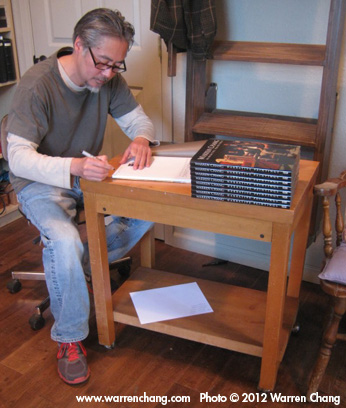
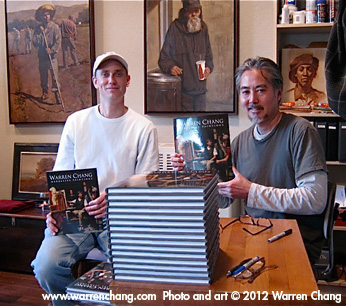
Our new title, Warren Chang: Narrative Paintings has arrived ahead of schedule. I had the opportunity to spend the afternoon with Warren at his studio where he signed and numbered 50 copies of the book. These special copies are available to all who have pre-ordered the book and while supplies last. I expect us to go through them quickly. If you have already placed your order, you can expect your copy shipped by this Friday.


It’s always a great feeling when a new book arrives. Here, Warren and I enjoy the moment as we crack open the first cases of books.

I’ll have the back story about how this book came to be, a video tour of the book and a Warren Chang interview posted in the coming weeks.

Enjoy,

Enjoy,
John

John Fleskes
Flesk Publications
Text © 2012 John Fleskes
Photos and art © 2012 Warren Chang

Links:
Warren Chang: Narrative Paintings book details and ordering information
Warren Chang website

The Art of Craig Elliott Book Video Preview

Craig Elliott put together a video preview of his new book The Art of Craig Elliott. The narration and flip through tour is by Craig. This will give you a great feel for the book as well as some extra details about the art pieces direct from the artist!

You can visit The Art of Craig Elliott book information page on our website for a larger screening. You can also visit the Craig Elliott Gallery channel on YouTube and his website for more videos by Craig.

Enjoy,
John

John Fleskes
Flesk Publications
Text © 2012 John Fleskes
Video and art © 2012 Craig Elliott